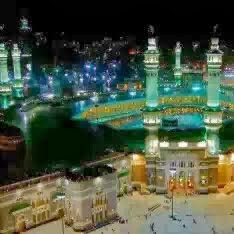
Are the first ten days of Dhu'l-Hijjah more special than other days?
What are the righteous deeds that it is recommended to do a lot of
during these ten days?.
Praise be to Allaah.
Among the great seasons of worship are the first ten days of
Dhu'l-Hijjah, which Allaah has favoured over other days. It was
narrated from Ibn 'Abbaas (may Allaah be pleased with him) that the
Prophet(peace and blessings of Allaah be upon him) said: "There are no
days on which righteous deeds are more beloved to Allaah than these
ten days." They said: "Not even jihad for the sake of Allaah?" He
said: "Not even jihad for the sake of Allaah, unless a man goes out
himself for jihad taking his wealth with him and does not come back
with anything." Narrated by al-Bukhaari, 2/457
It was also narrated from Anas (may Allaah be pleased with him) that
the Prophet(peace and blessings of Allaah be upon him) said: "There is
no deed that is better before Allaah or more greatly rewarded than a
good deed done in the (first) ten days of al-Adha." It was said: "Not
even jihad for the sake of Allaah?" He said: "Not even jihad for the
sake of Allaah, unless a man goes out himself for jihad taking his
wealth with him and does not come back with anything." Narrated by
al-Daarimi, 1/357; its isnaad is hasan as stated inal-Irwa', 3/398.
These texts and others indicate that these ten days are better than
all other days of the year, with no exception, even the last ten days
of Ramadaan. But the last ten nights of Ramadaan are better than the
first ten nights of Dhu'l-Hijjah, because they includeLaylat al-Qadr,
which is better than a thousand months. SeeTafseer Ibn Katheer, 5/412.
So the Muslim should start these days with sincere repentance to
Allaah, then he should do a lot of righteous deeds in general, then he
should pay attention to doing the following deeds:
1 – Fasting
It is Sunnah for the Muslim to fast on the first nine days of
Dhu'l-Hijjah, because the Prophet(peace and blessings of Allaah be
upon him) encouraged us to do righteous deeds in the first ten days of
Dhu'l-Hijjah, and fasting is one of the best of deeds, which Allaah
has chosen for Himself as it says in the hadeeth qudsi: "Allaah says:
'All the deeds of the son of Adam are for him, except fasting, which
is for Me and I shall reward for it." Narrated by al-Bukhaari, 1805.
The Prophet(peace and blessings of Allaah be upon him) used to fast on
the first nine days of Dhu'l-Hijjah. It was narrated from Hunaydah ibn
Khaalid from his wife, that one of the wives of the Prophet(peace and
blessings of Allaah be upon him) said: The Prophet(peace and blessings
of Allaah be upon him) used to fast on the first nine days of
Dhu'l-Hijjah and the day of 'Ashoora', and three days each month, the
first Monday of the month and two Thursdays. Narrated by al-Nasaa'i,
4/205 and by Abu Dawood; classed as saheeh by al-Albaani inSaheeh Abi
Dawood, 2/462.
2 – Reciting tahmeed, tahleel and takbeer a great deal
It is Sunnah to recite takbeer (saying Allaahu akbar (Allaah is most
great)), tahmeed (saying al-hamdu Lillah (praise be to Allaah)),
tahleel (saying Laa ilaaha ill-Allaah (There is no god but Allaah))
and tasbeeh (saying Subhaan-Allaah (Glory be to Allaah)), during the
first ten days of Dhu'l-Hijjah, saying these words out loud in the
mosques, homes, streets and every place in which it is permissible to
remember Allaah, to perform this act of worship openly and proclaim
the greatness of Allaah.
Men should recite out loud and women should recite quietly.
Allaah says (interpretation of the meaning):
"That they may witness things that are of benefit to them (i.e. reward
of Hajj in the Hereafter, and also some worldly gain from trade), and
mention the Name of Allaah on appointed days, over the beast of cattle
that He has provided for them (for sacrifice)"
[al-Hajj 22:28]
The majority are of the view that the "appointed days" are the first
ten days of Dhu'l-Hijjah, because it was narrated from Ibn 'Abbaas
(may Allaah be pleased with him) that the appointed days are the first
ten days of Dhu'l-Hijjah.
It was narrated from 'Abd-Allaah ibn 'Umar (may Allaah be pleased
with him) that the Prophet(peace and blessings of Allaah be upon him)
said: "There are no days that are greater before Allaah or in which
good deeds are more beloved to Him, than these ten days, so recite a
great deal of tahleel, takbeer and tahmeed during them." Narrated by
Ahmad, 7/224; its isnaad was classed as saheeh by Ahmad Shaakir.
The takbeer is as follows:
Allaah akbar, Allaahu akbar, laa ilaaha ill-Allaah, Allaahu akbar, wa
Lillaah il-hamd(Allaah is Most Great, Allaah is Most Great, there is
no god but Allaah; Allaah is Most Great and to Allaah be praise).
And there are other versions.
This takbeer has become a forsaken Sunnah nowadays, especially at the
beginning of these ten days. You can hardly hear it except from a few.
It should be recited out loud, so as to revive the Sunnah and remind
the heedless. It was proven that Ibn 'Umar and Abu Hurayrah (may
Allaah be pleased with them both) used to go out to the marketplace
during the first ten days of Dhu'l-Hijjah, reciting the takbeer our
loud, and the people would recite takbeer when they heard them, i.e.,
the people would remember the talkbeer and each one would recite it by
himself; it does not mean that they recited in unison – that is not
prescribed in sharee'ah.
Reviving Sunnahs that have been forgotten brings a great deal of
reward, as is indicated by the words of the Prophet(peace and
blessings of Allaah be upon him): "Whoever revives one of my Sunnahs
that has died out after I am gone, will have a reward like that of
everyone who does it, without that detracting from their reward in the
slightest." Narrated by al-Tirmidhi, 7/443; this hadeeth is hasan
because of corroborating reports.
3 – Doing Hajj and 'Umrah
One of the greatest deeds that can be done during these ten days is
Hajj to the sacred House of Allaah. Whoever Allaah helps to go on Hajj
to His House and do the rituals in the required manner will – in sha
Allaah – be included in the words of the Messenger of Allaah(peace and
blessings of Allaah be upon him): "An accepted Hajj brings no less a
reward than Paradise."
4 – Udhiyah (sacrifice)
One of the righteous deeds that bring a person closer to Allaah in
these ten days is to slaughter the sacrifice and to look for a good,
fat animal and to spend money on it for the sake of Allaah.
Let us hasten to make the most of these great days, before the
negligent regrets what he did, and before he asks to go back and
receives no response.
"GENERAL ARTICLES"
- Tamil -- Urdu -- Kannada -- Telugu --*-
Share
Share
-
-*- *: ::->
*
"BISMILLA HIRRAHMAAN NIRRAHEEM"
WELCOME! - AS'SALAMU ALAIKUM!!
******** *****
*****
[All] praise is [due] to Allah, Lord of the worlds; -
Guide us to the straight path
*- -*
* * In this Blog; More Than Ten Thousand(10,000) {Masha Allah} - Most Usefull Articles!, In Various Topics!! :- Read And All Articles & Get Benifite!
* Visit :- 
"INDIA "- Time in New Delhi -

*- WHAT ISLAM SAYS -*
-
Islam is a religion of Mercy, Peace and Blessing. Its teachings emphasize kind hear tedness, help, sympathy, forgiveness, sacrifice, love and care.Qur’an, the Shari’ah and the life of our beloved Prophet (SAW) mirrors this attribute, and it should be reflected in the conduct of a Momin.Islam appreciates those who are kind to their fellow being,and dislikes them who are hard hearted, curt, and hypocrite.Recall that historical moment, when Prophet (SAW) entered Makkah as a conqueror. There was before him a multitude of surrendered enemies, former oppressors and persecutors, who had evicted the Muslims from their homes, deprived them of their belongings, humiliated and intimidated Prophet (SAW) hatched schemes for his murder and tortured and killed his companions. But Prophet (SAW) displayed his usual magnanimity, generosity, and kind heartedness by forgiving all of them and declaring general amnesty...Subhanallah. May Allah help us tailor our life according to the teachings of Islam. (Aameen)./-
| ''HASBUNALLAHU WA NI'MAL WAKEEL''
-
''Allah is Sufficient for us'' + '' All praise is due to Allah. May peace and blessings beupon the Messenger, his household and companions '' (Aameen)
'' Our Lord ! grant us good in this world and good in the hereafter and save us from the torment of the Fire '' [Ameen]
-
{in Arab} :->
Rabbanaa aatinaa fid-dunyaa hasanatan wafil aakhirati hasanatan waqinaa 'athaaban-naar/-
(Surah Al-Baqarah ,verse 201)*--*~
| | |
| | | |
|
Follow Me | |
**
Wednesday, October 9, 2013
Dought & clear, - He is asking about the virtues of the first ten days of Dhu’l-Hijjah
Dought & clear, - Ruling on seeking auspicious omens from the Mushaf
Instead of offering salaat al-istikhaarah, some people open the Holy
Qur'an randomly, then they look for anything in the page that they
have chosen of the Mushaf to give them a hint to help them make their
decision. For example, there is a married daughter who came to live
with her parents, because her husband is not giving her her rights,
and she wants to get divorced. Her mother opened the Mushaf (at
random) and there was the story of Moosa (peace be upon him) and his
mother, (where Allah said to her): "but when you fear for him, then
cast him into the river" [al-Qasas 28:7]. From this story, she
understood that her daughter should go back to her husband. Can you
explain this matter to me?
Praise be to Allah.
Salaat al-istikhaarah is a confirmed Sunnah that is proven in reports
from the Prophet (blessings and peace of Allah be upon him), and it
cannot be replaced by what you have mentioned about seeking auspicious
omens in the Qur'an. Rather this seeking omens in the Mushaf is haraam
according to a number of scholars, because it comes under the same
heading as divination with arrows.
Al-Qarraafi (may Allah have mercy on him) said: With regard to the
haraam pursuit of auspicious omens, at-Tartooshi said in his
commentary that looking for auspicious omens in the Mushaf, geomancy,
drawing lots, throwing grains of barley (and interpreting the patterns
in which they fall), and all such things are haraam, because they come
under the same heading as divination with arrows. During the
Jaahiliyyah, they had arrows or pieces of wood, on one of which was
written "Do it"; on other arrows were written the words "Do not do it"
and "Not clear (or try again)". A person would draw one of them, and
if he found the words "Do it" he would go ahead with what he was
thinking of doing; if he found the words "Do not do it", he would turn
away from what he wanted to do and think that it was bad; if he found
the word "Not clear (or try again)," he would try again. Thus he was
seeking his share of the unseen by means of these arrows, so that if
it was good he would pursue it and if it was bad he would forget about
it. The same applies to one who looks for auspicious omens in the
Mushaf or elsewhere; the one who does that thinks that if he sees
something good he will pursue it or if he sees something bad he will
try to avoid it. This is exactly what is meant by divination with
arrows which the Qur'an states is haraam. End quote fromal-Furooq,
4/240
Al-Nafraawi said: The Prophet (blessings and peace of Allah be upon
him) liked good omens, which refers to anything that makes one feel at
ease, such as a good word. Inas-Saheehit says: "There isno tiyarah
(superstitious belief in bad omens), and the best of it is a good
omen." It was said: O Messenger of Allah, what is a good omen? He
said: "A good word that one of you hears." According to another
report, he said: "But I like good omens." An example of that is if a
person sets out on a journey or to go and visit a sick person and he
hears the wordsYaa saalim(O safe one),yaa ghaanim(O winner) oryaa
'aafiyah(O healthy one). This applies if he was not seeking such an
omen (and heard that by coincidence); but if he was seeking an omen so
that he could act upon whatever he heard, whether it was good or bad,
then it is not permissible, because it is like the haraam divination
with arrows that they used to do during the Jaahiliyyah. A similar
practice, which is also not permissible, is looking for omens in the
Mushaf, because this also comes under the same heading as divination
with arrows, because he may find something in the Qur'an that appears
to point to something he does not like, and that may lead him to
regard the Qur'an as "unlucky". If a person wants to do something then
hears something that upsets him, he should not change his plans;
rather he should say: "O Allah, no one brings good except You and no
one brings evil or wards off evil except You."
End quote fromal-Fawaakih ad-Dawaani, 2/342
Shaykh al-Islam Ibn Taymiyah (may Allah have mercy on him) was asked
about looking for good omens in the Mushaf. He replied: With regard to
looking for good omens in the Mushaf, there is no report of that from
the early generations, and the later generations disputed concerning
it. Al-Qaadi Abu Ya'la mentioned a dispute concerning it. He narrated
from Ibn Battah that he did it and said that someone else disliked it.
But this is not the kind of good omen that the Messenger of Allah
(blessings and peace of Allah be upon him) liked; he liked good omens
and disliked superstitious belief in bad omens. The kind of good omen
that he liked is when a person does something or decides to do
something, putting his trust in Allah, then he hears a good word that
makes him happy, such as if he hears the wordsYaa najeeh(O successful
one),Yaa muflih(O prosperous one),Ya sa'eed(O happy one),Yaa mansoor(O
victorious one) and so on. For example, during his hijrah (migration
to Madinah) he met a man en route and said to him: "What is your
name?" He said: Yazeed (meaning increase). He said: "O Abu Bakr,yazeed
amruna(our matter will increase in good)." As for superstitious belief
in bad omens, if a person has done something, putting his trust in
Allah, or he has decided to do something, then he hears a word that he
dislikes, such as "it will not reach its goal" or "he will not
prosper" and so on, and he takes it as a bad omen and gives up his
plans, this is forbidden. It is narrated inas-Saheehthat Mu'aawiyah
ibn al-Hakam as-Sulami said: I said: O Messenger of Allah, among us
are some people who superstitiously believe in bad omens. He said:
"That is something that one of you feels in his heart; do not let it
prevent you from going ahead." Thus the Prophet (blessings and peace
of Allah be upon him) forbade letting superstition prevent one from
doing what one intended to do. In both cases, even though he liked
good omens and disliked superstitious belief in bad omens, he would
still pray istikhaarah (seeking Allah's help in making a decision),
put his trust in Allah and go ahead on the basis of what is prescribed
of taking appropriate measures. In the case of a good omen, he did not
make it a reason or motive for going ahead, and he did not let a bad
omen prevent him from going ahead. Rather it was the people of the
Jaahiliyyah who based their decision whether to go ahead or not on
that, for which they would use arrows for divination. Allah forbade
using arrows for divination in two verses of the Qur'an; when they
(the people of the Jaahiliyyah) wanted to make a decision, they would
bring sticks like arrows or pebbles or something else on which they
had made marks to indicate "good", "bad" or "unclear (or try again)."
If they picked up the one that said "good," they would go ahead with
their plans; if they picked up the one that said "bad", they would
refrain; and if they picked up the one that said "unclear", they would
try again. And there are other actions that could come under the same
heading, such as throwing pebbles or barley grains (and "reading" the
patterns in which they fall), or using boards, pieces of wood or
pieces of paper on which were written Arabic letters, verses of poetry
and the like, by means of which a person would decide whether to go
ahead with his plans or not. All of these are forbidden because they
come under the same heading as seeking divination with arrows. Rather
it is Sunnah to pray istikhaarah, seeking guidance from the Creator,
and to consult other people and find out on the basis of shar'i
evidence what Allah likes and is pleased with and what He dislikes and
forbids. These superstitious practices are sometimes intended to find
out whether what a person wants to do is good or bad, and sometimes
they are intended to find out about its usefulness, in the past or in
the future. In either case it is not allowed or prescribed. And Allah,
may He be glorified and exalted, knows best.
End quote fromMajmoo' al-Fataawa, 23/66
Thus it is clear that seeking good omens from the Mushaf by opening it
and looking at the page, then basing one's decision on that, is haraam
and is the same as seeking divination with arrows. This is in contrast
to good omens that come immediately after one has taken a decision,
when hearing a good word by coincidence, when not looking for that.
What is mentioned in the question about the wife who is not being
given her rights by her husband indicates that the method mentioned is
not correct, because one may say: Rather the verse mentioned indicates
that she should separate from him and stay away, even if she fears the
consequences thereof, as the mother of Moosa threw her son into the
river, but the consequences were good for her.
In such cases it is essential to examine the problem and its causes
and ways of dealing with it in the appropriate shar'i manner, such as
offering sincere advice, and looking for arbitrators from the
husband's family and the wife's family, and so on.
And Allah knows best.
Qur'an randomly, then they look for anything in the page that they
have chosen of the Mushaf to give them a hint to help them make their
decision. For example, there is a married daughter who came to live
with her parents, because her husband is not giving her her rights,
and she wants to get divorced. Her mother opened the Mushaf (at
random) and there was the story of Moosa (peace be upon him) and his
mother, (where Allah said to her): "but when you fear for him, then
cast him into the river" [al-Qasas 28:7]. From this story, she
understood that her daughter should go back to her husband. Can you
explain this matter to me?
Praise be to Allah.
Salaat al-istikhaarah is a confirmed Sunnah that is proven in reports
from the Prophet (blessings and peace of Allah be upon him), and it
cannot be replaced by what you have mentioned about seeking auspicious
omens in the Qur'an. Rather this seeking omens in the Mushaf is haraam
according to a number of scholars, because it comes under the same
heading as divination with arrows.
Al-Qarraafi (may Allah have mercy on him) said: With regard to the
haraam pursuit of auspicious omens, at-Tartooshi said in his
commentary that looking for auspicious omens in the Mushaf, geomancy,
drawing lots, throwing grains of barley (and interpreting the patterns
in which they fall), and all such things are haraam, because they come
under the same heading as divination with arrows. During the
Jaahiliyyah, they had arrows or pieces of wood, on one of which was
written "Do it"; on other arrows were written the words "Do not do it"
and "Not clear (or try again)". A person would draw one of them, and
if he found the words "Do it" he would go ahead with what he was
thinking of doing; if he found the words "Do not do it", he would turn
away from what he wanted to do and think that it was bad; if he found
the word "Not clear (or try again)," he would try again. Thus he was
seeking his share of the unseen by means of these arrows, so that if
it was good he would pursue it and if it was bad he would forget about
it. The same applies to one who looks for auspicious omens in the
Mushaf or elsewhere; the one who does that thinks that if he sees
something good he will pursue it or if he sees something bad he will
try to avoid it. This is exactly what is meant by divination with
arrows which the Qur'an states is haraam. End quote fromal-Furooq,
4/240
Al-Nafraawi said: The Prophet (blessings and peace of Allah be upon
him) liked good omens, which refers to anything that makes one feel at
ease, such as a good word. Inas-Saheehit says: "There isno tiyarah
(superstitious belief in bad omens), and the best of it is a good
omen." It was said: O Messenger of Allah, what is a good omen? He
said: "A good word that one of you hears." According to another
report, he said: "But I like good omens." An example of that is if a
person sets out on a journey or to go and visit a sick person and he
hears the wordsYaa saalim(O safe one),yaa ghaanim(O winner) oryaa
'aafiyah(O healthy one). This applies if he was not seeking such an
omen (and heard that by coincidence); but if he was seeking an omen so
that he could act upon whatever he heard, whether it was good or bad,
then it is not permissible, because it is like the haraam divination
with arrows that they used to do during the Jaahiliyyah. A similar
practice, which is also not permissible, is looking for omens in the
Mushaf, because this also comes under the same heading as divination
with arrows, because he may find something in the Qur'an that appears
to point to something he does not like, and that may lead him to
regard the Qur'an as "unlucky". If a person wants to do something then
hears something that upsets him, he should not change his plans;
rather he should say: "O Allah, no one brings good except You and no
one brings evil or wards off evil except You."
End quote fromal-Fawaakih ad-Dawaani, 2/342
Shaykh al-Islam Ibn Taymiyah (may Allah have mercy on him) was asked
about looking for good omens in the Mushaf. He replied: With regard to
looking for good omens in the Mushaf, there is no report of that from
the early generations, and the later generations disputed concerning
it. Al-Qaadi Abu Ya'la mentioned a dispute concerning it. He narrated
from Ibn Battah that he did it and said that someone else disliked it.
But this is not the kind of good omen that the Messenger of Allah
(blessings and peace of Allah be upon him) liked; he liked good omens
and disliked superstitious belief in bad omens. The kind of good omen
that he liked is when a person does something or decides to do
something, putting his trust in Allah, then he hears a good word that
makes him happy, such as if he hears the wordsYaa najeeh(O successful
one),Yaa muflih(O prosperous one),Ya sa'eed(O happy one),Yaa mansoor(O
victorious one) and so on. For example, during his hijrah (migration
to Madinah) he met a man en route and said to him: "What is your
name?" He said: Yazeed (meaning increase). He said: "O Abu Bakr,yazeed
amruna(our matter will increase in good)." As for superstitious belief
in bad omens, if a person has done something, putting his trust in
Allah, or he has decided to do something, then he hears a word that he
dislikes, such as "it will not reach its goal" or "he will not
prosper" and so on, and he takes it as a bad omen and gives up his
plans, this is forbidden. It is narrated inas-Saheehthat Mu'aawiyah
ibn al-Hakam as-Sulami said: I said: O Messenger of Allah, among us
are some people who superstitiously believe in bad omens. He said:
"That is something that one of you feels in his heart; do not let it
prevent you from going ahead." Thus the Prophet (blessings and peace
of Allah be upon him) forbade letting superstition prevent one from
doing what one intended to do. In both cases, even though he liked
good omens and disliked superstitious belief in bad omens, he would
still pray istikhaarah (seeking Allah's help in making a decision),
put his trust in Allah and go ahead on the basis of what is prescribed
of taking appropriate measures. In the case of a good omen, he did not
make it a reason or motive for going ahead, and he did not let a bad
omen prevent him from going ahead. Rather it was the people of the
Jaahiliyyah who based their decision whether to go ahead or not on
that, for which they would use arrows for divination. Allah forbade
using arrows for divination in two verses of the Qur'an; when they
(the people of the Jaahiliyyah) wanted to make a decision, they would
bring sticks like arrows or pebbles or something else on which they
had made marks to indicate "good", "bad" or "unclear (or try again)."
If they picked up the one that said "good," they would go ahead with
their plans; if they picked up the one that said "bad", they would
refrain; and if they picked up the one that said "unclear", they would
try again. And there are other actions that could come under the same
heading, such as throwing pebbles or barley grains (and "reading" the
patterns in which they fall), or using boards, pieces of wood or
pieces of paper on which were written Arabic letters, verses of poetry
and the like, by means of which a person would decide whether to go
ahead with his plans or not. All of these are forbidden because they
come under the same heading as seeking divination with arrows. Rather
it is Sunnah to pray istikhaarah, seeking guidance from the Creator,
and to consult other people and find out on the basis of shar'i
evidence what Allah likes and is pleased with and what He dislikes and
forbids. These superstitious practices are sometimes intended to find
out whether what a person wants to do is good or bad, and sometimes
they are intended to find out about its usefulness, in the past or in
the future. In either case it is not allowed or prescribed. And Allah,
may He be glorified and exalted, knows best.
End quote fromMajmoo' al-Fataawa, 23/66
Thus it is clear that seeking good omens from the Mushaf by opening it
and looking at the page, then basing one's decision on that, is haraam
and is the same as seeking divination with arrows. This is in contrast
to good omens that come immediately after one has taken a decision,
when hearing a good word by coincidence, when not looking for that.
What is mentioned in the question about the wife who is not being
given her rights by her husband indicates that the method mentioned is
not correct, because one may say: Rather the verse mentioned indicates
that she should separate from him and stay away, even if she fears the
consequences thereof, as the mother of Moosa threw her son into the
river, but the consequences were good for her.
In such cases it is essential to examine the problem and its causes
and ways of dealing with it in the appropriate shar'i manner, such as
offering sincere advice, and looking for arbitrators from the
husband's family and the wife's family, and so on.
And Allah knows best.
Dought & clear, - It is mustahabb to fast the first eight days of Dhu’l-Hijjah for pilgrims and others
What is the ruling on fasting on the first eight days of Dhu'l-Hijjah
for the pilgrims? I know that it is makrooh for them to fast on the
Day of 'Arafah.
Praise be to Allaah.
Fasting on the first eight days of Dhu'l-Hijjah is mustahabb for
pilgrims and others, because the Prophet(peace and blessings of Allaah
be upon him) said: "There are no days in which good deeds are more
beloved to Allaah than these ten days." They said: O Messenger of
Allaah, not even jihad for the sake of Allaah? The Messenger of
Allaah(peace and blessings of Allaah be upon him) said: "Not even
jihad for the sake of Allaah, unless a man goes out with his self and
his wealth and comes back with neither." Narrated by al-Bukhaari (969)
and al-Tirmidhi (757), from the hadeeth of Ibn 'Abbaas (may Allaah be
pleased with him).
It says inal-Mawsoo'ah al-Fiqhiyyah(28/91): The fuqaha' are
unanimously agreed that it is mustahabb to fast during the first eight
days of Dhu'l-Hijjah, before the day of 'Arafah. The Maalikis and
Shaafa'is stated that it is Sunnah to fast on these days for the
pilgrim too. End quote.
It says inNihaayat al-Muhtaaj(3/207): It is Sunnah to fast the eight
days before the day of 'Arafah, as is stated inal-Rawdah, and that
applies equally to pilgrims and others, but it is not Sunnah for the
pilgrim to fast on the day of 'Arafah, rather it is mustahabb for him
not to fast then, even if he is able for it, following the example of
the Messenger(peace and blessings of Allaah be upon him), and so that
he will have more strength for du'aa'. End quote.
And Allaah knows best.
for the pilgrims? I know that it is makrooh for them to fast on the
Day of 'Arafah.
Praise be to Allaah.
Fasting on the first eight days of Dhu'l-Hijjah is mustahabb for
pilgrims and others, because the Prophet(peace and blessings of Allaah
be upon him) said: "There are no days in which good deeds are more
beloved to Allaah than these ten days." They said: O Messenger of
Allaah, not even jihad for the sake of Allaah? The Messenger of
Allaah(peace and blessings of Allaah be upon him) said: "Not even
jihad for the sake of Allaah, unless a man goes out with his self and
his wealth and comes back with neither." Narrated by al-Bukhaari (969)
and al-Tirmidhi (757), from the hadeeth of Ibn 'Abbaas (may Allaah be
pleased with him).
It says inal-Mawsoo'ah al-Fiqhiyyah(28/91): The fuqaha' are
unanimously agreed that it is mustahabb to fast during the first eight
days of Dhu'l-Hijjah, before the day of 'Arafah. The Maalikis and
Shaafa'is stated that it is Sunnah to fast on these days for the
pilgrim too. End quote.
It says inNihaayat al-Muhtaaj(3/207): It is Sunnah to fast the eight
days before the day of 'Arafah, as is stated inal-Rawdah, and that
applies equally to pilgrims and others, but it is not Sunnah for the
pilgrim to fast on the day of 'Arafah, rather it is mustahabb for him
not to fast then, even if he is able for it, following the example of
the Messenger(peace and blessings of Allaah be upon him), and so that
he will have more strength for du'aa'. End quote.
And Allaah knows best.
Dought & clear, - Why is Ibraaheem (peace be upon him) singled out for mention in the Tashahhud?
Why do we send blessings and peace upon Ibraaheem (peace be upon him)
in the prayer, and not upon the other Prophets? He is one of the five
Messengers of strong will, but he is not the first or last of them, so
why him, and if it is because he is the first one mentioned, why do we
not send greetings upon 'Eesa, Nooh and Moosa as well?
Praise be to Allah.
Allah, may He be glorified and exalted, singled out Sayyiduna
Ibraaheem (blessings and peace of Allah be upon him) for great favours
and honour. He was described in the Qur'an as an imam (leader), an
ummah (a nation in himself), a haneef (monotheist), and devoted to
Allah, may He be glorified and exalted; all the Prophets who came
after him were descended from him and the followers of all religions
(Muslims, Christians and Jews) believe in him.
Ibraaheem (peace be upon him) is the best of the Prophets and
Messengers after our Prophet Muhammad (blessings and peace of Allah be
upon him). Hence Allah has told us that He took him as a close
friend."And Allah did take Ibrahim (Abraham) as a Khaleel (an intimate
friend)" [an-Nisa' 4:125].
All the Prophets who came after him are descended from him via Ishaaq
and Ya'qoob, apart from Muhammad (blessings and peace of Allah be upon
him), who is descended from Ismaa'eel ibn Ibraaheem.
Our Prophet (blessings and peace of Allah be upon him) is closer to
Ibraaheem than anyone else. So Ibraaheem (peace be upon him) is the
father of the Arabs and the forefather of the Prophet (blessings and
peace of Allah be upon him) in terms of descent.
Ibraaheem is the one whom the Prophet (blessings and peace of Allah be
upon him) instructed his community to follow. "Then, We have inspired
you (O Muhammad SAW saying): "Follow the religion of Ibraheem
(Abraham) Haneefa (Islamic Monotheism - to worship none but Allah)"
[an-Nahl 16:123].
Hence our Prophet (blessings and peace of Allah be upon him) is the
closest of people to Ibraaheem (peace be upon him), and so are we, as
his followers.
Allah, may He be glorified and exalted, says (interpretation of the meaning):
"Verily, among mankind who have the best claim to Ibraheem (Abraham)
are those who followed him, and this Prophet (Muhammad SAW) and those
who have believed (Muslims)"
[Aal 'Imraan 3:68].
And He says, refuting the Jews and the Christians:
"Ibraheem (Abraham) was neither a Jew nor a Christian, but he was a
true Muslim Haneefa (Islamic Monotheism - to worship none but Allah
Alone) and he was not of Al-Mushrikoon"
[Aal 'Imraan 3:67].
Shaykh Ibn 'Uthaymeen (may Allah have mercy on him) was asked: Why is
Ibraaheem (peace be upon him) singled out for the call of Tawheed,
when all the Prophets called people to Tawheed (belief in the Oneness
of Allah)?
He replied:
All the Prophets brought the message of Tawheed. Allah, may He be
exalted, says (interpretation of the meaning):
"And We did not send any Messenger before you (O Muhammad SAW) but We
inspired him (saying): La ilaha illa Ana (none has the right to be
worshipped but I (Allah)), so worship Me (Alone and none else)"
[al-Anbiya' 21:25].
But Ibraaheem was the father of the Arabs, and the father of the
Israelites, and he called people to pure Tawheed. The Jews and the
Christians claimed to be his followers, but the Muslims are the ones
who are his followers. He (peace and blessings be upon him) was chosen
to be the father of the Prophets; he is the promoter of pure
monotheism and we are instructed to follow him, because we are closer
to Ibraaheem, as Allah, may He be exalted, says (interpretation of the
meaning):
"Verily, among mankind who have the best claim to Ibraheem (Abraham)
are those who followed him, and this Prophet (Muhammad SAW) and those
who have believed (Muslims)"
[Aal 'Imraan 3:68].
And He says, refuting the Jews and the Christians:
"Ibraheem (Abraham) was neither a Jew nor a Christian, but he was a
true Muslim Haneefa (Islamic Monotheism - to worship none but Allah
Alone) and he was not of Al-Mushrikoon"
[Aal 'Imraan 3:67].
Liqa' al-Baab al-Maftooh, 189/question no. 7
Al-'Allaamah Badr ad-Deen al-'Ayni al-Hanafi (may Allah have mercy on
him) noted another point with regard to this issue, as he said:
If it is said: Why was Ibraaheem (peace be upon him) singled out from
among all the other Prophets (peace be upon them) to be mentioned
during the prayer?
I say: That is because on the night of the Mi'raaj, the Prophet
(blessings and peace of Allah be upon him) saw all the Prophets and
Messengers, and he greeted each Prophet with salaam, but none of them
sent greetings to his ummah apart from Ibraaheem (peace be upon him).
Hence the Prophet (blessings and peace of Allah be upon him)
instructed us to send blessings upon him at the end of every prayer
until the Day of Resurrection, in response to his kindness.
It was also said that when Ibraaheem (peace be upon him) had finished
building the Ka'bah, he prayed for the ummah of Muhammad (blessings
and peace of Allah be upon him), saying: O Allah, whoever performs
pilgrimage to this House from the ummah of Muhammad, give him
greetings from me; and his family and children also offered this
supplication, so we are instructed to remember them in the prayer, in
response to their kind deed. End quote.
Sharh Sunan Abi Dawoodby al-'Ayni, 4/260
And Allah knows best.
in the prayer, and not upon the other Prophets? He is one of the five
Messengers of strong will, but he is not the first or last of them, so
why him, and if it is because he is the first one mentioned, why do we
not send greetings upon 'Eesa, Nooh and Moosa as well?
Praise be to Allah.
Allah, may He be glorified and exalted, singled out Sayyiduna
Ibraaheem (blessings and peace of Allah be upon him) for great favours
and honour. He was described in the Qur'an as an imam (leader), an
ummah (a nation in himself), a haneef (monotheist), and devoted to
Allah, may He be glorified and exalted; all the Prophets who came
after him were descended from him and the followers of all religions
(Muslims, Christians and Jews) believe in him.
Ibraaheem (peace be upon him) is the best of the Prophets and
Messengers after our Prophet Muhammad (blessings and peace of Allah be
upon him). Hence Allah has told us that He took him as a close
friend."And Allah did take Ibrahim (Abraham) as a Khaleel (an intimate
friend)" [an-Nisa' 4:125].
All the Prophets who came after him are descended from him via Ishaaq
and Ya'qoob, apart from Muhammad (blessings and peace of Allah be upon
him), who is descended from Ismaa'eel ibn Ibraaheem.
Our Prophet (blessings and peace of Allah be upon him) is closer to
Ibraaheem than anyone else. So Ibraaheem (peace be upon him) is the
father of the Arabs and the forefather of the Prophet (blessings and
peace of Allah be upon him) in terms of descent.
Ibraaheem is the one whom the Prophet (blessings and peace of Allah be
upon him) instructed his community to follow. "Then, We have inspired
you (O Muhammad SAW saying): "Follow the religion of Ibraheem
(Abraham) Haneefa (Islamic Monotheism - to worship none but Allah)"
[an-Nahl 16:123].
Hence our Prophet (blessings and peace of Allah be upon him) is the
closest of people to Ibraaheem (peace be upon him), and so are we, as
his followers.
Allah, may He be glorified and exalted, says (interpretation of the meaning):
"Verily, among mankind who have the best claim to Ibraheem (Abraham)
are those who followed him, and this Prophet (Muhammad SAW) and those
who have believed (Muslims)"
[Aal 'Imraan 3:68].
And He says, refuting the Jews and the Christians:
"Ibraheem (Abraham) was neither a Jew nor a Christian, but he was a
true Muslim Haneefa (Islamic Monotheism - to worship none but Allah
Alone) and he was not of Al-Mushrikoon"
[Aal 'Imraan 3:67].
Shaykh Ibn 'Uthaymeen (may Allah have mercy on him) was asked: Why is
Ibraaheem (peace be upon him) singled out for the call of Tawheed,
when all the Prophets called people to Tawheed (belief in the Oneness
of Allah)?
He replied:
All the Prophets brought the message of Tawheed. Allah, may He be
exalted, says (interpretation of the meaning):
"And We did not send any Messenger before you (O Muhammad SAW) but We
inspired him (saying): La ilaha illa Ana (none has the right to be
worshipped but I (Allah)), so worship Me (Alone and none else)"
[al-Anbiya' 21:25].
But Ibraaheem was the father of the Arabs, and the father of the
Israelites, and he called people to pure Tawheed. The Jews and the
Christians claimed to be his followers, but the Muslims are the ones
who are his followers. He (peace and blessings be upon him) was chosen
to be the father of the Prophets; he is the promoter of pure
monotheism and we are instructed to follow him, because we are closer
to Ibraaheem, as Allah, may He be exalted, says (interpretation of the
meaning):
"Verily, among mankind who have the best claim to Ibraheem (Abraham)
are those who followed him, and this Prophet (Muhammad SAW) and those
who have believed (Muslims)"
[Aal 'Imraan 3:68].
And He says, refuting the Jews and the Christians:
"Ibraheem (Abraham) was neither a Jew nor a Christian, but he was a
true Muslim Haneefa (Islamic Monotheism - to worship none but Allah
Alone) and he was not of Al-Mushrikoon"
[Aal 'Imraan 3:67].
Liqa' al-Baab al-Maftooh, 189/question no. 7
Al-'Allaamah Badr ad-Deen al-'Ayni al-Hanafi (may Allah have mercy on
him) noted another point with regard to this issue, as he said:
If it is said: Why was Ibraaheem (peace be upon him) singled out from
among all the other Prophets (peace be upon them) to be mentioned
during the prayer?
I say: That is because on the night of the Mi'raaj, the Prophet
(blessings and peace of Allah be upon him) saw all the Prophets and
Messengers, and he greeted each Prophet with salaam, but none of them
sent greetings to his ummah apart from Ibraaheem (peace be upon him).
Hence the Prophet (blessings and peace of Allah be upon him)
instructed us to send blessings upon him at the end of every prayer
until the Day of Resurrection, in response to his kindness.
It was also said that when Ibraaheem (peace be upon him) had finished
building the Ka'bah, he prayed for the ummah of Muhammad (blessings
and peace of Allah be upon him), saying: O Allah, whoever performs
pilgrimage to this House from the ummah of Muhammad, give him
greetings from me; and his family and children also offered this
supplication, so we are instructed to remember them in the prayer, in
response to their kind deed. End quote.
Sharh Sunan Abi Dawoodby al-'Ayni, 4/260
And Allah knows best.
For children, - Fish: A valuable source of nutrition
Anything you catch in the sea is lawful for you, and all food from it,
for your enjoyment and that of travellers…(Qur'an, 5:96)
The fact the average age of people developing and dying from heart
disease is constantly decreasing has considerably increased the
importance attached to coronary health. Although a great many advances
have been registered in the treatment of heart disease, experts in the
field basically recommend that careful precautions be taken before
such diseases ever arise. Experts also recommend one important
foodstuff for the healthy functioning of the heart and the prevention
of disease: fish.
The reason why fish is such an important source of nutrition is that
it both provides substances necessary for the human body and also
reduces the risk of various diseases. For example, it has been
revealed that when fish—which acts as a shield in terms of health with
the omega-3 acid it contains—is consumed on a regular basis, it
reduces the risk of heart disease and strengthens the immune system.
The fact that fish, the health benefits of which have only newly been
scientifically registered, is an important nutritional source is
revealed in the Qur'an. Almighty Allah makes the following references
to seafood in the Qur'an:"It is He Who made the sea subservient to you
so that you can eat fresh flesh from it..."(Qur'an, 16:14),"Anything
you catch in the sea is lawful for you, and all food from it, for your
enjoyment and that of travellers…"(Qur'an, 5:96) Furthermore,
particular attention is drawn to fish in Surat al-Kahf, in which it is
revealed that the Prophet Musa (as) set out on a long journey with his
servant and that they took fish along with them to eat:
But when they reached their meeting-place, they forgot their fish
which quickly burrowed its way into the sea. When they had gone a
distance further on, he said to his servant, "Bring us our morning
meal. Truly this journey of ours has made us tired." He said, "Do you
see what has happened? When we went to find shelter at the rock, I
forgot the fish…"(Qur'an, 18:61-63)
It is noteworthy that in Surat al-Kahf fish should be specially chosen
as a foodstuff after a long, tiring journey. Therefore, one of the
pieces of wisdom in this tale may well be an indication of the
nutritional benefits of fish. (Allah knows best.)
In fact, when we examine the nutritional properties of fish, we
encounter some very striking facts. Fish, given to us as a blessing by
our Lord, are a perfect food, particularly in terms of protein,
vitamin D and trace elements (certain elements found in minimal
quantities in the body but which are still of great importance to it).
Due to the minerals they contain—such as phosphorus, sulphur and
vanadium—fish encourages growth and enables tissues to recover. Fish
meat also assists in the formation of healthy teeth and gums, benefits
the complexion, makes the hair healthier and contributes to the fight
against bacterial infection. It also plays an important role in the
prevention of heart attacks as it beautifully regulates the level of
cholesterol in the blood. It helps the body to break down and use
starch and fats, making it stronger and more energetic. On the other
hand, it also influences the functioning of mental activities. In the
event that the vitamin D and other minerals contained in fish are not
consumed in sufficient quantities, disorders such as rickets (bone
weakness), gum disease, goitre and hyperthyroid may all arise. 1
In addition, modern science has also discovered that the omega-3 fatty
acids in fish also occupy an important place in human health. These
fats have even been described as essential fatty acids.
The Benefits of Omega-3 in Fish Oil
There are two kinds of unsaturated fatty acid in fish oil which are
particularly important for our health: EPA (eicosapentaenoic acid) and
DHA (docosahexaenoic acid). EPA and DHA are known as polyunsaturated
fats and contain the important omega-3 fatty acids. Since the fatty
acids omega-3 and omega-6 are not manufactured in the human body, they
need to be taken in from the outside.
There is a large body of evidence relating to the benefits to human
health of fish oil, the actual benefit stemming from its omega-3 fatty
acid content. Despite being present in vegetable oils, these omega-3
fatty acids are less effective in relation to human health. However,
marine plankton is very effective at turning omega-3 into EPA and DHA.
When fish eat plankton, their constitution becomes much richer in EPA
and DHA. That, in turn, makes fish one of the richest sources of these
vitally important fatty acids.
Vital Benefits of the Fatty Acids Found in Fish
One of the main features of the fatty acids in fish is the
contribution they make to the body's energy production. These fatty
acids carry out electron transfers by attaching themselves to oxygen
in the body and permit energy to be produced for various chemical
processes within it. There is therefore considerable evidence that a
diet rich in fish oil helps combat fatigue and increases mental and
physical capacity. Omega-3 increases the individual's powers of
concentration as much as it does his or her energy levels. There is a
scientific foundation to the old saying "fish is good for the brain":
The main compound in brain fat is DHA, which contains omega-3 fatty
acids.
The Importance of Fish for a Healthy Heart and Arteries
The omega-3 fatty acid in fish is acknowledged to protect against
cardiovascular disease by reducing blood pressure and the cholesterol
and triglyceride in the blood. 2Triglyceride is a form of fat and
resembles LDL (bad cholesterol) which is high in fat and low in
protein content. A raised triglyceride level, especially together with
high cholesterol, increases the risk of heart disease. In addition,
fish oils reduce life-threatening post-heart attack abnormal heart
rhythms.
In one study by the American Medical Association, it was observed that
heart attack levels in women eating five portions of fish a week fell
by one-third. This is thought to stem from the omega-3 fatty acids in
fish oil causing less blood clotting. The normal speed of blood in our
veins is 60 kmph (37.3 mph) and it is of vital importance for the
blood to be of the right viscosity and for the density, quantity and
speed to be at normal levels. The worst danger for our blood—apart
from normal conditions of bleeding—is for it to clot and lose the
ability to flow properly. Fish oils are also effective in reducing
blood clotting by preventing the thrombocytes in the blood (blood
platelets that concentrate the blood in the event of bleeding) from
adhering to one another. Otherwise, blood thickening can lead to
narrowing of the arteries. In turn, this can lead to many organs in
the body—especially the heart, brain, eyes and kidneys—receiving an
inadequate blood supply, function deceleration and eventually, loss of
function. For example, when an artery is totally blocked on account of
clotting this can lead to heart attack, paralysis or other disorders,
depending on the location of the artery.
Omega-3 fatty acids also play an important role in the production of
the molecule haemoglobin, that carries oxygen in the red blood cells,
and in controlling the nutrients passing through the cell membrane.
They also prevent the damaging effects of fats harmful to the body.
Importance for the Development of New Born Babies
Being an important component of the brain and eye, omega-3 fatty acids
have been the subject of research, especially over the last 10 years,
in connection with the needs of new born babies. There is a
considerable body of evidence relating to the importance of omega-3 to
the development of the foetus in the mother's womb and of the new-born
baby. Omega-3 is of the greatest importance for the proper development
of the brain and nerves throughout pregnancy and in early babyhood.
Scientists emphasise the importance of mother's milk since it is a
natural and perfect store of omega-3.
Benefits for Joint Health
The major risk in rheumatoid arthritis (a painful joint condition
linked to rheumatism) is that of wearing of the joints, leading to
irreparable damage. It has been proven that a diet rich in omega-3
fatty acids prevents arthritis and reduces discomfort in swollen and
sensitive joints.
Benefits Regarding the Healthy Functioning of the Brain and Nervous System
A large number of studies have revealed the effects of omega-3 fatty
acids on the healthy functioning of the brain and nerves. In addition,
it has been shown that fish oil reinforcement can reduce symptoms of
depression and schizophrenia and prevent Alzheimer's disease (a brain
disease which causes loss of memory and hinders day-to-day
activities). For example, reductions in such problems as anxiety,
stress and sleeping difficulties have been observed in individuals
suffering from depression who took 1 gram of omega-3 fatty acid over a
period of 12 weeks. 3
Benefits against Inflammatory Disorders and Strengthening of the Immune System
At the same time, omega-3 fatty acids have an anti-inflammatory
(infection preventing) function. Omega-3 can therefore be employed in
the following diseases:
• Rheumatoid arthritis (joint infection linked to rheumatism),
• Osteoarthritis (a form of arthritis gradually degenerating the
functions of joints)
• Ulcerative colitis (ulcers linked to the inflammation of the colon), and
• Lupus (a disease which causes patches on the skin).
It also protects myelin (the material surrounding nerve cells). It is
therefore used in the treatment of
• Glaucoma (an eye disorder marked by abnormally high pressure within
the eyeball that may even lead to blindness)
• Multiple sclerosis (a serious progressive disease resulting from
tissue hardening in the brain and spinal cord),
• Osteoporosis (a disease leading to structural weakening in the bone structure)
• Diabetes patients.
In addition, it is also reported to be useful in the treatment of
• Migraine patients,
• Anorexia (a possibly fatal eating disorder)
• Burns
• Problems concerning skin health.
There is also wide-ranging evidence that societies such as the
Greenland Eskimos and Japanese, who eat a lot of fish, rich in omega-3
fatty acid, have a much lower incidence of heart and artery disease,
asthma and psoriasis. Fish is therefore recommended as a form of
treatment and is particularly recommended by nutritionists on account
of its proven benefits for coronary health.
Additional benefits to those outlined above are emerging every day.
Moreover, it has only been possible to reveal the health benefits of
fish by a great many scientists working in well-equipped research
laboratories. The fact that such a valuable source of nutrition is
indicated in the Qur'an, and especially that it is described as a
fatigue eliminator in Surat al-Kahf, is nothing short of
awe-inspiring. All the benefits provided by fish are a great blessing
given us by our Lord. As with all foods, it is Allah, the Lord of the
Worlds, Who has created the superior structure in fish for our
benefit.
for your enjoyment and that of travellers…(Qur'an, 5:96)
The fact the average age of people developing and dying from heart
disease is constantly decreasing has considerably increased the
importance attached to coronary health. Although a great many advances
have been registered in the treatment of heart disease, experts in the
field basically recommend that careful precautions be taken before
such diseases ever arise. Experts also recommend one important
foodstuff for the healthy functioning of the heart and the prevention
of disease: fish.
The reason why fish is such an important source of nutrition is that
it both provides substances necessary for the human body and also
reduces the risk of various diseases. For example, it has been
revealed that when fish—which acts as a shield in terms of health with
the omega-3 acid it contains—is consumed on a regular basis, it
reduces the risk of heart disease and strengthens the immune system.
The fact that fish, the health benefits of which have only newly been
scientifically registered, is an important nutritional source is
revealed in the Qur'an. Almighty Allah makes the following references
to seafood in the Qur'an:"It is He Who made the sea subservient to you
so that you can eat fresh flesh from it..."(Qur'an, 16:14),"Anything
you catch in the sea is lawful for you, and all food from it, for your
enjoyment and that of travellers…"(Qur'an, 5:96) Furthermore,
particular attention is drawn to fish in Surat al-Kahf, in which it is
revealed that the Prophet Musa (as) set out on a long journey with his
servant and that they took fish along with them to eat:
But when they reached their meeting-place, they forgot their fish
which quickly burrowed its way into the sea. When they had gone a
distance further on, he said to his servant, "Bring us our morning
meal. Truly this journey of ours has made us tired." He said, "Do you
see what has happened? When we went to find shelter at the rock, I
forgot the fish…"(Qur'an, 18:61-63)
It is noteworthy that in Surat al-Kahf fish should be specially chosen
as a foodstuff after a long, tiring journey. Therefore, one of the
pieces of wisdom in this tale may well be an indication of the
nutritional benefits of fish. (Allah knows best.)
In fact, when we examine the nutritional properties of fish, we
encounter some very striking facts. Fish, given to us as a blessing by
our Lord, are a perfect food, particularly in terms of protein,
vitamin D and trace elements (certain elements found in minimal
quantities in the body but which are still of great importance to it).
Due to the minerals they contain—such as phosphorus, sulphur and
vanadium—fish encourages growth and enables tissues to recover. Fish
meat also assists in the formation of healthy teeth and gums, benefits
the complexion, makes the hair healthier and contributes to the fight
against bacterial infection. It also plays an important role in the
prevention of heart attacks as it beautifully regulates the level of
cholesterol in the blood. It helps the body to break down and use
starch and fats, making it stronger and more energetic. On the other
hand, it also influences the functioning of mental activities. In the
event that the vitamin D and other minerals contained in fish are not
consumed in sufficient quantities, disorders such as rickets (bone
weakness), gum disease, goitre and hyperthyroid may all arise. 1
In addition, modern science has also discovered that the omega-3 fatty
acids in fish also occupy an important place in human health. These
fats have even been described as essential fatty acids.
The Benefits of Omega-3 in Fish Oil
There are two kinds of unsaturated fatty acid in fish oil which are
particularly important for our health: EPA (eicosapentaenoic acid) and
DHA (docosahexaenoic acid). EPA and DHA are known as polyunsaturated
fats and contain the important omega-3 fatty acids. Since the fatty
acids omega-3 and omega-6 are not manufactured in the human body, they
need to be taken in from the outside.
There is a large body of evidence relating to the benefits to human
health of fish oil, the actual benefit stemming from its omega-3 fatty
acid content. Despite being present in vegetable oils, these omega-3
fatty acids are less effective in relation to human health. However,
marine plankton is very effective at turning omega-3 into EPA and DHA.
When fish eat plankton, their constitution becomes much richer in EPA
and DHA. That, in turn, makes fish one of the richest sources of these
vitally important fatty acids.
Vital Benefits of the Fatty Acids Found in Fish
One of the main features of the fatty acids in fish is the
contribution they make to the body's energy production. These fatty
acids carry out electron transfers by attaching themselves to oxygen
in the body and permit energy to be produced for various chemical
processes within it. There is therefore considerable evidence that a
diet rich in fish oil helps combat fatigue and increases mental and
physical capacity. Omega-3 increases the individual's powers of
concentration as much as it does his or her energy levels. There is a
scientific foundation to the old saying "fish is good for the brain":
The main compound in brain fat is DHA, which contains omega-3 fatty
acids.
The Importance of Fish for a Healthy Heart and Arteries
The omega-3 fatty acid in fish is acknowledged to protect against
cardiovascular disease by reducing blood pressure and the cholesterol
and triglyceride in the blood. 2Triglyceride is a form of fat and
resembles LDL (bad cholesterol) which is high in fat and low in
protein content. A raised triglyceride level, especially together with
high cholesterol, increases the risk of heart disease. In addition,
fish oils reduce life-threatening post-heart attack abnormal heart
rhythms.
In one study by the American Medical Association, it was observed that
heart attack levels in women eating five portions of fish a week fell
by one-third. This is thought to stem from the omega-3 fatty acids in
fish oil causing less blood clotting. The normal speed of blood in our
veins is 60 kmph (37.3 mph) and it is of vital importance for the
blood to be of the right viscosity and for the density, quantity and
speed to be at normal levels. The worst danger for our blood—apart
from normal conditions of bleeding—is for it to clot and lose the
ability to flow properly. Fish oils are also effective in reducing
blood clotting by preventing the thrombocytes in the blood (blood
platelets that concentrate the blood in the event of bleeding) from
adhering to one another. Otherwise, blood thickening can lead to
narrowing of the arteries. In turn, this can lead to many organs in
the body—especially the heart, brain, eyes and kidneys—receiving an
inadequate blood supply, function deceleration and eventually, loss of
function. For example, when an artery is totally blocked on account of
clotting this can lead to heart attack, paralysis or other disorders,
depending on the location of the artery.
Omega-3 fatty acids also play an important role in the production of
the molecule haemoglobin, that carries oxygen in the red blood cells,
and in controlling the nutrients passing through the cell membrane.
They also prevent the damaging effects of fats harmful to the body.
Importance for the Development of New Born Babies
Being an important component of the brain and eye, omega-3 fatty acids
have been the subject of research, especially over the last 10 years,
in connection with the needs of new born babies. There is a
considerable body of evidence relating to the importance of omega-3 to
the development of the foetus in the mother's womb and of the new-born
baby. Omega-3 is of the greatest importance for the proper development
of the brain and nerves throughout pregnancy and in early babyhood.
Scientists emphasise the importance of mother's milk since it is a
natural and perfect store of omega-3.
Benefits for Joint Health
The major risk in rheumatoid arthritis (a painful joint condition
linked to rheumatism) is that of wearing of the joints, leading to
irreparable damage. It has been proven that a diet rich in omega-3
fatty acids prevents arthritis and reduces discomfort in swollen and
sensitive joints.
Benefits Regarding the Healthy Functioning of the Brain and Nervous System
A large number of studies have revealed the effects of omega-3 fatty
acids on the healthy functioning of the brain and nerves. In addition,
it has been shown that fish oil reinforcement can reduce symptoms of
depression and schizophrenia and prevent Alzheimer's disease (a brain
disease which causes loss of memory and hinders day-to-day
activities). For example, reductions in such problems as anxiety,
stress and sleeping difficulties have been observed in individuals
suffering from depression who took 1 gram of omega-3 fatty acid over a
period of 12 weeks. 3
Benefits against Inflammatory Disorders and Strengthening of the Immune System
At the same time, omega-3 fatty acids have an anti-inflammatory
(infection preventing) function. Omega-3 can therefore be employed in
the following diseases:
• Rheumatoid arthritis (joint infection linked to rheumatism),
• Osteoarthritis (a form of arthritis gradually degenerating the
functions of joints)
• Ulcerative colitis (ulcers linked to the inflammation of the colon), and
• Lupus (a disease which causes patches on the skin).
It also protects myelin (the material surrounding nerve cells). It is
therefore used in the treatment of
• Glaucoma (an eye disorder marked by abnormally high pressure within
the eyeball that may even lead to blindness)
• Multiple sclerosis (a serious progressive disease resulting from
tissue hardening in the brain and spinal cord),
• Osteoporosis (a disease leading to structural weakening in the bone structure)
• Diabetes patients.
In addition, it is also reported to be useful in the treatment of
• Migraine patients,
• Anorexia (a possibly fatal eating disorder)
• Burns
• Problems concerning skin health.
There is also wide-ranging evidence that societies such as the
Greenland Eskimos and Japanese, who eat a lot of fish, rich in omega-3
fatty acid, have a much lower incidence of heart and artery disease,
asthma and psoriasis. Fish is therefore recommended as a form of
treatment and is particularly recommended by nutritionists on account
of its proven benefits for coronary health.
Additional benefits to those outlined above are emerging every day.
Moreover, it has only been possible to reveal the health benefits of
fish by a great many scientists working in well-equipped research
laboratories. The fact that such a valuable source of nutrition is
indicated in the Qur'an, and especially that it is described as a
fatigue eliminator in Surat al-Kahf, is nothing short of
awe-inspiring. All the benefits provided by fish are a great blessing
given us by our Lord. As with all foods, it is Allah, the Lord of the
Worlds, Who has created the superior structure in fish for our
benefit.
For children, - Everything you possessis a favor from Allah
In the world in which we live, Allah bestows many favours on man.All
the needs of each living being are benevolently met; no detail is
forgotten.
Let's think about ourselves as examples. From the moment we wake in
the morning, we need many things and encounter many situations. In
brief, we survive due to the many favours bestowed upon us.
We can breathe as soon as we wake up. We never experience difficulty
in doing this, thanks to our respiratory systems functioning
perfectly.
We can see as soon as we open our eyes. The sharp and distant images,
all three-dimensional and fully coloured, are perceived by our eyes,
and indeed owe their existence to the unique design of eyes.
We taste delicious flavours. The relative proportions of the vitamin,
mineral, carbohydrate or protein content of the food we eat, or how
the excess of these nutrients are stored or utilised in the body never
concern us. Moreover, we are mostly never aware that such complicated
operations take place in our body.
When we hold some material in our hands, we immediately know if it is
soft or hard. What is more, we need no mental effort to do this.
Numerous similar minute operations take place in our body. The organs,
responsible for these operations, have complicated mechanisms.The
human body functions almost like a factory of enormous complexity and
ingenuity. This body is one of the major favours given to man since
man leads his existence on earth with it.
At this point, a question remains to be answered: how are the raw
materials necessary to operate this factory supplied? To put it
another way, how do water, air, and all the other nutrients essential
for life come into existence?
Let's think about fruits and vegetables. Melons, watermelons,
cherries, oranges, tomatoes, peppers, pineapples, mulberries, grapes,
eggplants… all grow in soil from seeds, and the seed has a structure
sometimes as hard as wood. However, while considering these, we should
avoid habitual ways of thinking and employ different methods.
Visualise the delicious tastes and odours of strawberries or the
ever-changing odour of melon. Think about the time and energy spent in
laboratories to produce similar odours and about the repeated trials
that resulted in failure. Indeed, results obtained by scientists in
laboratories prove to be no better than the unsuccessful imitations of
their natural counterparts.The varieties of taste, odour and colour in
nature bear indeed matchless attributes.
That all vegetables and fruits have distinct tastes and odours and
carry individual colours is the result of the design particular to
them. They are all favours Allah bestows upon man.
Similarly, animals, too, are created specially for human beings. Apart
from serving as food, man finds their physical appearances appealing.
Fish, corals, star-fishes decorating the depths of oceans with all
their beautiful colours, all kinds of birds adding charm to their
habitat or cats, dogs, dolphins and penguins… they are all favours
from Allah. Allah stresses this fact in many verses:
And He has made everything in the heavens and everything on the earth
subservient to you. It is all from Him. There are certainly signs in
that for people who reflect.(Surat al-Jathiyah: 13)
If you tried to number Allah's blessings, you could never count them.
Allah is Ever -Forgiving, Most Merciful.(Surat an-Nahl: 18)
He has given you everything you have asked Him for. If you tried to
number Allah's blessings, you could never count them. Man is indeed
wrongdoing, ungrateful.(Surah Ibrahim: 34)
The living beings mentioned above are only a tiny part of the favours
and beauties Allah bestows. Wherever we turn, we come across creations
reflecting the attributes of Allah. Allah is ar-Razzaq (the Ceaseless
Provider), al-Latif (the Subtle One, He who creates things most
subtly), al-Karim (the Generous One), al-Barr (the source of all
goodness).
Now, take a look around you and think. And never plead ignorance of
the fact that everything you possess is a favour to you from your
Creator:
Any blessing you have is from Allah. Then when harm touches you, it is
to Him you cry for help.(Surat an-Nahl: 53)
the needs of each living being are benevolently met; no detail is
forgotten.
Let's think about ourselves as examples. From the moment we wake in
the morning, we need many things and encounter many situations. In
brief, we survive due to the many favours bestowed upon us.
We can breathe as soon as we wake up. We never experience difficulty
in doing this, thanks to our respiratory systems functioning
perfectly.
We can see as soon as we open our eyes. The sharp and distant images,
all three-dimensional and fully coloured, are perceived by our eyes,
and indeed owe their existence to the unique design of eyes.
We taste delicious flavours. The relative proportions of the vitamin,
mineral, carbohydrate or protein content of the food we eat, or how
the excess of these nutrients are stored or utilised in the body never
concern us. Moreover, we are mostly never aware that such complicated
operations take place in our body.
When we hold some material in our hands, we immediately know if it is
soft or hard. What is more, we need no mental effort to do this.
Numerous similar minute operations take place in our body. The organs,
responsible for these operations, have complicated mechanisms.The
human body functions almost like a factory of enormous complexity and
ingenuity. This body is one of the major favours given to man since
man leads his existence on earth with it.
At this point, a question remains to be answered: how are the raw
materials necessary to operate this factory supplied? To put it
another way, how do water, air, and all the other nutrients essential
for life come into existence?
Let's think about fruits and vegetables. Melons, watermelons,
cherries, oranges, tomatoes, peppers, pineapples, mulberries, grapes,
eggplants… all grow in soil from seeds, and the seed has a structure
sometimes as hard as wood. However, while considering these, we should
avoid habitual ways of thinking and employ different methods.
Visualise the delicious tastes and odours of strawberries or the
ever-changing odour of melon. Think about the time and energy spent in
laboratories to produce similar odours and about the repeated trials
that resulted in failure. Indeed, results obtained by scientists in
laboratories prove to be no better than the unsuccessful imitations of
their natural counterparts.The varieties of taste, odour and colour in
nature bear indeed matchless attributes.
That all vegetables and fruits have distinct tastes and odours and
carry individual colours is the result of the design particular to
them. They are all favours Allah bestows upon man.
Similarly, animals, too, are created specially for human beings. Apart
from serving as food, man finds their physical appearances appealing.
Fish, corals, star-fishes decorating the depths of oceans with all
their beautiful colours, all kinds of birds adding charm to their
habitat or cats, dogs, dolphins and penguins… they are all favours
from Allah. Allah stresses this fact in many verses:
And He has made everything in the heavens and everything on the earth
subservient to you. It is all from Him. There are certainly signs in
that for people who reflect.(Surat al-Jathiyah: 13)
If you tried to number Allah's blessings, you could never count them.
Allah is Ever -Forgiving, Most Merciful.(Surat an-Nahl: 18)
He has given you everything you have asked Him for. If you tried to
number Allah's blessings, you could never count them. Man is indeed
wrongdoing, ungrateful.(Surah Ibrahim: 34)
The living beings mentioned above are only a tiny part of the favours
and beauties Allah bestows. Wherever we turn, we come across creations
reflecting the attributes of Allah. Allah is ar-Razzaq (the Ceaseless
Provider), al-Latif (the Subtle One, He who creates things most
subtly), al-Karim (the Generous One), al-Barr (the source of all
goodness).
Now, take a look around you and think. And never plead ignorance of
the fact that everything you possess is a favour to you from your
Creator:
Any blessing you have is from Allah. Then when harm touches you, it is
to Him you cry for help.(Surat an-Nahl: 53)
Tuesday, October 8, 2013
Fwd: How to conquer your fears M. NajimudeeN. Bsc-INDIA
---------- Forwarded message ----------
From: "M.Farouk Radwan" <farouk@2knowmyself.com>
Date: Mon, 7 Oct 2013 08:43:40 -0400
Subject: How to conquer your fears M. NajimudeeN. Bsc-INDIA
To: "M. NajimudeeN. Bsc-INDIA" <aydnajimudeen@gmail.com>
How fear limits your potential
Hi M. NajimudeeN. Bsc-INDIA,
How are you?
I just came back from a wonderful vacation in Cyprus. During the
vacation me and my friends came across a relatively high cliff located
beside the beach.
We thought about jumping off the cliff into the sea but we were
stopped by a warning sign we found nearby. The problem wasn't with the
height of the cliff but rather with the rocks resting below the cliff
that were clearly visible from above.
When you stand on the edge of the cliff all what you can see is the
transparent water with massive rocks beneath it.
Diving strictly prohibited, you may seriously harm yourself
[image]
Both the sight of the rocks and the warning sign forced us to give up
on jumping and to wait until the closed water sports section reopens
so that we ask about a safe spot to jump from.
one hour later someone who already jumped before told the people on
the cliff that they can jump safely in this area and that the rocks
they see below the sea lie too deep beneath it. Suddenly people
started gathering on the cliff and jumping one by one. By the time i
arrived back to the cliff i found that 4 people had already jumped.
Rocks below the sea clearly visible from above
[image]
How your thoughts promote fear
My turn came after few minutes and i found myself standing on the edge
of the cliff thinking about jumping. I felt really afraid as many
thoughts came to my mind. What if i hit a rock below the sea? What if
i hit a rock on my way to the bottom? what if something wrong
happened? Why is this warning sign here??
After 10 seconds of thinking i made my mind and decided to jump.
The jump
[image]
For the first millisecond i felt really scared but after that i felt
that i made a great achievement that i have never done before. I
conquered my fear and discovered many facts about dealing with fear in
those few seconds! (see How to become fearless in life)
Just like i said in the Solid Self confidence program as soon as you
proof something to your subconscious mind it gives you a quick
confidence boost. I always believed i am a brave person but my in
order for my subconscious mind to believe me it had to see a real
proof.
After that jump my subconscious mind made sure even more that i am a
brave person and as a result that belief became stronger. People asked
me earlier how to change their beliefs and i replied saying that it
can't be done by affirmations or day dreaming but it can only be done
by serious actions.
How to conquer your fears
So what can this story teach us about conquering fear?
1) Fear is only in your mind: The jump wasn't as risky as it seemed
but our fears were fueled by our thoughts and the warning sign. Many
people attempt to do things that aren't really scary but few seconds
later they find themselves terrified as a result of the thoughts that
came to their minds. Public speaking is a good example that shows how
your thoughts can let you end up feeling terrified even if you were
feeling good moments ago (see also Self confidence and fear)
2) People scare each other: Most people on the beach never jumped.
When people get scared they scare others as well without intending to
do so. If you want to be brave then you must first understand that
most people are not brave and that following the crowd will only make
you a coward (see also 5 reasons you should never follow the crowd)
3)Its OK to be afraid as long as you keep moving forward: All the
people who jumped that day felt afraid but they kept moving forward
and they did it. In other words, its OK to feel afraid as long as you
don't let this fear stop you.(see also How to have courage)
4) Brave people infect each other: Right after few people jumped many
people who never thought about jumping did it as well. Just like
scared people scare each other brave people infect each other with
courage. In short, you must have at least one brave friend in order to
get a good dose of courage) (see also What is real courage)
Finally i want you to be careful. Had we knew that anyone got injured
in the past by jumping from that cliff we would have never done it.
Courage is not about getting yourself injured or even killed but its
all about differentiating between real danger and perceived danger
that is unreal.
This newsletter contains less than 5% of the information present in
the solid confidence program. The solid confidence program is a
confidence building program that will either increase your self
confidence or give you your money back. Check out this link if you are
interested.
Can't wait till the next lesson?
here are some related articles from 2knowmyself:
A quick and powerful way to build confidence
How to gain instant self confidence
I don't feel confident anymore
The kind of confidence that attracts women
Do you have any questions that you want to ask me? Just login to the
forums here and you have the option of sending me a private message in
addition to being able to post your question in public.
Till the next lesson
Take care of yourself M. NajimudeeN. Bsc-INDIA :)
2knowmyself, el eqbal st louran alexandria, alexandria, none 24611, EGYPT
Unsubscribe | Change Subscriber Options
[image]
--
- - - - - - - - -
- - ▓███▓ TRANSLATOR 1:->
http://translate.google.com.my/m?sl=auto&tl=en&hl=en ▓███▓ - -
- TRANSLATOR 2 -
http://andrew-lviv.net/en/services/translator/?url=site.ua/ -
- - - -Tamil Translator
[http://translate.google.com.my/m?sl=auto&tl=ta&hl=en ] -
''''''''''"''"' '''''''''''''''''''' ''''''''''"''"' +
'''''''''''''''''''' ''''''''''"''"' '''''''''''''''''''' -
From: "M.Farouk Radwan" <farouk@2knowmyself.com>
Date: Mon, 7 Oct 2013 08:43:40 -0400
Subject: How to conquer your fears M. NajimudeeN. Bsc-INDIA
To: "M. NajimudeeN. Bsc-INDIA" <aydnajimudeen@gmail.com>
How fear limits your potential
Hi M. NajimudeeN. Bsc-INDIA,
How are you?
I just came back from a wonderful vacation in Cyprus. During the
vacation me and my friends came across a relatively high cliff located
beside the beach.
We thought about jumping off the cliff into the sea but we were
stopped by a warning sign we found nearby. The problem wasn't with the
height of the cliff but rather with the rocks resting below the cliff
that were clearly visible from above.
When you stand on the edge of the cliff all what you can see is the
transparent water with massive rocks beneath it.
Diving strictly prohibited, you may seriously harm yourself
[image]
Both the sight of the rocks and the warning sign forced us to give up
on jumping and to wait until the closed water sports section reopens
so that we ask about a safe spot to jump from.
one hour later someone who already jumped before told the people on
the cliff that they can jump safely in this area and that the rocks
they see below the sea lie too deep beneath it. Suddenly people
started gathering on the cliff and jumping one by one. By the time i
arrived back to the cliff i found that 4 people had already jumped.
Rocks below the sea clearly visible from above
[image]
How your thoughts promote fear
My turn came after few minutes and i found myself standing on the edge
of the cliff thinking about jumping. I felt really afraid as many
thoughts came to my mind. What if i hit a rock below the sea? What if
i hit a rock on my way to the bottom? what if something wrong
happened? Why is this warning sign here??
After 10 seconds of thinking i made my mind and decided to jump.
The jump
[image]
For the first millisecond i felt really scared but after that i felt
that i made a great achievement that i have never done before. I
conquered my fear and discovered many facts about dealing with fear in
those few seconds! (see How to become fearless in life)
Just like i said in the Solid Self confidence program as soon as you
proof something to your subconscious mind it gives you a quick
confidence boost. I always believed i am a brave person but my in
order for my subconscious mind to believe me it had to see a real
proof.
After that jump my subconscious mind made sure even more that i am a
brave person and as a result that belief became stronger. People asked
me earlier how to change their beliefs and i replied saying that it
can't be done by affirmations or day dreaming but it can only be done
by serious actions.
How to conquer your fears
So what can this story teach us about conquering fear?
1) Fear is only in your mind: The jump wasn't as risky as it seemed
but our fears were fueled by our thoughts and the warning sign. Many
people attempt to do things that aren't really scary but few seconds
later they find themselves terrified as a result of the thoughts that
came to their minds. Public speaking is a good example that shows how
your thoughts can let you end up feeling terrified even if you were
feeling good moments ago (see also Self confidence and fear)
2) People scare each other: Most people on the beach never jumped.
When people get scared they scare others as well without intending to
do so. If you want to be brave then you must first understand that
most people are not brave and that following the crowd will only make
you a coward (see also 5 reasons you should never follow the crowd)
3)Its OK to be afraid as long as you keep moving forward: All the
people who jumped that day felt afraid but they kept moving forward
and they did it. In other words, its OK to feel afraid as long as you
don't let this fear stop you.(see also How to have courage)
4) Brave people infect each other: Right after few people jumped many
people who never thought about jumping did it as well. Just like
scared people scare each other brave people infect each other with
courage. In short, you must have at least one brave friend in order to
get a good dose of courage) (see also What is real courage)
Finally i want you to be careful. Had we knew that anyone got injured
in the past by jumping from that cliff we would have never done it.
Courage is not about getting yourself injured or even killed but its
all about differentiating between real danger and perceived danger
that is unreal.
This newsletter contains less than 5% of the information present in
the solid confidence program. The solid confidence program is a
confidence building program that will either increase your self
confidence or give you your money back. Check out this link if you are
interested.
Can't wait till the next lesson?
here are some related articles from 2knowmyself:
A quick and powerful way to build confidence
How to gain instant self confidence
I don't feel confident anymore
The kind of confidence that attracts women
Do you have any questions that you want to ask me? Just login to the
forums here and you have the option of sending me a private message in
addition to being able to post your question in public.
Till the next lesson
Take care of yourself M. NajimudeeN. Bsc-INDIA :)
2knowmyself, el eqbal st louran alexandria, alexandria, none 24611, EGYPT
Unsubscribe | Change Subscriber Options
[image]
--
- - - - - - - - -
- - ▓███▓ TRANSLATOR 1:->
http://translate.google.com.my/m?sl=auto&tl=en&hl=en ▓███▓ - -
- TRANSLATOR 2 -
http://andrew-lviv.net/en/services/translator/?url=site.ua/ -
- - - -Tamil Translator
[http://translate.google.com.my/m?sl=auto&tl=ta&hl=en ] -
''''''''''"''"' '''''''''''''''''''' ''''''''''"''"' +
'''''''''''''''''''' ''''''''''"''"' '''''''''''''''''''' -
Dua when waking up at night
اللهً أَكْبَرْ x10
سُبْحَان الله x10
أَسْتَغْفِرُ الله x10
اللَّهُمَّ اغْفِرْ لِي وَاهْدِنِي، وَارْزُقْنِي وَعَافِنِي،
أَعُوذُ بِاللَّهِ مِنْ ضِيقِ الْمَقَامِ يَوْمَ الْقِيَامَةِ
Translation
The prophet (may the peace and blessings of Allah be upon him) used to
say the following before starting the Night Prayer:
Allah is the greatest! (10 times)
How far from imperfections Allah is! (10 times)
O Allah, forgive me! (10 times)
O Allah, forgive me and guide me [to righteousness], provide me
subsistence and grant my body health.
I seek refuge in Allah from the tightness (or suffocation) of my
standing on the day of judgement.
Transliteration
Al-laahu Akbar x10
Subḥaan-allaah x10
Astaghfi-rul-laah x10
Allaahumma-ghfir lee wah-dinee, war-zuqnee wa ‛aafinee,
A‛oodhu bil-laahi min ḍeeqi-lmaqaami tawmal-qi-yaamah
Sources: Abu Dawud No# 766 An-Nasa'i No# 1617, 5535 Ibn Majah No# 1356
سُبْحَان الله x10
أَسْتَغْفِرُ الله x10
اللَّهُمَّ اغْفِرْ لِي وَاهْدِنِي، وَارْزُقْنِي وَعَافِنِي،
أَعُوذُ بِاللَّهِ مِنْ ضِيقِ الْمَقَامِ يَوْمَ الْقِيَامَةِ
Translation
The prophet (may the peace and blessings of Allah be upon him) used to
say the following before starting the Night Prayer:
Allah is the greatest! (10 times)
How far from imperfections Allah is! (10 times)
O Allah, forgive me! (10 times)
O Allah, forgive me and guide me [to righteousness], provide me
subsistence and grant my body health.
I seek refuge in Allah from the tightness (or suffocation) of my
standing on the day of judgement.
Transliteration
Al-laahu Akbar x10
Subḥaan-allaah x10
Astaghfi-rul-laah x10
Allaahumma-ghfir lee wah-dinee, war-zuqnee wa ‛aafinee,
A‛oodhu bil-laahi min ḍeeqi-lmaqaami tawmal-qi-yaamah
Sources: Abu Dawud No# 766 An-Nasa'i No# 1617, 5535 Ibn Majah No# 1356
Dua and remembrance to be said at any time
اللهُمَّ أَصْلِحْ لِي دِينِي الَّذِي هُوَ عِصْمَةُ أَمْرِي، وَأَصْلِحْ
لِي دُنْيَايَ الَّتِي فِيهَا مَعَاشِي، وَأَصْلِحْ لِي آخِرَتِي الَّتِي
فِيهَا مَعَادِي، وَاجْعَلِ الْحَيَاةَ زِيَادَةً لِي فِي كُلِّ خَيْرٍ،
وَاجْعَلِ الْمَوْتَ رَاحَةً لِي مِنْ كُلِّ شَرٍّ
Translation
O Allah perfect for me my religion on which success of all my affairs
depends, and perfect my worldly affairs on which my livelihood
depends, and perfect my hereafter to which I will return, and make in
life for me an increase of all good, and make death for me a comfort
from all evil
Transliteration
allaahumma aṣliḥ lee deeni al-ladhi huwa ‛ismatu amree, wa aṣliḥ lee
dun-yaai-a al-lati feeha ma‛aashee, wa aṣliḥ lee aakhiratee al-lati
feeha ma‛aadee, waj-‛alil ḥayaata zyaadatan lee fee kulli khair
wal-mawta raaḥatan lee min kulli shar
Sources: Muslim No# 2720
لِي دُنْيَايَ الَّتِي فِيهَا مَعَاشِي، وَأَصْلِحْ لِي آخِرَتِي الَّتِي
فِيهَا مَعَادِي، وَاجْعَلِ الْحَيَاةَ زِيَادَةً لِي فِي كُلِّ خَيْرٍ،
وَاجْعَلِ الْمَوْتَ رَاحَةً لِي مِنْ كُلِّ شَرٍّ
Translation
O Allah perfect for me my religion on which success of all my affairs
depends, and perfect my worldly affairs on which my livelihood
depends, and perfect my hereafter to which I will return, and make in
life for me an increase of all good, and make death for me a comfort
from all evil
Transliteration
allaahumma aṣliḥ lee deeni al-ladhi huwa ‛ismatu amree, wa aṣliḥ lee
dun-yaai-a al-lati feeha ma‛aashee, wa aṣliḥ lee aakhiratee al-lati
feeha ma‛aadee, waj-‛alil ḥayaata zyaadatan lee fee kulli khair
wal-mawta raaḥatan lee min kulli shar
Sources: Muslim No# 2720
Dua seeking good in this world and in the hereafter
رَبَّنَآ ءَاتِنَا فِى ٱلدُّنْيَا حَسَنَةً وَفِى ٱلْأَخِرَةِ حَسَنَةً
وَقِنَا عَذَابَ ٱلنَّارِ
Translation
And of them there are some (righteous believers) who say:
"Our Lord! Give us in this world that which is good and in the
Hereafter that which is good, and save us from the torment of the Hell
Fire!"
Note:
1. It is incorrect to ask from Allah for this world only. Allah
mentions this misbehavior in the preceding ayah as;
… But of mankind there are some who say: "Our Lord! Give us (Your
Bounties) in this world!" and for such there will be no portion in the
Hereafter. (2:200)
2. This was one dua the prophet of Allah (may the peace and blessings
of Allah be upon him) used to say in abundance.
Transliteration
rabbanaaa aatinaa fid-dunyaa ḥasanatan wa fil-aakhirati ḥasanatan wa
qinaa ‛adhaab-an-naar
Sources: Surah Al-Baqarah (2:201)
وَقِنَا عَذَابَ ٱلنَّارِ
Translation
And of them there are some (righteous believers) who say:
"Our Lord! Give us in this world that which is good and in the
Hereafter that which is good, and save us from the torment of the Hell
Fire!"
Note:
1. It is incorrect to ask from Allah for this world only. Allah
mentions this misbehavior in the preceding ayah as;
… But of mankind there are some who say: "Our Lord! Give us (Your
Bounties) in this world!" and for such there will be no portion in the
Hereafter. (2:200)
2. This was one dua the prophet of Allah (may the peace and blessings
of Allah be upon him) used to say in abundance.
Transliteration
rabbanaaa aatinaa fid-dunyaa ḥasanatan wa fil-aakhirati ḥasanatan wa
qinaa ‛adhaab-an-naar
Sources: Surah Al-Baqarah (2:201)
Believers' bonds of love are a shield that eliminates oppression
Why do Muslims love one another?
What is the measure by which Muslims love one another?
How does Mr. Adnan Oktar describe the conception of love that comes
as a blessing from Allah?
One of the main characteristics of Muslims is that they have a great
love of Allah, Allah's messengers and prophets and for all Muslims
who seek Allah's approval. This bond of love and friendship between
believers is revealed as follows in the Qur'an:
" Your friend is only Allah and His Messenger and those who have
iman: those who establish prayer and pay alms, and bow." (Surat
al-Ma'ida, 55)
Muslims Love for One Another Is a Manifestation of the Profound
Love and Passion for Allah
The true source of Muslims' love for one another is their profound
love of Allah. Believers whose aim in the life of this world is to
earn the approval and mercy of Allah and paradise spend their whole
lives for Allah. As revealed in the Qur'an in the verse " Say: 'My
prayer and my rites, my living and my dying, are for Allah alone,
the Lord of all the worlds, " (Surat al-An'am, 162) , they seek to
earn Allah's approval in all they do and in all their behavior. The
love of believers who dedicate all they have to earning Allah's
approval is also for Allah alone.
The love of a believer who knows Allah, who witnesses His might and
greatness at every moment and who feels His love, affection and
mercy throughout his life, is incomparable stronger than any other
love. His love for other believers will similarly be powerful and
profound since it is based on love of Allah. The fact that he knows
that the friendship he enjoys with other believers will last for all
time in the hereafter is another reason for that being very strong
and permanent. Allah cites the moral values of the Prophet John
(pbuh) in the Qur'an as an example of the love of believers:
"[After the child had been born and grown We said], 'John, take
hold of the Book with vigor.' We gave him judgment while still a
child, and tenderness and purity from Us – he had piety –" (Surah
Maryam, 12-13)
Our Prophet (saas) also reveals in the hadiths that believers' love
for one another is for Allah's approval:
Abu Zarr (pbuh) relates: "Rasulullah (saas) said: "The most virtuous
of deeds is to love for Allah's sake and to hate for Allah's sake."
(Kütüb-i Sitte, Vol. 10, p. 140; Abû Dâvud, Sünnet 3, 4599)
"The strongest bonds of faith are friendship for Allah, enmity for
Allah and love for Allah." (Kütüb-i Sitte, Vol. 10, p. 141)
Believers with a great love and fear of Allah and who honestly
strive for His approval of them, are auspicious people who bring
beauty to the world. Because of these superior virtues they also
love Allah's creations, feel affection and compassion for them, and
wish to protect them and do them good.
Allah has revealed that in return for this fine love and their
sincere devotion to our Lord that stem from the faith in believers'
hearts and their fear of Him, they will be rewarded with paradise,
the place of the best love and devotion.
The Qur'an is the Basis of Love
Our Lord does not only command His servants to love in the Qur'an. He
also describes in detail what form the foundation of love will
take. For example, He reveals that at the basis of a person's love
for someone else will lie patience, loyalty, generosity, care,
truthfulness, courage, protectiveness and loving other more than
one loves oneself. Allah refers to this love as follows in the
Qur'an:
" Those who were already settled in the abode, and in faith, before
they came, love those who have made pilrgrimage to them and do not
find in their hearts any need for what they have been given and
prefer them to themselves even if they themselves are needy. It is
the people who are safe-guarded from the avarice of their own
selves who are successful." (Surat al-Hashr, 9)
As revealed in this verse, characteristics such as consideration,
loyalty and fortitude are the most significant indicators of love.
People who are egotistical and selfish, and not patient and
forgiving, are totally devoid of true love. Our Lord, who of course
has a flawless knowledge of the behavior and attitudes of the
servants He creates, their psychology in other words, describes the
features of people who are loveless and do not behave in accordance
with the moral values of the Qur'an in detail in that book, and
thus makes it easier for Muslims to identify those characteristics.
Allah reveals in the Qur'an that hard work and care and attention
are necessary for love. He notes that loves needs to be tended, just
like a flower. Some people who do not know the true love that
Allah describes in the Qur'an imagine that love is dependent on
physical appearance and that people can only be loved if they are
attractive. Yet people's anatomical structures consist of flesh,
fat, bone and blood; therefore, were it not for the skin, the work
of Allah's matchless creation, there would be very little about people
to like. People who turn their love toward matter do not in fact
love that appearance. It is at this point that the basis of the
true love that believers feel for one another emerges. This is
because believers love people, not just for their external
appearance, but for the moral virtues they embody in their souls.
And it is believers who live by the moral values of the Qur'an and
seek the approval of Allah who possesses these moral qualities. For
that reason, MUSLIMS LOVE OTHER MUSLIMS. AND AMONG MUSLIMS, THEY
MOST LOVE THOSE THEY REGARD AS HAVING THE MOST PIETY AND BEING THE
MOST SINCERE BECAUSE ACCORDING TO THE QUR'AN, LOVE IS DEPENDENT ON
PEITY, AND MUSLIMS MOST LOVE THE PERSON THEY REGARD AS HAVING MOST
OF ALLAH'S APPROVAL. This is revealed as follows in a verse :
" Some people set up equals to Allah, loving them as they should
love Allah. But those who have faith have greater love for Allah. If
only you could see those who do wrong at the time when they see the
punishment, and that truly all strength belongs to Allah, and that
Allah is severe in punishment." (Surat al-Baqara, 165)
What is the measure by which Muslims love one another?
How does Mr. Adnan Oktar describe the conception of love that comes
as a blessing from Allah?
One of the main characteristics of Muslims is that they have a great
love of Allah, Allah's messengers and prophets and for all Muslims
who seek Allah's approval. This bond of love and friendship between
believers is revealed as follows in the Qur'an:
" Your friend is only Allah and His Messenger and those who have
iman: those who establish prayer and pay alms, and bow." (Surat
al-Ma'ida, 55)
Muslims Love for One Another Is a Manifestation of the Profound
Love and Passion for Allah
The true source of Muslims' love for one another is their profound
love of Allah. Believers whose aim in the life of this world is to
earn the approval and mercy of Allah and paradise spend their whole
lives for Allah. As revealed in the Qur'an in the verse " Say: 'My
prayer and my rites, my living and my dying, are for Allah alone,
the Lord of all the worlds, " (Surat al-An'am, 162) , they seek to
earn Allah's approval in all they do and in all their behavior. The
love of believers who dedicate all they have to earning Allah's
approval is also for Allah alone.
The love of a believer who knows Allah, who witnesses His might and
greatness at every moment and who feels His love, affection and
mercy throughout his life, is incomparable stronger than any other
love. His love for other believers will similarly be powerful and
profound since it is based on love of Allah. The fact that he knows
that the friendship he enjoys with other believers will last for all
time in the hereafter is another reason for that being very strong
and permanent. Allah cites the moral values of the Prophet John
(pbuh) in the Qur'an as an example of the love of believers:
"[After the child had been born and grown We said], 'John, take
hold of the Book with vigor.' We gave him judgment while still a
child, and tenderness and purity from Us – he had piety –" (Surah
Maryam, 12-13)
Our Prophet (saas) also reveals in the hadiths that believers' love
for one another is for Allah's approval:
Abu Zarr (pbuh) relates: "Rasulullah (saas) said: "The most virtuous
of deeds is to love for Allah's sake and to hate for Allah's sake."
(Kütüb-i Sitte, Vol. 10, p. 140; Abû Dâvud, Sünnet 3, 4599)
"The strongest bonds of faith are friendship for Allah, enmity for
Allah and love for Allah." (Kütüb-i Sitte, Vol. 10, p. 141)
Believers with a great love and fear of Allah and who honestly
strive for His approval of them, are auspicious people who bring
beauty to the world. Because of these superior virtues they also
love Allah's creations, feel affection and compassion for them, and
wish to protect them and do them good.
Allah has revealed that in return for this fine love and their
sincere devotion to our Lord that stem from the faith in believers'
hearts and their fear of Him, they will be rewarded with paradise,
the place of the best love and devotion.
The Qur'an is the Basis of Love
Our Lord does not only command His servants to love in the Qur'an. He
also describes in detail what form the foundation of love will
take. For example, He reveals that at the basis of a person's love
for someone else will lie patience, loyalty, generosity, care,
truthfulness, courage, protectiveness and loving other more than
one loves oneself. Allah refers to this love as follows in the
Qur'an:
" Those who were already settled in the abode, and in faith, before
they came, love those who have made pilrgrimage to them and do not
find in their hearts any need for what they have been given and
prefer them to themselves even if they themselves are needy. It is
the people who are safe-guarded from the avarice of their own
selves who are successful." (Surat al-Hashr, 9)
As revealed in this verse, characteristics such as consideration,
loyalty and fortitude are the most significant indicators of love.
People who are egotistical and selfish, and not patient and
forgiving, are totally devoid of true love. Our Lord, who of course
has a flawless knowledge of the behavior and attitudes of the
servants He creates, their psychology in other words, describes the
features of people who are loveless and do not behave in accordance
with the moral values of the Qur'an in detail in that book, and
thus makes it easier for Muslims to identify those characteristics.
Allah reveals in the Qur'an that hard work and care and attention
are necessary for love. He notes that loves needs to be tended, just
like a flower. Some people who do not know the true love that
Allah describes in the Qur'an imagine that love is dependent on
physical appearance and that people can only be loved if they are
attractive. Yet people's anatomical structures consist of flesh,
fat, bone and blood; therefore, were it not for the skin, the work
of Allah's matchless creation, there would be very little about people
to like. People who turn their love toward matter do not in fact
love that appearance. It is at this point that the basis of the
true love that believers feel for one another emerges. This is
because believers love people, not just for their external
appearance, but for the moral virtues they embody in their souls.
And it is believers who live by the moral values of the Qur'an and
seek the approval of Allah who possesses these moral qualities. For
that reason, MUSLIMS LOVE OTHER MUSLIMS. AND AMONG MUSLIMS, THEY
MOST LOVE THOSE THEY REGARD AS HAVING THE MOST PIETY AND BEING THE
MOST SINCERE BECAUSE ACCORDING TO THE QUR'AN, LOVE IS DEPENDENT ON
PEITY, AND MUSLIMS MOST LOVE THE PERSON THEY REGARD AS HAVING MOST
OF ALLAH'S APPROVAL. This is revealed as follows in a verse :
" Some people set up equals to Allah, loving them as they should
love Allah. But those who have faith have greater love for Allah. If
only you could see those who do wrong at the time when they see the
punishment, and that truly all strength belongs to Allah, and that
Allah is severe in punishment." (Surat al-Baqara, 165)
Allah Has Created a Powerful Love amongMuslims
The love among Muslims is a naturally occurring love resulting from
a faith-based sincerity. Is not based on any self-interest;
believers love one another solely for Allah's approval. This
sincere love also brings with it a lofty conception of humility.
And when love and humility are combined together, the result is a
powerful bond among Muslims.
The people to whom believers most direct their love as
manifestations of Allah are their brothers in faith. As our Lord
says in one verse, "The faithful are brothers..." (Surat
al-Hujurat, 10), Muslims are one anothers brothers. Therefore, as
with blood brothers, the relationship between Muslims is based on a
profound love, and they watch over and protect one another.
Allah gives love to the heart of every Muslim who loves Him, fears
Him and genuinely strives to seek His approval. Our Lord states that
it is His Presence that creates love among believers:
" As for those who have faith and do right actions, the All-Merciful
will bestow His love on them." (Surah Maryam, 96)
Since these people love Allah, they will also love His creations and
feel affection and compassion for them. They will wish to protect
them and seek the best for them. As Allah tells believers, whom He
has made his best and most virtuous servants:
" Say: 'I do not ask you for any wage for this –except for you to
love your near of kin. If anyone does a good action,We will
increase the good of it for him. Allah is Ever-Forgiving,
Ever-Thankful'." (Surat ash-Shura, 23)
Muslims Loving One Another in This World Is a Moral Virtue of Paradise
It is incompatible with Qur'anic moral values for the bond of love
that Muslims feel for one another to be limited to a small
community. That bond of love must include all sects and communities
and even the entire Islamic world. Allah disapproves of coldness,
and even conflict, between sects and communities. All Muslims must
hope to enter paradise and strive for that by doing good works. But
in order to enter paradise they must love one another. In paradise,
all Muslims are a single community, and verses reveal that Muslims
will recognize one another there, talk with one another, be friends
and love one another:
" in Gardens of Delight. A large group of the earlier people but few
of the later ones.
On sumptuous woven couches, reclining on them face to face." (Surat
al-Waki'ah, 12-16)
Another verse reveals that brotherhood, profound love and devotion
among Muslims is one of the features of paradise as follows.
" We will strip away any rancor in their hearts – brothers, resting
on couches face-to-face." (Surat al-Hijr, 47)
Muslims are a single community in paradise, and there are no
communities or groups that do not love another, and everyone is
equal. There is also an obligation for his model in paradise as
described in the verses to be adopted and implemented in this
world, too. Allah warns Muslims in another verse that they must be
very considerate of one another and that there must be a bond of
love between them, and He reveals that this will be pleasing to
Him:
" Allah loves those who fight in His Way in ranks like well-built
walls." (Surat as-Saff, 4)
a faith-based sincerity. Is not based on any self-interest;
believers love one another solely for Allah's approval. This
sincere love also brings with it a lofty conception of humility.
And when love and humility are combined together, the result is a
powerful bond among Muslims.
The people to whom believers most direct their love as
manifestations of Allah are their brothers in faith. As our Lord
says in one verse, "The faithful are brothers..." (Surat
al-Hujurat, 10), Muslims are one anothers brothers. Therefore, as
with blood brothers, the relationship between Muslims is based on a
profound love, and they watch over and protect one another.
Allah gives love to the heart of every Muslim who loves Him, fears
Him and genuinely strives to seek His approval. Our Lord states that
it is His Presence that creates love among believers:
" As for those who have faith and do right actions, the All-Merciful
will bestow His love on them." (Surah Maryam, 96)
Since these people love Allah, they will also love His creations and
feel affection and compassion for them. They will wish to protect
them and seek the best for them. As Allah tells believers, whom He
has made his best and most virtuous servants:
" Say: 'I do not ask you for any wage for this –except for you to
love your near of kin. If anyone does a good action,We will
increase the good of it for him. Allah is Ever-Forgiving,
Ever-Thankful'." (Surat ash-Shura, 23)
Muslims Loving One Another in This World Is a Moral Virtue of Paradise
It is incompatible with Qur'anic moral values for the bond of love
that Muslims feel for one another to be limited to a small
community. That bond of love must include all sects and communities
and even the entire Islamic world. Allah disapproves of coldness,
and even conflict, between sects and communities. All Muslims must
hope to enter paradise and strive for that by doing good works. But
in order to enter paradise they must love one another. In paradise,
all Muslims are a single community, and verses reveal that Muslims
will recognize one another there, talk with one another, be friends
and love one another:
" in Gardens of Delight. A large group of the earlier people but few
of the later ones.
On sumptuous woven couches, reclining on them face to face." (Surat
al-Waki'ah, 12-16)
Another verse reveals that brotherhood, profound love and devotion
among Muslims is one of the features of paradise as follows.
" We will strip away any rancor in their hearts – brothers, resting
on couches face-to-face." (Surat al-Hijr, 47)
Muslims are a single community in paradise, and there are no
communities or groups that do not love another, and everyone is
equal. There is also an obligation for his model in paradise as
described in the verses to be adopted and implemented in this
world, too. Allah warns Muslims in another verse that they must be
very considerate of one another and that there must be a bond of
love between them, and He reveals that this will be pleasing to
Him:
" Allah loves those who fight in His Way in ranks like well-built
walls." (Surat as-Saff, 4)
The Darwinist deception is a disgrace against all mankind!
For the last 150 years, people have been obliged to believe in
Darwinism as an official ideology.
THE WORLD MUST FINALLY PUT AN END TO BEING TAKEN IN BY THE LIE THAT
IS DARWINISM.
DARWINISTS HAVE CONCEALED 350 MILLION FOSSILS THAT PROVE CREATION.
THEY HAVE CONCEALED THE FACT THAT NO TRANSITIONAL FORM FOSSILS EXIST.
THEY HAVE CONCEALED THE FACT THAT NOT EVEN A SINGLE PROTEIN CAN COME
INTO BEING BY CHANCE and have made people believe the lie that "life
emerged by chance."
They have pointed to FALSE SKULLS as evidence for the supposed
evolution of man.
THE HAVE PERPETRATED FRAUDS. They have produced hoax fossils and
shamelessly exhibited these for decades.
They have used the EQUINE EVOLUTION SERIES, WHICH IS KNOWN TO BE
FALSE, as supposed proof for evolution in school textbooks.
They have tried use the SO-CALLED INDUSTRIAL EVOLUTION MOTHS WHICH
THEY FORMED BY STICKING THE MOTHS ONTO TREES and photographed as
evidence for evolution by natural selection.
THEY KEPT CAMBRIAN FOSSILS, which are definitive proof of creation,
CONCEALED FOR 70 YEARS.
They have spread the lie that MUTATIONS AND NATURAL SELECTION GIVE
RISE TO NEW LIFE FORMS, even though this is scientifically
impossible.
AND NOW THEY ARE TERRIFIED OF FOSSILS THAT PROVE THAT EVOLUTION
NEVER HAPPENED!
Fossils, which people occasionally come across in their gardens, by
the sea or down in mines and which can easily be found by anyone,
have literally turned into a nightmare for Darwinists.
The teaching and propagation of evolution, a pagan idea that has
come down to us from the Sumerians, is imposed by the Darwinist
dictatorship, while all kinds of efforts are made to suppress the
exhibition and discussion of fossils, concrete proof of creation.
The aim is to keep the scientific facts hidden under pressure from
communists, atheists and materialists. Darwinists' great fear of
science is proof of the wretched nature of their ideology.
If Darwinists were really confident of their theory there would be no
need for them to panic in the face of the facts revealed by
science. Instead of trying to muffle science with the fascistic
methods of the last century, they could just produce their own
evidence, if they had any. But that they can never do BECAUSE THERE
IS NOT ONE SINGLE SCIENTIFIC FINDING TO SUPPORT EVOLUTION. BECAUSE
SCIENCE REFUTES EVOLUTION!
Darwinism as an official ideology.
THE WORLD MUST FINALLY PUT AN END TO BEING TAKEN IN BY THE LIE THAT
IS DARWINISM.
DARWINISTS HAVE CONCEALED 350 MILLION FOSSILS THAT PROVE CREATION.
THEY HAVE CONCEALED THE FACT THAT NO TRANSITIONAL FORM FOSSILS EXIST.
THEY HAVE CONCEALED THE FACT THAT NOT EVEN A SINGLE PROTEIN CAN COME
INTO BEING BY CHANCE and have made people believe the lie that "life
emerged by chance."
They have pointed to FALSE SKULLS as evidence for the supposed
evolution of man.
THE HAVE PERPETRATED FRAUDS. They have produced hoax fossils and
shamelessly exhibited these for decades.
They have used the EQUINE EVOLUTION SERIES, WHICH IS KNOWN TO BE
FALSE, as supposed proof for evolution in school textbooks.
They have tried use the SO-CALLED INDUSTRIAL EVOLUTION MOTHS WHICH
THEY FORMED BY STICKING THE MOTHS ONTO TREES and photographed as
evidence for evolution by natural selection.
THEY KEPT CAMBRIAN FOSSILS, which are definitive proof of creation,
CONCEALED FOR 70 YEARS.
They have spread the lie that MUTATIONS AND NATURAL SELECTION GIVE
RISE TO NEW LIFE FORMS, even though this is scientifically
impossible.
AND NOW THEY ARE TERRIFIED OF FOSSILS THAT PROVE THAT EVOLUTION
NEVER HAPPENED!
Fossils, which people occasionally come across in their gardens, by
the sea or down in mines and which can easily be found by anyone,
have literally turned into a nightmare for Darwinists.
The teaching and propagation of evolution, a pagan idea that has
come down to us from the Sumerians, is imposed by the Darwinist
dictatorship, while all kinds of efforts are made to suppress the
exhibition and discussion of fossils, concrete proof of creation.
The aim is to keep the scientific facts hidden under pressure from
communists, atheists and materialists. Darwinists' great fear of
science is proof of the wretched nature of their ideology.
If Darwinists were really confident of their theory there would be no
need for them to panic in the face of the facts revealed by
science. Instead of trying to muffle science with the fascistic
methods of the last century, they could just produce their own
evidence, if they had any. But that they can never do BECAUSE THERE
IS NOT ONE SINGLE SCIENTIFIC FINDING TO SUPPORT EVOLUTION. BECAUSE
SCIENCE REFUTES EVOLUTION!
Health Guidelines For Hajj And Umrah - (to be continued )
As a prophylaxis and also as treatment in some cases, a cheap
anti-fungal in the form of a generic anti-fungal can be useful. More
expensive preparations, which are cosmetically better, are available
and may be in a spray or powder form. The spray and powder form can be
used inside shoes and sandles where the fungus may still be present.
Treatment must start well before departure so that the infection can
be treated adequately.
Only prophylactic treatment may then be needed. Treat fungal
infections well before departure to prevent complications.
Diabetics
Tea ordered from a take-away place may have sugar added to it.
Fruit juices that are made in take-away places have large amounts of
sugar added to them to make the juice taste sweet. It is not wise to
assume that the fruit juice that is available has not had sugar added
to it. Please read labels of fruit juice containers to make sure
whether sugar is added or not.
Diabetics must make sure that no sugar is added. Fruit juices are
plentiful and extremely tempting.
Please make sure that diabetic control is at its optimum. Together
with a Doctor's help optimal diabetic control should start at least
two months before departure to make sure that control is good and the
correct medication is taken. Take your glucose monitor (glucometer)
with you and enough strips to last you for the duration of your stay.
Test your glucose level regularly and write down the results. This
becomes important if a Doctor needs to be consulted.
A proper diabetic diet is very important. Some people would have their
food included in their accommodation package. The hotels provide food
for many people who do not have special dietary requirements.
Diabetics should make their own arrangements where possible, e.g., use
brown bread which can be bought easily instead of the tempting
white-flour rolls or bread that may be on offer, or the abundant white
rice that may be prepared.
Diabetics must take extra care of their feet. Treat scratches and even
tiny cuts and fungal infections promptly with an antibiotic cream like
Bactroban until they heal.
Apply extra moisturiser to keep the skin supple and elastic.
Urea-based moisturizers are the best.
Care of nails on feet is also important. Remember that open sandals
will be worn for the duration of Hajj. Nails should be well trimmed
and not "catch" on clothes.
When walking, allow enough space in front so that feet are not
trampled. If a fidgety or panicky person is in front of you, move to
another place.
Complications from wounds can easily arise in diabetics resulting in
unnecessary pain and discomfort and a possibility of missing Hajj.
Following a diabetic diet is very important always but especially
before and during Hajj. Correct medication and good control must be
maintained throughout your stay. Take your glucose monitor with you
with enough test strips to last you for the duration of your stay.
High Blood Pressure
High blood pressure must be well controlled. Start at least three
months before departure. Visit your Doctor regularly so that if a
change in medication is necessary, it can be introduced and
established before your departure. It is not enough to have your blood
pressure checked at a Pharmacy or a nursing sister. Your whole body
would need to be checked.
Have your blood pressure checked regularly whilst you are there.
Gout
Those who suffer from gout must make sure that they continue their
preventative medication. They should also take with them a supply of
medicines that usually helps them during an attack of gout. Gout
usually affects the feet causing swelling and severe pain.
Asthma
Those who suffer from asthma must ensure that their asthma is well
controlled with preventative medications. Good control must be
achieved before departure. Adequate supplies of medications must be
taken, especially preventative medications, broncho-dilator inhalers
and tablets.
If well controlled, asthma should not pose a problem during Hajj and Umrah.
Both Makkah and Medinahhave a dry climate. There is very little pollen
in the air. Due to the dry climate, house dust mite population is also
low. Cockroach allergy may cause a problem for those who are allergic
to cockroach droppings. Those with hyper-reactive airways sensitive to
other pollutants should ensure that they control their asthma well.
Asthmatics must seek medical attention as soon as their normal
medication stops helping them.
Good asthma control is essential for a hassle-free Hajj and Umrah.
Itchy conditions of the skin
People who suffer from skin conditions which cause intense itching,
e.g., eczema, lichen planus, psoriasis, etc., are advised to visit
their doctor to bring their condition under control to their best
ability well before departure. Medications, both tablets and creams
can be taken to stop the itching for the duration of the state of
Ihraam.
Moisturizers must be used liberally throughout the stay in the Holy
land, especially during Hajj. Make sure that the moisturizers do not
contain perfumes as perfumes are not allowed whilst in the state of
Ihraam.
Moisturizers have different strengths of oil in them. This affects
their ability to moisturize. The more the oil content, the more the
ability to moisturize. If a moisturizer is not moisturizing
adequately, then a "stronger" one is necessary.
Going from weak to strong, the following is a guide:
Aqueous cream – Cream E45 – Vaseline – Nutraderm – Nutraderm Plus – Heal balm.
For itchy conditions of the skin, moisturize, moisturize, moisturize.
Dental Care
There is nothing worse than having pain during Hajj. It can take all
your energy and concentration away. A toothache is one such condition
that can cause intense pain. To find a dentist during the Hajj period
will be very difficult. A dental check is essential well before
departure to make sure that all the teeth and gums are normal. If you
are unfortunate enough to suffer a toothache whilst you are there, a
course of a broad spectrum antibiotic will help the pain until you can
have it attended to after Hajj, Insha-Allah.
Have a dental check before departure to make sure that your teeth and
gums are all in order.
Eye care
People who have an eye problem, e.g., glaucoma, must make sure that
they take enough medication with them.
Those people who need reading glasses and those that cannot see well
without glasses should take a spare set of spectacles with them. If
your glasses break for some reason or is lost, it will not be possible
to find another suitable pair.
The white marble around the Haramain shine brilliantly in sunshine. It
can be over-whelming. Sun glasses can be used for those with sensitive
eyes.
PROBLEMS THAT MAY ARISE
The Prevention of Infections
In situations where there are crowds of people, infections are bound
to spread. Germs spread by droplets from our mouth as we speak or when
we cough or sneeze especially if phlegm is present, or by direct
contact as in kissing or sharing a cup, spoon, fork, etc.
Germs also spread via the faecal-oral route, as in the case of
diarrhoea or gastro-enteritis and hepatitis A. Protect children, as
they are the ones who come closest to us. Cover your mouth before you
cough so as not to spread the infection further. The unhygienic act of
spitting phlegm onto the pavement is a sure way of spreading germs!
Signs that show that spitting on floors is prohibited are stuck on
walls in all Muassasah's offices. Large open bins are situated in
strategic places for those that want to spit. Rather there than on the
floor.
Thorough washing of hands with soap helps tremendously in preventing
the spread of infections.
Avoid close contact with people who are ill. Visit them by all means
but keep your distance. Spend as little time as possible with the ill
person.
Use a mask if necessary.
If you are ill and are fortunate enough to have a visitor, protect
your visitor by staying a fair distance away. Avoid close contact and
tell visitors that the illness may be contagious.
People who are ill should try not to mix with people who are well. In
this way, the illness can be contained.
If you suffer from any condition which results in decreased immunity,
e.g., following chemo-therapy, please use a mask. Avoid people who are
ill. Avoid crowded conditions.
If you need an antibiotic, please consult a Doctor there to get the
most appropriate antibiotic at the correct dose.
Diarrhoea and vomiting
If one has diarrhoea, one must drink extra fluids, preferably oral
re-hydrating fluids, like hydrol or rehidrate, which are easily
available there. Try not to take any medication to stop the diarrhoea
unless one is having very frequent diarrhoea (more than 6 times in 12
hours for an adult is a reasonable guide). In this case, one may take
either lomotil or Imodium or their generic equivalents as directed in
the package insert. These are easily available in Saudi Arabia.
Diarrhoea is a method by which the body is trying to get rid of the
germs. By stopping it, one may be helping the germs to stay in the
body causing one to become more ill. Stomach cramps can occur.
Anti-spasmodic agents such as buscopan can be used for pain relief. If
there is appetite loss, the forced intake of food may cause the person
to become more ill. If an appetite is present, one may eat food, but
take in carbohydrates, fruit and vegetables only. Avoid protein foods
such as meat, chicken, fish, eggs, dairy products and fried and fatty
foods for the first 48 hours. Then, a normal diet may be resumed.
The fruit bought may have insecticides or pesticides sprayed on them.
Thorough washing of the fruit before eating must be done to minimize
infection. Peel the fruit to be safer. Fruit that need to be peeled
are safer e.g., oranges, mandarins, bananas, etc.
When diarrhoea and vomiting are present, drink extra fluids preferably
with electrolytes.
Constipation
Due to a change in the diet and the hot weather resulting in water
depletion, constipation can be a real problem. Constipation may result
in haemorrhoids and fissures. These may result in bleeding.
Constipation, haemorrhoids and fissures can be very distressing. It
can affect normal activities resulting in loss of valuable time in
Makkah and Medinah.
Maintaining a high fibre diet, e.g., a high fibre breakfast cereal,
wholemeal bread, dried fruit like prunes and apricots, drinking
adequate amounts of water can avoid constipation.
To avoid constipation, eat a high fibre diet and drink adequate
amounts of liquids.
Skin Care
Because of the harsh, dry conditions that can be encountered, dryness
of the skin can become a problem.
Saudi Arabia, being in the Northern Hemisphere has its winter when the
southern hemisphere is having its summer. Hence, those people
travelling from the southern hemisphere are confronted by a big change
in the external environment.
Going from a humid climate to dry conditions will have a major effect
on the skin. The skin will not have the time necessary to acclimatise.
Cracking of the skin is common. If this happens on the feet, it can
cause deep fissures resulting in pain and discomfort with the
possibility of infection developing. This is especially important for
diabetics.
A good moisturizer applied two or three times a day starting as soon
as possible after arrival in Saudi Arabia will help the skin retain
moisture and slowly acclimatise. The moisturizer need not be
expensive. A good heel balm would be ideal. To allow the feet to
retain the moisture in the skin, it may be necessary to wear a pair of
socks to avoid the evaporation of water. Extra care should be paid to
the feet, as performing Hajj with painful feet would add an
unnecessary burden. A suitable heel balm will also help to smoothen
out the thick skin around the heels.
Good care must be taken of the skin, especially the skin on the feet.
Scafing or scuffing of the inner thigh and scrotum
As men are not allowed to wear underwear, inflammation of the skin on
the inner side of the thigh and scrotum can occur especially if the
person is over-weight. The sweat and the rubbing of the thighs and
scrotum during walking can cause a very painful rash and excoriation
of the skin in this area.
To prevent this condition, men are advised to use vaseline or any
other non-perfumed moisturiser liberally to the inner side of the
thighs frequently throughout the state of Ihraam. If this problem does
occur, a mild steroid cream will help in soothing the area until
healing takes place, Insha-Allah.
Prevention is better than cure.
Swelling of feet
Due to the intense heat, it is not uncommon for the feet to swell. In
healthy people, this is transient and is due to the dilatation of
blood vessels in the lower limbs from the heat. As the body
acclimatises to the hot conditions, the swelling should subside, Insha
Allah. If one suffers from any illness, especially heart disease,
diabetes or high blood pressure, then one should seek the advice of a
Doctor. Acclimatisation usually takes about 5 to 7 days. Those that
spend a short time in Saudi Arabia before Hajj may find their feet
swollen during Hajj. Not much can be done about this as the body needs
time to adjust.
It would help to elevate the legs at every opportunity so that the
dependent fluid in the feet can go back into the circulation.
Medicines
Most medicines that we find here are obtainable in Saudi Arabia. Take
adequate and extra amounts of the usual medicines that you need in
case departure from Saudi Arabia is for some reason delayed. These
would include medications for High blood pressure, Diabetes, Heart
Disease, Glaucoma, raised cholesterol, etc. Besides the usual
medicines taken, one may take small quantities of a pain killer such
as panado or suncodin and whatever else one may feel is needed.
Codiene-containing preparations are not available in Saudi Arabia as
codeine is addictive. Pharmacies in Saudi Arabia do not require
prescriptions for medications that usually require control here. This
is done to make medication easily accessible to the millions of people
that come there without the need to look for a doctor. The pharmacists
are usually very helpful and will give you whatever you need. Take a
presctription of your medications from your Doctor to make it easier
for the Pharmacist there. Do not hesitate to take the advise of a
Doctor or a Pharmacist who may be traveling with you.
The Holy Mosques in Makkah and Medina have extensive marble floors
inside and outside. When the smooth marble is wet, as after rain or
after washing, it becomes very slippery. Walking on slippery floors
must be done with extra care as slipping and falling hard onto the
marble can cause some serious injury to the back, hips, elbows and
wrists.
Fractures usually result from these falls.
Take extra care when walking on wet marble floors in and around the Haramain.
THE FIVE DAYS OF HAJJ
We must not lose sight of the primary aim of our journey and that is
to perform Hajj. We can become engrossed in daily activities in Makkah
and Medinah without realising the closeness of Hajj. The whole purpose
of our journey is to perform Hajj. We must therefore be physically and
spiritually ready to undertake the Pilgrimage.
If you are ill, get adequate treatment so that you can recover well
before Hajj actually starts. If you are not ill, make sure that you
look after yourself so that you do not become ill, e.g., avoid coming
too close to people who are ill, dress adequately so that you do not
get cold or wet if it rains. exercise your body to keep well in peak
condition. Take special care of your skin and your feet. Try out your
footwear to make sure they fit. Walk with them for a few days or all
the time to "break" them in and allow your feet to become accustomed
to the footwear.
Have a positive attitude during this time. You are a guest of Allah
Ta'ala. Look forward to going out of Makkah to show Allah Ta'ala that
you would prove to Him that you are worthy of returning to Makkah for
Tawaful Ziyarah, that you reject Shaitaan with enthusiasm and contempt
and not return to the ways of Shaitaan. It would be more productive to
go out there and perform the rituals with enthusiasm. A positive
attitude towards helping other pilgrims in whichever way possible can
help you to have a very fulfilling Hajj, Insha-Allah. Please help out
in which ever way you can and don't expect things to be done for you
by others.
DURING HAJJ
Spend ALL your time in Ibadaat. The time in Mina is mainly for
reflection, on your life so far and on Allah Ta'ala, on Zikr and
reading appropriate parts of the Quran.
The Day of Arafat is the most important day of Hajj. Use it to the
maximum. You may not get another chance. Take full advantage of
standing outside during Waquf to tell Allah Ta'ala how Great He is and
to thank Him for all that He has done for you and your family and
friends.
Ask Him for whatever your needs are with humility and confidence. If
you have prepared well, standing in the hot sun for two to three hours
would not be a difficult task Insha Allah.
Please remember to take your medications on time. If you are on a
diet, stay strictly on the diet. This is not the time to get sick
because you did not take your medication or follow your diet. Besides
compromising your own Hajj, you may inconvenience other Hajees.
Do not over eat. Eat small meals, take adequate liquids
Do not rush to stone the Shaitaan. This must be done deliberately with
a lot of emotion. Wait for a suitable opportunity. Stand at a safe
spot and observe the scene. Do not rush into the crowd. Insha-Allah, a
suitable opportunity will present itself. Women should be protected
from the pushing. There can be a lot of pushing. Please do not push as
it worsens the situation. If you lose your footwear and if it is very
crowded with people pushing and shoving, leave your footwear. Do not
try looking for your footwear in the crowd. A little push can throw
you to the ground. People can get trampled in this rush.
If an injury is sustained on the feet, treat it well with an
antiseptic such as savlon regularly and apply Mercurochrome or a
suitable antiseptic cream if the wound is deeper until medical help is
available. Do not ignore it as Hajj is yet incomplete. There is still
Tawaful Ziyarah to be done sometimes under very trying conditions.
There is no need to rush. Insha-Allah, there will be plenty of time to
complete Hajj.
Pharmacies are available at Mina during Hajj.
IMMUNISATIONS
Yellow Fever Immunisation is recommended only for people traveling
through Africa. South Africa is not regarded as a yellow fever endemic
area. Therefore, South Africans traveling straight to Saudi Arabia
need not take yellow fever immunization. However, some airlines
travelling from South Africa to Saudi Arabia make an unscheduled stop
in Central Africa, usually Nairobi. If this happens, then Yellow Fever
Immunisation becomes necessary. Therefore, it would be advisable to
take the Yellow Fever Immunisation. This vaccine lasts 10 years.
Menningo-coccal meningitis vaccine (4 strain – A,C,W135,L- only) is
also recommended and required by the Saudi authorities as this
infection can be picked up from fellow travelers. This is compulsory
for everyone above 2 years old.
This vaccine lasts for 3 years.
Menningo-coccal meningitis can be carried by people who have been
vaccinated. To prevent pilgrims from taking the germ home where it can
infect other people, all pilgrims are required to take one dose of
CIPROBAY 500mg before departure (GENERIC AVAILABLE). This can be
obtained from a pharmacy. The tablets are purchased in packs of ten
tablets.
Hepatitis A is an infection of the liver resulting in jaundice. It is
transmitted via the faecal-oral route by infected food from infected
food handlers. The incubation period is 2 to 3 weeks from the time of
contact. It can be a serious illness. Hepatitis A vaccine can be taken
at least two weeks before departure. Immunity derived from this
vaccine can last up to two years. If a booster vaccine is taken after
six months, the immunity to hepatitis A will last 10 years. This
vaccine is optional.
It is recommended that the Influenza vaccine be taken by all pilgrims
before departure for Hajj. Influenza spreads very fast in the crowded
situations. This is most important for the elderly, and for people who
have chronic illnesses like asthma, diabetes, etc.
Immunisations can have side effects. For this reason, it is better to
take the injections well before departure. This will allow for good
immunity to develop as well as for the injection site to heal.
CONCLUSION
Adequate preparations to keep your health in good condition will,
Insha Allah make the performance of Hajj and Umrah a spiritually
uplifting and memorable experience. Invoking Allah Ta'ala's help, in
duas, in keeping illness and injury away and in protection from
ill-health cannot be over-emphasised.
anti-fungal in the form of a generic anti-fungal can be useful. More
expensive preparations, which are cosmetically better, are available
and may be in a spray or powder form. The spray and powder form can be
used inside shoes and sandles where the fungus may still be present.
Treatment must start well before departure so that the infection can
be treated adequately.
Only prophylactic treatment may then be needed. Treat fungal
infections well before departure to prevent complications.
Diabetics
Tea ordered from a take-away place may have sugar added to it.
Fruit juices that are made in take-away places have large amounts of
sugar added to them to make the juice taste sweet. It is not wise to
assume that the fruit juice that is available has not had sugar added
to it. Please read labels of fruit juice containers to make sure
whether sugar is added or not.
Diabetics must make sure that no sugar is added. Fruit juices are
plentiful and extremely tempting.
Please make sure that diabetic control is at its optimum. Together
with a Doctor's help optimal diabetic control should start at least
two months before departure to make sure that control is good and the
correct medication is taken. Take your glucose monitor (glucometer)
with you and enough strips to last you for the duration of your stay.
Test your glucose level regularly and write down the results. This
becomes important if a Doctor needs to be consulted.
A proper diabetic diet is very important. Some people would have their
food included in their accommodation package. The hotels provide food
for many people who do not have special dietary requirements.
Diabetics should make their own arrangements where possible, e.g., use
brown bread which can be bought easily instead of the tempting
white-flour rolls or bread that may be on offer, or the abundant white
rice that may be prepared.
Diabetics must take extra care of their feet. Treat scratches and even
tiny cuts and fungal infections promptly with an antibiotic cream like
Bactroban until they heal.
Apply extra moisturiser to keep the skin supple and elastic.
Urea-based moisturizers are the best.
Care of nails on feet is also important. Remember that open sandals
will be worn for the duration of Hajj. Nails should be well trimmed
and not "catch" on clothes.
When walking, allow enough space in front so that feet are not
trampled. If a fidgety or panicky person is in front of you, move to
another place.
Complications from wounds can easily arise in diabetics resulting in
unnecessary pain and discomfort and a possibility of missing Hajj.
Following a diabetic diet is very important always but especially
before and during Hajj. Correct medication and good control must be
maintained throughout your stay. Take your glucose monitor with you
with enough test strips to last you for the duration of your stay.
High Blood Pressure
High blood pressure must be well controlled. Start at least three
months before departure. Visit your Doctor regularly so that if a
change in medication is necessary, it can be introduced and
established before your departure. It is not enough to have your blood
pressure checked at a Pharmacy or a nursing sister. Your whole body
would need to be checked.
Have your blood pressure checked regularly whilst you are there.
Gout
Those who suffer from gout must make sure that they continue their
preventative medication. They should also take with them a supply of
medicines that usually helps them during an attack of gout. Gout
usually affects the feet causing swelling and severe pain.
Asthma
Those who suffer from asthma must ensure that their asthma is well
controlled with preventative medications. Good control must be
achieved before departure. Adequate supplies of medications must be
taken, especially preventative medications, broncho-dilator inhalers
and tablets.
If well controlled, asthma should not pose a problem during Hajj and Umrah.
Both Makkah and Medinahhave a dry climate. There is very little pollen
in the air. Due to the dry climate, house dust mite population is also
low. Cockroach allergy may cause a problem for those who are allergic
to cockroach droppings. Those with hyper-reactive airways sensitive to
other pollutants should ensure that they control their asthma well.
Asthmatics must seek medical attention as soon as their normal
medication stops helping them.
Good asthma control is essential for a hassle-free Hajj and Umrah.
Itchy conditions of the skin
People who suffer from skin conditions which cause intense itching,
e.g., eczema, lichen planus, psoriasis, etc., are advised to visit
their doctor to bring their condition under control to their best
ability well before departure. Medications, both tablets and creams
can be taken to stop the itching for the duration of the state of
Ihraam.
Moisturizers must be used liberally throughout the stay in the Holy
land, especially during Hajj. Make sure that the moisturizers do not
contain perfumes as perfumes are not allowed whilst in the state of
Ihraam.
Moisturizers have different strengths of oil in them. This affects
their ability to moisturize. The more the oil content, the more the
ability to moisturize. If a moisturizer is not moisturizing
adequately, then a "stronger" one is necessary.
Going from weak to strong, the following is a guide:
Aqueous cream – Cream E45 – Vaseline – Nutraderm – Nutraderm Plus – Heal balm.
For itchy conditions of the skin, moisturize, moisturize, moisturize.
Dental Care
There is nothing worse than having pain during Hajj. It can take all
your energy and concentration away. A toothache is one such condition
that can cause intense pain. To find a dentist during the Hajj period
will be very difficult. A dental check is essential well before
departure to make sure that all the teeth and gums are normal. If you
are unfortunate enough to suffer a toothache whilst you are there, a
course of a broad spectrum antibiotic will help the pain until you can
have it attended to after Hajj, Insha-Allah.
Have a dental check before departure to make sure that your teeth and
gums are all in order.
Eye care
People who have an eye problem, e.g., glaucoma, must make sure that
they take enough medication with them.
Those people who need reading glasses and those that cannot see well
without glasses should take a spare set of spectacles with them. If
your glasses break for some reason or is lost, it will not be possible
to find another suitable pair.
The white marble around the Haramain shine brilliantly in sunshine. It
can be over-whelming. Sun glasses can be used for those with sensitive
eyes.
PROBLEMS THAT MAY ARISE
The Prevention of Infections
In situations where there are crowds of people, infections are bound
to spread. Germs spread by droplets from our mouth as we speak or when
we cough or sneeze especially if phlegm is present, or by direct
contact as in kissing or sharing a cup, spoon, fork, etc.
Germs also spread via the faecal-oral route, as in the case of
diarrhoea or gastro-enteritis and hepatitis A. Protect children, as
they are the ones who come closest to us. Cover your mouth before you
cough so as not to spread the infection further. The unhygienic act of
spitting phlegm onto the pavement is a sure way of spreading germs!
Signs that show that spitting on floors is prohibited are stuck on
walls in all Muassasah's offices. Large open bins are situated in
strategic places for those that want to spit. Rather there than on the
floor.
Thorough washing of hands with soap helps tremendously in preventing
the spread of infections.
Avoid close contact with people who are ill. Visit them by all means
but keep your distance. Spend as little time as possible with the ill
person.
Use a mask if necessary.
If you are ill and are fortunate enough to have a visitor, protect
your visitor by staying a fair distance away. Avoid close contact and
tell visitors that the illness may be contagious.
People who are ill should try not to mix with people who are well. In
this way, the illness can be contained.
If you suffer from any condition which results in decreased immunity,
e.g., following chemo-therapy, please use a mask. Avoid people who are
ill. Avoid crowded conditions.
If you need an antibiotic, please consult a Doctor there to get the
most appropriate antibiotic at the correct dose.
Diarrhoea and vomiting
If one has diarrhoea, one must drink extra fluids, preferably oral
re-hydrating fluids, like hydrol or rehidrate, which are easily
available there. Try not to take any medication to stop the diarrhoea
unless one is having very frequent diarrhoea (more than 6 times in 12
hours for an adult is a reasonable guide). In this case, one may take
either lomotil or Imodium or their generic equivalents as directed in
the package insert. These are easily available in Saudi Arabia.
Diarrhoea is a method by which the body is trying to get rid of the
germs. By stopping it, one may be helping the germs to stay in the
body causing one to become more ill. Stomach cramps can occur.
Anti-spasmodic agents such as buscopan can be used for pain relief. If
there is appetite loss, the forced intake of food may cause the person
to become more ill. If an appetite is present, one may eat food, but
take in carbohydrates, fruit and vegetables only. Avoid protein foods
such as meat, chicken, fish, eggs, dairy products and fried and fatty
foods for the first 48 hours. Then, a normal diet may be resumed.
The fruit bought may have insecticides or pesticides sprayed on them.
Thorough washing of the fruit before eating must be done to minimize
infection. Peel the fruit to be safer. Fruit that need to be peeled
are safer e.g., oranges, mandarins, bananas, etc.
When diarrhoea and vomiting are present, drink extra fluids preferably
with electrolytes.
Constipation
Due to a change in the diet and the hot weather resulting in water
depletion, constipation can be a real problem. Constipation may result
in haemorrhoids and fissures. These may result in bleeding.
Constipation, haemorrhoids and fissures can be very distressing. It
can affect normal activities resulting in loss of valuable time in
Makkah and Medinah.
Maintaining a high fibre diet, e.g., a high fibre breakfast cereal,
wholemeal bread, dried fruit like prunes and apricots, drinking
adequate amounts of water can avoid constipation.
To avoid constipation, eat a high fibre diet and drink adequate
amounts of liquids.
Skin Care
Because of the harsh, dry conditions that can be encountered, dryness
of the skin can become a problem.
Saudi Arabia, being in the Northern Hemisphere has its winter when the
southern hemisphere is having its summer. Hence, those people
travelling from the southern hemisphere are confronted by a big change
in the external environment.
Going from a humid climate to dry conditions will have a major effect
on the skin. The skin will not have the time necessary to acclimatise.
Cracking of the skin is common. If this happens on the feet, it can
cause deep fissures resulting in pain and discomfort with the
possibility of infection developing. This is especially important for
diabetics.
A good moisturizer applied two or three times a day starting as soon
as possible after arrival in Saudi Arabia will help the skin retain
moisture and slowly acclimatise. The moisturizer need not be
expensive. A good heel balm would be ideal. To allow the feet to
retain the moisture in the skin, it may be necessary to wear a pair of
socks to avoid the evaporation of water. Extra care should be paid to
the feet, as performing Hajj with painful feet would add an
unnecessary burden. A suitable heel balm will also help to smoothen
out the thick skin around the heels.
Good care must be taken of the skin, especially the skin on the feet.
Scafing or scuffing of the inner thigh and scrotum
As men are not allowed to wear underwear, inflammation of the skin on
the inner side of the thigh and scrotum can occur especially if the
person is over-weight. The sweat and the rubbing of the thighs and
scrotum during walking can cause a very painful rash and excoriation
of the skin in this area.
To prevent this condition, men are advised to use vaseline or any
other non-perfumed moisturiser liberally to the inner side of the
thighs frequently throughout the state of Ihraam. If this problem does
occur, a mild steroid cream will help in soothing the area until
healing takes place, Insha-Allah.
Prevention is better than cure.
Swelling of feet
Due to the intense heat, it is not uncommon for the feet to swell. In
healthy people, this is transient and is due to the dilatation of
blood vessels in the lower limbs from the heat. As the body
acclimatises to the hot conditions, the swelling should subside, Insha
Allah. If one suffers from any illness, especially heart disease,
diabetes or high blood pressure, then one should seek the advice of a
Doctor. Acclimatisation usually takes about 5 to 7 days. Those that
spend a short time in Saudi Arabia before Hajj may find their feet
swollen during Hajj. Not much can be done about this as the body needs
time to adjust.
It would help to elevate the legs at every opportunity so that the
dependent fluid in the feet can go back into the circulation.
Medicines
Most medicines that we find here are obtainable in Saudi Arabia. Take
adequate and extra amounts of the usual medicines that you need in
case departure from Saudi Arabia is for some reason delayed. These
would include medications for High blood pressure, Diabetes, Heart
Disease, Glaucoma, raised cholesterol, etc. Besides the usual
medicines taken, one may take small quantities of a pain killer such
as panado or suncodin and whatever else one may feel is needed.
Codiene-containing preparations are not available in Saudi Arabia as
codeine is addictive. Pharmacies in Saudi Arabia do not require
prescriptions for medications that usually require control here. This
is done to make medication easily accessible to the millions of people
that come there without the need to look for a doctor. The pharmacists
are usually very helpful and will give you whatever you need. Take a
presctription of your medications from your Doctor to make it easier
for the Pharmacist there. Do not hesitate to take the advise of a
Doctor or a Pharmacist who may be traveling with you.
The Holy Mosques in Makkah and Medina have extensive marble floors
inside and outside. When the smooth marble is wet, as after rain or
after washing, it becomes very slippery. Walking on slippery floors
must be done with extra care as slipping and falling hard onto the
marble can cause some serious injury to the back, hips, elbows and
wrists.
Fractures usually result from these falls.
Take extra care when walking on wet marble floors in and around the Haramain.
THE FIVE DAYS OF HAJJ
We must not lose sight of the primary aim of our journey and that is
to perform Hajj. We can become engrossed in daily activities in Makkah
and Medinah without realising the closeness of Hajj. The whole purpose
of our journey is to perform Hajj. We must therefore be physically and
spiritually ready to undertake the Pilgrimage.
If you are ill, get adequate treatment so that you can recover well
before Hajj actually starts. If you are not ill, make sure that you
look after yourself so that you do not become ill, e.g., avoid coming
too close to people who are ill, dress adequately so that you do not
get cold or wet if it rains. exercise your body to keep well in peak
condition. Take special care of your skin and your feet. Try out your
footwear to make sure they fit. Walk with them for a few days or all
the time to "break" them in and allow your feet to become accustomed
to the footwear.
Have a positive attitude during this time. You are a guest of Allah
Ta'ala. Look forward to going out of Makkah to show Allah Ta'ala that
you would prove to Him that you are worthy of returning to Makkah for
Tawaful Ziyarah, that you reject Shaitaan with enthusiasm and contempt
and not return to the ways of Shaitaan. It would be more productive to
go out there and perform the rituals with enthusiasm. A positive
attitude towards helping other pilgrims in whichever way possible can
help you to have a very fulfilling Hajj, Insha-Allah. Please help out
in which ever way you can and don't expect things to be done for you
by others.
DURING HAJJ
Spend ALL your time in Ibadaat. The time in Mina is mainly for
reflection, on your life so far and on Allah Ta'ala, on Zikr and
reading appropriate parts of the Quran.
The Day of Arafat is the most important day of Hajj. Use it to the
maximum. You may not get another chance. Take full advantage of
standing outside during Waquf to tell Allah Ta'ala how Great He is and
to thank Him for all that He has done for you and your family and
friends.
Ask Him for whatever your needs are with humility and confidence. If
you have prepared well, standing in the hot sun for two to three hours
would not be a difficult task Insha Allah.
Please remember to take your medications on time. If you are on a
diet, stay strictly on the diet. This is not the time to get sick
because you did not take your medication or follow your diet. Besides
compromising your own Hajj, you may inconvenience other Hajees.
Do not over eat. Eat small meals, take adequate liquids
Do not rush to stone the Shaitaan. This must be done deliberately with
a lot of emotion. Wait for a suitable opportunity. Stand at a safe
spot and observe the scene. Do not rush into the crowd. Insha-Allah, a
suitable opportunity will present itself. Women should be protected
from the pushing. There can be a lot of pushing. Please do not push as
it worsens the situation. If you lose your footwear and if it is very
crowded with people pushing and shoving, leave your footwear. Do not
try looking for your footwear in the crowd. A little push can throw
you to the ground. People can get trampled in this rush.
If an injury is sustained on the feet, treat it well with an
antiseptic such as savlon regularly and apply Mercurochrome or a
suitable antiseptic cream if the wound is deeper until medical help is
available. Do not ignore it as Hajj is yet incomplete. There is still
Tawaful Ziyarah to be done sometimes under very trying conditions.
There is no need to rush. Insha-Allah, there will be plenty of time to
complete Hajj.
Pharmacies are available at Mina during Hajj.
IMMUNISATIONS
Yellow Fever Immunisation is recommended only for people traveling
through Africa. South Africa is not regarded as a yellow fever endemic
area. Therefore, South Africans traveling straight to Saudi Arabia
need not take yellow fever immunization. However, some airlines
travelling from South Africa to Saudi Arabia make an unscheduled stop
in Central Africa, usually Nairobi. If this happens, then Yellow Fever
Immunisation becomes necessary. Therefore, it would be advisable to
take the Yellow Fever Immunisation. This vaccine lasts 10 years.
Menningo-coccal meningitis vaccine (4 strain – A,C,W135,L- only) is
also recommended and required by the Saudi authorities as this
infection can be picked up from fellow travelers. This is compulsory
for everyone above 2 years old.
This vaccine lasts for 3 years.
Menningo-coccal meningitis can be carried by people who have been
vaccinated. To prevent pilgrims from taking the germ home where it can
infect other people, all pilgrims are required to take one dose of
CIPROBAY 500mg before departure (GENERIC AVAILABLE). This can be
obtained from a pharmacy. The tablets are purchased in packs of ten
tablets.
Hepatitis A is an infection of the liver resulting in jaundice. It is
transmitted via the faecal-oral route by infected food from infected
food handlers. The incubation period is 2 to 3 weeks from the time of
contact. It can be a serious illness. Hepatitis A vaccine can be taken
at least two weeks before departure. Immunity derived from this
vaccine can last up to two years. If a booster vaccine is taken after
six months, the immunity to hepatitis A will last 10 years. This
vaccine is optional.
It is recommended that the Influenza vaccine be taken by all pilgrims
before departure for Hajj. Influenza spreads very fast in the crowded
situations. This is most important for the elderly, and for people who
have chronic illnesses like asthma, diabetes, etc.
Immunisations can have side effects. For this reason, it is better to
take the injections well before departure. This will allow for good
immunity to develop as well as for the injection site to heal.
CONCLUSION
Adequate preparations to keep your health in good condition will,
Insha Allah make the performance of Hajj and Umrah a spiritually
uplifting and memorable experience. Invoking Allah Ta'ala's help, in
duas, in keeping illness and injury away and in protection from
ill-health cannot be over-emphasised.
Health Guidelines For Hajj And Umrah - (to be continued )
- (to be continued )The more physically fit you are, the easier it
would become to perform the many rituals associated withHajj and
Umrah. If you have decided to perform a walking Hajj, then it would be
very important for you to be as fit as possible. This will require
walking as much as possible, starting about 6 to 8 weeks before
departure, walking greater and greater distances as the time of
departure arrives….
The performance of Hajj is obligatory on all adult Muslims who have
the means to make the trip to the Holy City of Makkah. Umrah is
regarded as a minor pilgrimage with only part of the required rituals
performed. Whosoever enters the Mi'qaat (boundary of the Holy Land)
has to perform Umrah, which includes Tawaaf (seven circuits around the
Holy Kabah) and Sa'i (seven times between Mount Safa and Mount Murwa).
Good health makes it easier not only to enjoyHajj and Umrahin the
pleasure of Allah Subahanahu Wata'ala but also to make maximum use of
the opportunity to make as much ibadah as possible.
Health plays a major role in fulfilling the requirements ofHajj and
Umrahas Hajj and Umrah can be physically demanding depending on
circumstances prevailing at the time.
The following is a guideline and must be accompanied by your own
Doctor's advice pertaining to your own health needs.
PHYSICAL FITNESS
The more physically fit you are, the easier it would become to perform
the many rituals associated with Hajj and Umrah. If you have decided
to perform a walking Hajj, then it would be very important for you to
be as fit as possible. This will require walking as much as possible,
starting about 6 to 8 weeks before departure, walking greater and
greater distances as the time of departure arrives.
A brisk walk for about an hour three times a week would be sufficient
to prepare for a walking Hajj. During Hajj and Umrah, the footwear for
men is specified in that the high arch on the top of the foot needs to
be exposed. The sandles or slippers that are used need to be broken-in
well before Hajj and Umrah. Using your new sandles well before
departure helps to make the feet accustomed to the footwear. Women may
wear any comfortable footwear. Total distance to walk – approximately
10 – 12 kilometres to Arafat and 10 – 12 Kilometres back to Makkah.
Men are not allowed to cover their heads during Hajj and Umrah.
Furthermore, in the case of Hajj, men may have shaven their heads
recently from the performance of Umrah. It would therefore be
advisable to expose the head to the sun whilst exercising before
departure so that the head (scalp and face) and neck can become
accustomed to the sun. This can also be done in Saudi Arabia before
Hajj starts.
The sooner exercise is started, the better. For those who can, brisk
walking, stationary cycling, swimming, etc. would be excellent forms
of exercise. Even if one is not performing a walking Hajj, these
exercises will help tremendously.
Tawaf – approximately 200 metres to 2 kilometers depending on the
crowd present and where it is performed, e.g., 1st floor of the Haram.
Sai (Safa – Marwa) – approximately 3.5 kilometers.
Rasulallah Sallallahu Alaihi Wasallum often spoke of the importance of
physical fitness in general.
Physical fitness is therefore very important.
CLIMATE IN SAUDI ARABIA
Jeddah is on the coast of the Red Sea and therefore enjoys a slightly
humid climate in summer. It becomes less humid in winter.
Makkah is about 70 kilometers inland. It has an escarpment around it.
One of the most famous sources of drinking water is from the Holy well
of Zam Zam . There is very little vegetation in and around Makkah due
to the low rainfall. The Great Arabian Desert is all around Makkah.
The climate is dry. Temperatures are extremely high, usually in the
forty degree Celsius range and sometimes going into the fifties in
summer.
Medina is situated about 500 kilometers north and is about 150
kilometers from the coast. It is a large oasis with the Great Arabian
Desert all around it. Because of the numerous wells providing
excellent water, it has date orchards spreading out on to the
outskirts of the city. The climate is dry and hot, the temperatures
not reaching as high as in Makkah. In winter, it can become cool to
cold especially around Tahadjud and Fajr times.
DRINKING WATER
Water obtained from bore holes is brought to the hotels in tankers.
Water is stored in huge tanks on the top of hotels.
Drinking water has to be bought in the form of bottled water. However,
Zam Zam is available freely in Makkah and in Medina. Since this is an
opportunity to drink as much Zam Zam water as possible, plastic
containers easily obtainable can be filled with Zam Zam water and
brought to the room.
Because of the hot weather conditions, it becomes necessary to drink
water in abundance. Less urine is passed due to the hot conditions.
The body conserves water by concentrating the urine. It is not good to
pass very concentrated urine for a variety of reasons. Drink enough
water so that the urine is clear. Passing clear urine indicates good
hydration.
Drinking brackish water can causes a sore throat, stomach cramps and a
cough from the irritation in the throat. The sore throat can be
confused with a throat infection. Zam Zam water is abundantly
available in both the Haramain. Zam Zam water is also available from
taps outside the Haram Shareef. Plastic containers may be purchased
outside the Haram Shareef, either empty or full of Zam Zam water. Zam
Zam water that is available in storage containers in the Harram
Shareef is cooled in cooling chambers. Ice is not added to the Zam Zam
water. Every group of Zam Zam water containers in the Haram has one
container that does not have cooled water. Arabic writing on the
container would indicate which container has Zam Zam water that is not
cooled.
Although the authorities provide disposable cups for drinking Zam Zam
in the Haram, people unfamiliar with this practice often mix the used
cups with the unused ones resulting in confusion. If one is unsure,
rinse out the cup well before use. It is through the sharing of cups
that infections can spread from one pilgrim to another. People come
from all parts of the world with different hygienic control. What one
may find offensive may be quite normal for another. The important
thing to do is to avoid picking up infections from this source.
The Hajj authorities in Saudi Arabia do an excellent job of keeping
the Zam Zam water area and containers as clean as possible. Clean
drinking cups are always available. Despite hundreds of thousands of
people going through the Harram, the authorities keep the facilities
exceptionally clean.
Drink adequate amounts of fluids especially water throughout your stay.
CONTROL OF EXISTING HEALTH PROBLEMS
It is very important for anyone who takes regular medications to have
enough supplies available for use during their stay in the Holy land.
Medications are available from Pharmacies. Please take a prescription
from your doctor with you in case your medication gets misplaced or
runs out. The names of the medications may be different and can be
confusing. It is far better to take adequate supplies of your own
medications. Make sure that you continue to take your medication
regularly.
Arthritis
Arthritis needs to be controlled well before departure. Your Doctor is
the best person to ask for guidance on medication. Please do not take
advise from people who are not properly qualified. The treatment of
the arthritis would involve decreasing the inflammation in and around
the joints that are affected. Once the inflammation has settled, then
light exercises to strengthen the muscles around the affected joint
would help tremendously. Again be guided by a Doctor with the help of
a Physiotherapist.
Start treatment well before departure.
People who suffer from arthritis of the weight-bearing joints should
lose weight if they are overweight. Less weight would result in a
decrease in load bearing on the joints.
Control arthritis well before departure.
Care of the back
Most people would travel with heavy suitcases when going overseas.
Going to Makkah is no exception. In most cases, it will be found that
most of the clothes taken will not be used. Travel light.
Back strain is a common problem. Most people suffer some back pain
during their lifetime. Back strains take time to heal sometimes up to
a month. Prolapsed discs take longer to heal. Therefore, it is
strongly recommended that every precaution be taken not to strain the
back unnecessarily.
If it were necessary to buy new luggage, then it would be better to
spend a little more and acquire bags with wheels. These can be pulled
along without being carried.
Proper lifting of heavy articles involves not bending the back but
bending the knees and lifting with a straight back. It will be better
to allow others who are not going to Hajj to do the lifting, e.g.,
relatives who are not going, hotel staff, porters, etc.
If a back problem already exists, extra care needs to be taken not
only in lifting but also in sitting in awkward positions or on very
low chairs, bending and twisting awkwardly, etc.
Remember, back strains take up to a month to heal. If a disc becomes
prolapsed, this would take longer to heal, sometimes requiring
operations.
In conclusion
1. Travel light.
2. Lift luggage correctly.
3. Find others who are not performing Hajj or Umrah to lift the
luggage if possible.
Fungal Infections of the feet
Fungal infections of the feet present as either a dry scaly very itchy
rash or little fluid-filled blisters between the toes or under the
feet or around the heel. Fungal infections thrive in moist conditions,
as between the toes or under the feet after bathing and after wudhu.
The fungi cannot grow without moisture. It is therefore a good habit
to dry the feet and the areas between the toes with a paper towel or
tissue and to wear open sandals were possible so the feet may dry out.
Fungal infections are contagious.
If a fungal infection is present, this must be attended to especially
if diabetes is present. Fungal infections of the feet resulting in
cracks or maceration of the skin can get secondarily infected with
other bacteria causing a spreading cellulites. This can take up to a
week or two to resolve with antibiotics and leg elevation.
Fungal infections can be treated with an anti-fungal agent until
cured. Please consult a Doctor or Pharmacist for the most appropriate
one to use.- (to be continued )
would become to perform the many rituals associated withHajj and
Umrah. If you have decided to perform a walking Hajj, then it would be
very important for you to be as fit as possible. This will require
walking as much as possible, starting about 6 to 8 weeks before
departure, walking greater and greater distances as the time of
departure arrives….
The performance of Hajj is obligatory on all adult Muslims who have
the means to make the trip to the Holy City of Makkah. Umrah is
regarded as a minor pilgrimage with only part of the required rituals
performed. Whosoever enters the Mi'qaat (boundary of the Holy Land)
has to perform Umrah, which includes Tawaaf (seven circuits around the
Holy Kabah) and Sa'i (seven times between Mount Safa and Mount Murwa).
Good health makes it easier not only to enjoyHajj and Umrahin the
pleasure of Allah Subahanahu Wata'ala but also to make maximum use of
the opportunity to make as much ibadah as possible.
Health plays a major role in fulfilling the requirements ofHajj and
Umrahas Hajj and Umrah can be physically demanding depending on
circumstances prevailing at the time.
The following is a guideline and must be accompanied by your own
Doctor's advice pertaining to your own health needs.
PHYSICAL FITNESS
The more physically fit you are, the easier it would become to perform
the many rituals associated with Hajj and Umrah. If you have decided
to perform a walking Hajj, then it would be very important for you to
be as fit as possible. This will require walking as much as possible,
starting about 6 to 8 weeks before departure, walking greater and
greater distances as the time of departure arrives.
A brisk walk for about an hour three times a week would be sufficient
to prepare for a walking Hajj. During Hajj and Umrah, the footwear for
men is specified in that the high arch on the top of the foot needs to
be exposed. The sandles or slippers that are used need to be broken-in
well before Hajj and Umrah. Using your new sandles well before
departure helps to make the feet accustomed to the footwear. Women may
wear any comfortable footwear. Total distance to walk – approximately
10 – 12 kilometres to Arafat and 10 – 12 Kilometres back to Makkah.
Men are not allowed to cover their heads during Hajj and Umrah.
Furthermore, in the case of Hajj, men may have shaven their heads
recently from the performance of Umrah. It would therefore be
advisable to expose the head to the sun whilst exercising before
departure so that the head (scalp and face) and neck can become
accustomed to the sun. This can also be done in Saudi Arabia before
Hajj starts.
The sooner exercise is started, the better. For those who can, brisk
walking, stationary cycling, swimming, etc. would be excellent forms
of exercise. Even if one is not performing a walking Hajj, these
exercises will help tremendously.
Tawaf – approximately 200 metres to 2 kilometers depending on the
crowd present and where it is performed, e.g., 1st floor of the Haram.
Sai (Safa – Marwa) – approximately 3.5 kilometers.
Rasulallah Sallallahu Alaihi Wasallum often spoke of the importance of
physical fitness in general.
Physical fitness is therefore very important.
CLIMATE IN SAUDI ARABIA
Jeddah is on the coast of the Red Sea and therefore enjoys a slightly
humid climate in summer. It becomes less humid in winter.
Makkah is about 70 kilometers inland. It has an escarpment around it.
One of the most famous sources of drinking water is from the Holy well
of Zam Zam . There is very little vegetation in and around Makkah due
to the low rainfall. The Great Arabian Desert is all around Makkah.
The climate is dry. Temperatures are extremely high, usually in the
forty degree Celsius range and sometimes going into the fifties in
summer.
Medina is situated about 500 kilometers north and is about 150
kilometers from the coast. It is a large oasis with the Great Arabian
Desert all around it. Because of the numerous wells providing
excellent water, it has date orchards spreading out on to the
outskirts of the city. The climate is dry and hot, the temperatures
not reaching as high as in Makkah. In winter, it can become cool to
cold especially around Tahadjud and Fajr times.
DRINKING WATER
Water obtained from bore holes is brought to the hotels in tankers.
Water is stored in huge tanks on the top of hotels.
Drinking water has to be bought in the form of bottled water. However,
Zam Zam is available freely in Makkah and in Medina. Since this is an
opportunity to drink as much Zam Zam water as possible, plastic
containers easily obtainable can be filled with Zam Zam water and
brought to the room.
Because of the hot weather conditions, it becomes necessary to drink
water in abundance. Less urine is passed due to the hot conditions.
The body conserves water by concentrating the urine. It is not good to
pass very concentrated urine for a variety of reasons. Drink enough
water so that the urine is clear. Passing clear urine indicates good
hydration.
Drinking brackish water can causes a sore throat, stomach cramps and a
cough from the irritation in the throat. The sore throat can be
confused with a throat infection. Zam Zam water is abundantly
available in both the Haramain. Zam Zam water is also available from
taps outside the Haram Shareef. Plastic containers may be purchased
outside the Haram Shareef, either empty or full of Zam Zam water. Zam
Zam water that is available in storage containers in the Harram
Shareef is cooled in cooling chambers. Ice is not added to the Zam Zam
water. Every group of Zam Zam water containers in the Haram has one
container that does not have cooled water. Arabic writing on the
container would indicate which container has Zam Zam water that is not
cooled.
Although the authorities provide disposable cups for drinking Zam Zam
in the Haram, people unfamiliar with this practice often mix the used
cups with the unused ones resulting in confusion. If one is unsure,
rinse out the cup well before use. It is through the sharing of cups
that infections can spread from one pilgrim to another. People come
from all parts of the world with different hygienic control. What one
may find offensive may be quite normal for another. The important
thing to do is to avoid picking up infections from this source.
The Hajj authorities in Saudi Arabia do an excellent job of keeping
the Zam Zam water area and containers as clean as possible. Clean
drinking cups are always available. Despite hundreds of thousands of
people going through the Harram, the authorities keep the facilities
exceptionally clean.
Drink adequate amounts of fluids especially water throughout your stay.
CONTROL OF EXISTING HEALTH PROBLEMS
It is very important for anyone who takes regular medications to have
enough supplies available for use during their stay in the Holy land.
Medications are available from Pharmacies. Please take a prescription
from your doctor with you in case your medication gets misplaced or
runs out. The names of the medications may be different and can be
confusing. It is far better to take adequate supplies of your own
medications. Make sure that you continue to take your medication
regularly.
Arthritis
Arthritis needs to be controlled well before departure. Your Doctor is
the best person to ask for guidance on medication. Please do not take
advise from people who are not properly qualified. The treatment of
the arthritis would involve decreasing the inflammation in and around
the joints that are affected. Once the inflammation has settled, then
light exercises to strengthen the muscles around the affected joint
would help tremendously. Again be guided by a Doctor with the help of
a Physiotherapist.
Start treatment well before departure.
People who suffer from arthritis of the weight-bearing joints should
lose weight if they are overweight. Less weight would result in a
decrease in load bearing on the joints.
Control arthritis well before departure.
Care of the back
Most people would travel with heavy suitcases when going overseas.
Going to Makkah is no exception. In most cases, it will be found that
most of the clothes taken will not be used. Travel light.
Back strain is a common problem. Most people suffer some back pain
during their lifetime. Back strains take time to heal sometimes up to
a month. Prolapsed discs take longer to heal. Therefore, it is
strongly recommended that every precaution be taken not to strain the
back unnecessarily.
If it were necessary to buy new luggage, then it would be better to
spend a little more and acquire bags with wheels. These can be pulled
along without being carried.
Proper lifting of heavy articles involves not bending the back but
bending the knees and lifting with a straight back. It will be better
to allow others who are not going to Hajj to do the lifting, e.g.,
relatives who are not going, hotel staff, porters, etc.
If a back problem already exists, extra care needs to be taken not
only in lifting but also in sitting in awkward positions or on very
low chairs, bending and twisting awkwardly, etc.
Remember, back strains take up to a month to heal. If a disc becomes
prolapsed, this would take longer to heal, sometimes requiring
operations.
In conclusion
1. Travel light.
2. Lift luggage correctly.
3. Find others who are not performing Hajj or Umrah to lift the
luggage if possible.
Fungal Infections of the feet
Fungal infections of the feet present as either a dry scaly very itchy
rash or little fluid-filled blisters between the toes or under the
feet or around the heel. Fungal infections thrive in moist conditions,
as between the toes or under the feet after bathing and after wudhu.
The fungi cannot grow without moisture. It is therefore a good habit
to dry the feet and the areas between the toes with a paper towel or
tissue and to wear open sandals were possible so the feet may dry out.
Fungal infections are contagious.
If a fungal infection is present, this must be attended to especially
if diabetes is present. Fungal infections of the feet resulting in
cracks or maceration of the skin can get secondarily infected with
other bacteria causing a spreading cellulites. This can take up to a
week or two to resolve with antibiotics and leg elevation.
Fungal infections can be treated with an anti-fungal agent until
cured. Please consult a Doctor or Pharmacist for the most appropriate
one to use.- (to be continued )
Hajj Checklist
*. Ihram/s
*.Musalla
*.Gym bag – useful to carry your musalla in, and once inside haram footwear also
*.safety pins
*.Money belt
*.Flip flops
*.Sandals
*.Sleeping bag
*.Light jacket for Muzdalifa
*.Small bag for pebbles
Toiletries
*.Toothbrush
*.Toothpaste
*.Soap
*.Shampoo
*.Razor
*.Wet wipes
*.Mobile phone
*.Spare glasses/ contact lenses
*.Small Quran
*. Hajjguide/ Du'a kitabs
*.Small shoulder bag – to keep Qur'an and Kitabs in
I am sure there maybe more you can think of so please leave your
suggestions in the comments and Insha' AllahI will update the list.
*.Musalla
*.Gym bag – useful to carry your musalla in, and once inside haram footwear also
*.safety pins
*.Money belt
*.Flip flops
*.Sandals
*.Sleeping bag
*.Light jacket for Muzdalifa
*.Small bag for pebbles
Toiletries
*.Toothbrush
*.Toothpaste
*.Soap
*.Shampoo
*.Razor
*.Wet wipes
*.Mobile phone
*.Spare glasses/ contact lenses
*.Small Quran
*. Hajjguide/ Du'a kitabs
*.Small shoulder bag – to keep Qur'an and Kitabs in
I am sure there maybe more you can think of so please leave your
suggestions in the comments and Insha' AllahI will update the list.
Subscribe to:
Comments (Atom)
'' Our Lord ! grant us good in this world and good in the hereafter and save us from the torment of the Fire '' [Ameen]
-
{in Arab} :->
Rabbanaa aatinaa fid-dunyaa hasanatan wafil aakhirati hasanatan waqinaa 'athaaban-naar/-
(Surah Al-Baqarah ,verse 201)