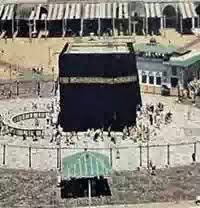
"GENERAL ARTICLES"
"BISMILLA HIRRAHMAAN NIRRAHEEM"
WELCOME! - AS'SALAMU ALAIKUM!! ******** ***** *****
[All] praise is [due] to Allah, Lord of the worlds; - Guide us to the straight path
*- -*
* * In this Blog; More Than Ten Thousand(10,000) {Masha Allah} - Most Usefull Articles!, In Various Topics!! :- Read And All Articles & Get Benifite! * Visit :-
*- WHAT ISLAM SAYS -* - Islam is a religion of Mercy, Peace and Blessing. Its teachings emphasize kind hear tedness, help, sympathy, forgiveness, sacrifice, love and care.Qur’an, the Shari’ah and the life of our beloved Prophet (SAW) mirrors this attribute, and it should be reflected in the conduct of a Momin.Islam appreciates those who are kind to their fellow being,and dislikes them who are hard hearted, curt, and hypocrite.Recall that historical moment, when Prophet (SAW) entered Makkah as a conqueror. There was before him a multitude of surrendered enemies, former oppressors and persecutors, who had evicted the Muslims from their homes, deprived them of their belongings, humiliated and intimidated Prophet (SAW) hatched schemes for his murder and tortured and killed his companions. But Prophet (SAW) displayed his usual magnanimity, generosity, and kind heartedness by forgiving all of them and declaring general amnesty...Subhanallah. May Allah help us tailor our life according to the teachings of Islam. (Aameen)./-
"INDIA "- Time in New Delhi -
''HASBUNALLAHU WA NI'MAL WAKEEL'' - ''Allah is Sufficient for us'' + '' All praise is due to Allah. May peace and blessings beupon the Messenger, his household and companions '' (Aameen)
NAJIMUDEEN M
Dua' from Al'Qur'an - for SUCCESS in 'both the worlds': '' Our Lord ! grant us good in this world and good in the hereafter and save us from the torment of the Fire '' [Ameen] - {in Arab} :-> Rabbanaa aatinaa fid-dunyaa hasanatan wafil aakhirati hasanatan waqinaa 'athaaban-naar/- (Surah Al-Baqarah ,verse 201)*--*~
Category - *- About me -* A note for me *-* Aa My Public Album*-* Acts of Worship*-* Ahlesunnat Wal Jamat*-* Asmaul husna*-* Belief in the Last Day*-* Between man and wife*-* Bible and Quran*-* Bioghraphy*-* Commentary on Hadeeth*-* Conditions of Marriage*-* Da'eef (weak) hadeeths*-* Darwinism*-* Dating in Islam*-* Description of the Prayer*-* Diary of mine*-* Discover Islam*-* Dought & clear*-* Duas*-* Eid Prayer*-* Engagment*-* Family*-* Family & Society*-* family Articles*-* Family Issues*-* Fasting*-* Fathwa*-* Fiqh*-* For children*-* Gender differences*-* General*-* General Dought & clear*-* General hadeeths*-* General History*-* Hadees*-* Hajj*-* Hajj & Umrah*-* Hazrat Mahdi (pbuh)*-* Health*-* Health and Fitness*-* Highlights*-* Hijaab*-* Holiday Prayer*-* I'tikaaf*-* Imp of Islamic Months*-* Innovations in Religion and Worship*-* Islamic Article*-* Islamic History*-* Islamic history and biography*-* Islamic Months*-* Islamic story*-* Issues of fasting*-* Jannah: Heaven*-* jokes*-* Just know this*-* Kind Treatment of Spouses*-* Links*-* Making Up Missed Prayers*-* Manners of Greeting with Salaam*-* Marital Life*-* Marriage in Islam*-* Menstruation and Post-Natal bleeding*-* Miracles of Quran*-* Moral stories*-* Names and Attributes of Allaah*-* Never Forget*-* News*-* Night Prayer*-* Notes*-* Other*-* Personal*-* Personalities*-* Pilgrimage*-* Plural marriage*-* Prayer*-* Prayers on various occasions*-* Principles of Fiqh*-* Qanoon e Shariat*-* Qur'an*-* Qur'an Related*-* Quraanic Exegesis*-* Ramadan Articles*-* Ramadan File*-* Ramadhan ul Mubarak*-* Sacrifices*-* Saheeh (sound) hadeeths*-* Schools of Thought and Sects*-* Seerah of Prophet Muhammad (pbuh)*-* Sex in Islam*-* Sharia and Islam*-* Shirk and its different forms*-* Sms, jokes, tips*-* Social Concerns*-* Soul Purification*-* Story*-* Sufi - sufi path*-* Supplication*-* Taraaweeh prayers*-* The book of Prayer*-* Tips & Tricks*-* Tourist Place*-* Trust (amaanah) in Islam*-* Welcome to Islam*-* Women in Ramadaan*-* Women site*-* Women Who are Forbidden for Marriage*-* Womens Work*-* Youth*-* Zakath*-*
*- Our Nabi' (s.a.w) Most Like this Dua' -*
"Allahumma Salli'Alaa Muhammadin Wa 'Alaa'Aali Muhammadin, kamaa Sallayta 'Alaa' Ibraheema wa 'Alaa 'Aali 'Ibraheema, 'Innaka Hameedun Majeed. Allahumma Baarik'Alaa Muhammadin Wa 'Alaa'Aali Muhammadin, kamaa Baarakta 'Alaa' Ibraheema wa 'Alaa 'Aali 'Ibraheema, 'Innaka Hameedun Majeed." ******
"Al Qur'an - first Ayath, came to our Nabi (s.a.w)
"Read! In the name of yourLord Who created. Created man from clinging cells. Read! And your Lord is Most Bountiful. The One Who taught with the Pen. Taught man what he did not know." (Qur'an 96: 1-5) - ~ - ~ - lt;18.may.2012/friday-6.12pm:{IST} ;(Ayatul Kursi Surah Al-Baqarah, Ayah 255/)
*- Al Qur'an's last ayath came to Nabi{s.a.w} -*
Allah states the following: “Thisday have I perfected your religion for you, completed My favour upon you, and have chosen for you Islam as your religion.” [Qur’an 5:3]
Surat alAhzab 40; Says Our Prophet Muhammad (s.a.w) is the final Prophet sent by Allah'
↓TRANSLATE THIS BLOG↓
IndonesiaArabicChinaEnglishSpanishFrenchItalianJapanKoreanHindiRussian
ShareShare

Follow Me

* A Precious DUA' *
Dua' - '' All praise is due to Allah'. May peace and blessings beupon the Messenger, his household and companions '' - - - O Allah, I am Your servant, son of Your servant, son of Your maidservant; my forelock is in Your hand; Your command over me is forever executed and Your decree over me is just; I ask You by every name belonging to You that You have named Yourself with, or revealed in Your book, ortaught to any of Your creation, or have preserved in the knowledge of the unseen with You, that You make the Qur'an thelife of my heart and the light of my breast, and a departure for my sorrow and a release from my anxiety.
- Tamil -- Urdu -- Kannada -- Telugu --*- ShareShare
**
ShareShare - -*-
tandapanahkebawah.gifbabby-gif-240-240-0-24000.giftandapanahkebawah.gif400692269-4317571d76.jpeg wall-paper.gif story.gif
*: ::->
*

Monday, October 7, 2013

Radicals: The Biggest Anti-Christ Army Islam Faces

Part 1
Radicalism is a system which strives to show extremism, something in
complete violation of true Islam, as the religion itself. In truth,
Islam commands peace, love, friendship, happiness, aesthetics, art,
science, valuing women, forgiveness; in other words, everything
that is beautiful.
Radicalism, on the other hand, offers a completely different
perspective on religion swarming with superstitions and inventions
that are in complete contradiction with the true faith. This system
lacks love, and it feeds on hatred and anger. It is against
kindness, cleanliness, art and science, it bans happiness and beauty
, it harbors immense hatred towards women and children and is
invented by satan to drive people away from religion. By the grace
of Allah, this problem will be completely done away with by the
means of Hz. Mahdi (as).
Radicals have some very indicative qualities explained in the Qur'an
and the hadiths. Now, let's take a look at some of those:
Radicals try to prevent people from following the Qur'an
The radicals try to include things that are not in the Quran, in
Islam. They also reject the parts of the Qur'an that contradict with
their inventions and superstitions. The Qur'an commands love,
compassion, mercy, peace, brotherhood and the Qur'an praises all
beauties and encourages science and art. This fact infuriates the
radicals.
That's why the antichrist uses radicalism and extremists to strike
and destroy Islam from within.
The radicals are the army of the antichrist
Bigotry, radicalism and extremism ARE THE BIGGEST ARMY OF THE
ANTI-CHRIST FIGHTING ISLAM. Prophet Mohammed (pbuh) told us about
it in a hadith:
"Some seventy thousand turbaned scholars of my community will be
subject to the antichrist." (Ahmad Ibn Hanbal, Musnad, p. 796)
Prophet Mohammed (pbuh), with this hadith, made it clear that this
group that will be the most fervent enemy of Hz. Mahdi (as) and
they will try to do the worst harm to religion.
Radicals are against love
Radicals hate everything that's beautiful. They hate flowers,
children, cats, dogs, rabbits. They are completely hollow and empty
inside. There is not even a single shred of love inside them.
No one likes the radicals, their lives are dark
The radicals do not love anyone and no one likes the radicals.
Everyone dislikes the state of mind, the lifestyle and way of the
radicals. Even the radicals hate each other. For this reason, they
are always in a constant clash amongst themselves as well. They can
never be united, or live peacefully and comfortably. Their lives
are just as dark as their souls.
ADNAN OKTAR: Everything about them is irritating. The way they look,
the way they walk, the way they act, the way they think. It's like
they are everything that is irritating, plunged into a sea of
annoying behavior. Naturally everyone hates them. And as if that's
not enough, despite all their uselessness, they are very arrogant,
pompous and conceited. They think no one is good enough. Smirking,
sneering, not liking anyone, looking down on people, not taking
others seriously, those are the things that they do all the time.
However, a Muslim is always very modest and down-to-earth and full
of love, with their feet on the ground with the knowledge that
they might be sent to hell any minute. (December 16, 2011 Aksu,
Kaçkar Tv)
Radicals are also hypocrites
ADNAN OKTAR: Actually radicals and hypocrites are like the same
thing, so a radical is essentially a hypocrite, as well. The main
quality of a radical is his hypocrisy. They should read the verses
about hypocrites in the Qur'an and they can understand what a
radical is. (19 October 2010 Gaziantep Olay)
Radicals hate women
Radicals do not value people, and they don't think highly of
anything that is alive. There is no room for kindness,
consideration or compassion in their souls. As a natural outcome of
that state of mind, they hate women. They abhor women. They treat
women as third class citizens.
ADNAN OKTAR: Their view of women is so twisted; on a constant
basis, they seek to insult women. They do not respect them, talking
about them with disrespectful remarks. They harbor a lot of hatred
towards women, these radicals, these bigots. I am not like that, I
love them so much, they are extremely sweet. And my love for them
is so overwhelming, it surrounds me completely. I feel so much
love for them, I want to protect and take care of all of them. I
feel jealous of all of them, all of them. I don't want to think
about a possibility that any harm could come to them, and if I hear
anything like that, it really disturbs me. (October 25, 2010 Asu
Tv)
ADNAN OKTAR: One has to give thanks to Allah for women, because
Allah gave them the blessing of women. The animosity towards women
is something the radicals are proud of, the hypocrites are proud
of. They hate women. Those tasteless people do not understand
women anyway. However women are great gifts from Allah. Prophet
Mohammed (pbuh) says: 'I was made to love three things: one my
beloved salat, second; beautiful smells and third, righteous
women." (October 26, 2010 Gaziantep Olay Tv)
ADNAN OKTAR: Do not believe in those fake hadiths which are against
women. All those made up hadiths which insult women, they are the
products of radicals who hate women, the blinded, hateful
psychopaths. Woman is a very holy, very valuable being. Allah
created them as an ornament, as the most beautiful adornment in the
world. Satan wants people to hate women as he truly hates women.
Darwinists also hate women and so do the communists and the
fascists, and the ones that hate women the most, are the radicals.
They see women as low, third-class citizens. (October 26, 2010
Gaziantep Olay Tv)
Radicals are liars
Lying is one of the most common methods of the radicals to disguise
their true face. It is a habit for them to lie.
ADNAN OKTAR: "Do not say about what your lying tongues describe:"
The hypocrites are very big liars, they lie all the time. The
Qur'an draws attention to that. They are masters of lying. It is
not only the religion that the hypocrites and the radicals lie
about. They lie about their mistakes. They lie when praising
themselves, they lie about everything, they lie constantly. Lie is
their food. The Qur'an refers to that. It says "Do not say about
what your lying tongues describe: This is halal and this is haram."
He says this is halal, this is legal. Based on what? Based on his
own ideas. He says this is haram, illegal. Why? He says because he
believes so. Is it in the Qur'an? No. (January 17, 2011 Adıyaman
Asu)
Radicalism is the venom that the antichrist uses against Muslims
ADNAN OKTAR: Radicalism is a sinister poison that the antichrist
uses against the Muslims. The antichrist spiked the water of
Muslims, with an invincible poison. Some come disguised in a
turban, others a cloak, some with a certain type of mustache. They
used that disguise to poison. Radicalism is such a sinister threat,
it is the biggest weapon of the antichrist against Islam. It is
the strongest weapon against Islam, striking Islam from within.
Many Europeans think that Muslims are growling, bloody, brutal
people with bushy hair and beards, looking like beasts. We
destroyed that idea and they were shocked to see the truth. And we
showed the true modern face of Muslims to Europeans. Because
Muslims are the world's most quality, most perfect people. They are
the most modern, most decent people in the world; but not everybody
knew that. It is usually known, but there were some places where
people didn't know this truth. We opened many doors, we started a
new era. We also helped some of our conservative brothers and
sisters, too…

Short History of Hajj

Hajj literally means 'to set out for a place'. Islamically however it
refers to the annual pilgrimage that Muslims make to Makkah with the
intention of performing certain religious rites in accordance with the
method prescribed by the Prophet Muhammad.
Hajj and its rites were first ordained by Allah in the time of the
Prophet lbrahim [Abraham] and he was the one who was entrusted by
Allah to build the Kaba - the House of Allah - along with his son
Ismail [Ishmael] at Makkah. Allah described the Kaba and its building
as follows:
"And remember when We showed Ibrahim the site of the [Sacred] House
[saying]: Associate not anything [in worship with Me and purify My
House for those who circumambulate it [i.e. perform tawaaf] and those
who stand up for prayer and those who bow down and make prostration
[in prayer etc.]."
[Surah Al-Hajj 22:26]
After building the Kaba, Prophet Ibrahim would come to Makkah to
perform Hajj every year, and after his death, this practice was
continued by his son. However, gradually with the passage of time,
both the form and the goal of the Hajj rites were changed. As idolatry
spread throughout Arabia, the Kaba lost its purity and idols were
placed inside it. Its walls became covered with poems and paintings,
including one of Jesus and his mother Maryam and eventually over 360
idols came to be placed around the Kaba.
During the Hajj period itself, the atmosphere around the sacred
precincts of the Kaba was like a circus. Men and women would go round
the Kaba naked, arguing that they should present themselves before
Allah in the same condition they were born. Their prayer became devoid
of all sincere remembrance of Allah and was instead reduced to a
series of hand clapping, whistling and the blowing of horns. Even the
talbiah[ 1]was distorted by them with the following additions:'No one
is Your partner except one who is permitted by you. You are his Master
and the Master of what he possesses'.
Sacrifices were also made in the name of God. However, the blood of
the sacrificed animals was poured onto the walls of the Kaba and the
flesh was hung from pillars around the Kaba, in the belief that Allah
demanded the flesh and blood of these animals.
Singing, drinking, adultery and other acts of immorality was rife
amongst the pilgrims and the poetry competitions, which were held,
were a major part of the whole Hajj event. In these competitions,
poets would praise the bravery and splendor of their own tribesmen and
tell exaggerated tales of the cowardice and miserliness of other
tribes. Competitions in generosity were also staged where the chief of
each tribe would set up huge cauldrons and feed the pilgrims, only so
that they could become well-known for their extreme generosity.
Thus the people had totally abandoned the teachings of their
forefather and leader Prophet Ibrahim. The House that he had made pure
for the worship of Allah alone, had been totally desecrated by the
pagans and the rites which he had established were completely
distorted by them. This sad state of affairs continued for nearly two
and a half thousand years. But then after this long period, the time
came for the supplication of Prophet Ibrahim to be answered:
"Our Lord! Send amongst them a Messenger of their own, who shall
recite unto them your aayaat (verses) and instruct them in the book
and the Wisdom and sanctify them. Verily you are the 'Azeezul-Hakeem
[the All-Mighty, the All-Wise]."
[Surah Al-Baqarah 2:129]
Sure enough, a man by the name of Muhammad ibn 'Abdullaahwas born in
the very city that Prophet Ibrahim had made this supplication
centuries earlier. For twenty-three years, Prophet Muhammadspread the
message of Tawheed [true monotheism] - the same message that Prophet
Ibrahim and all the other Prophets came with - and established the law
of Allah upon the land. He expended every effort into making the word
of Allah supreme and his victory over falsehood culminated in the
smashing of the idols inside the Kaba which once again became the
universal center for the worshippers of the one True God.
Not only did the Prophet rid the Kaba of all its impurities, but he
also reinstated all the rites of Hajj which were established by
Allah's Permission, in the time of Prophet Ibrahim. Specific
injunctions in the Quran were revealed in order to eliminate all the
false rites which had become rampant in the pre-Islamic period. All
indecent and shameful acts were strictly banned in Allah's statement:
"There is to be no lewdness nor wrangles during Hajj."
[Surah al-Baqarah 2:197]
Competitions among poets in the exaltations of their forefathers and
their tribesmen's achievements were all stopped. Instead, Allah told
them:
"And when you have completed your rites [of Hajj] then remember Allah
as you remember your forefathers; nay with a more vigorous
remembrance."
[Surah al-Baqarah 2:200]
Competitions in generosity were also prohibited. Of course, the
feeding of the poor pilgrims was still encouraged as this was done
during the time of Prophet Ibrahim but Allah commanded that the
slaughtering of the animals which was done for this purpose should be
done seeking the pleasure of Allah rather than fame and the praise of
the people. He said:
"So mention the name of Allah over these animals when they are drawn
up in lines. Then, when they are drawn on their sides [after the
slaughter], eat thereof and feed the beggar who does not ask, and the
beggar who asks."
[Surah al-Hajj 22:36]
As for the deplorable practice of spattering blood of the sacrificed
animals on the walls of the Kaba and hanging their flesh on alters,
then Allah clearly informed them that:
"It is neither their meat nor their blood that reaches Allah, but it
is Taqwaa (piety) from you that reaches Him."
[Surah al-Hajj 22:37]
The Prophetalso put a stop to the practice of circling the Kaba in a
state of nudity and the argument that the pagans put forward to
justify this ritual was sharply rebutted in Allah's question:
"Say: Who has forbidden the adornment [i.e. clothes] given by Allah
which He has produced for His Slaves?"
[Surah al-A'raaf 7:32]
Another custom which was prohibited through the Quran was that of
setting off for Hajj without taking any provisions for the journey. In
the pre-Islamic period, some people who claimed to be mutawakkiloon
(those having complete trust in Allah) would travel to perform Hajj
begging for food through the whole journey. They considered this form
of behavior a sign of piety and an indication of how much faith they
had in Allah. However Allah told mankind that to have sufficient
provisions for the journey was one of the preconditions for making
Hajj. He said:
"And take a provision [with you] for the journey, but the best
provision is at-Taqwaa (piety)."
[Surah al-Baqarah 2:197]
In this way, all the pre-Islamic practices, which were based on
ignorance, were abolished and Hajj was once more made a model of
piety, fear of Allah, purity, simplicity and austerity. Now, when the
pilgrims reach the Kaba, they no longer find the carnivals and the
frolic and frivolity that had once occupied the minds of the pilgrims
there before. Now, there is the remembrance of Allah at every step and
every action and every sacrifice was devoted to Him alone. It was this
kind of Hajj that was worthy of the reward of paradise, as the
Prophetsaid:"The reward for an accepted Hajj is nothing less than
paradise."
May Allah grant us all the ability to visit His House and perform the
Hajj in the manner of the Prophet Muhammad. Aameen.

Basics of Hajj

The ritual of Hajj is performed in themonth of ZulHijjah, thetwelfth
and last monthin the Islamic lunar calendar. In Arabic, the word hajj
literally meansgoing to a place for the sake of visiting; and
according to the terminology of the Islamic Sharee'ah, it implies to
the act of going to the Baitullah in Mecca to observe the necessary
devotions related to pilgrimage. The hajj is mandatory upon all able
Muslims, men and women, at least once in a lifetime.
Apart from worship of Allah (SWT), the command for hajj offers Muslims
theopportunity to interact with their brethren from around the globe.
The command concerning the hajj is found in several Qur'anic verses,
among them:
"And when We assigned to Ibraheem the site of the Sacred House
(Ka'bah), saying 'Do not associate with Me anything, and purify My
House for those who circumambulate the Ka'bah, and those who stand up
and prostrate and bow in prayer. And proclaim the Pilgrimage among
men, and they will come to you on foot and mounted on every kind of
camel, lean on account of journeys through deep and distant mountain
highways." [Surah Al-Hajj: Verse 26-27].
The verse above confirms that Prophet Ibraheem (a.s.) worshipped at
the Sacred House of Allah SWT (Baitullah - another name of Ka'bah)
long before the advent of Judaism or Christianity.
For that matter, some Bibilical historians say that he lived in the
first half of the second millennium B.C, that is prior to the
establishment of the Indus civilizations of Harappa and Mohenjo-Daro;
hence, prior to the birth of Hinduism. By virtue of it being thefifth
pillar of Islam, the hajj literally makes Islam the oldest religion on
earth.The hajj today is thelargest gathering of human beingson earth.
Besides this annual ritual, there is a lesser hajj known asUmrahthat
can be performed at any time during the year except on the days of the
greater hajj, specificallyfrom 9th till 13th of ZulHijjah.
On the benefit of hajj, Abu Hurairah (r.a.) narrates that he heard the
Prophet SAW say:
"Whoever performs Hajj and does not commit any Rafath (obscenity) or
Fusooq (transgression), he returns (free from sin) as the day his
mother bore him." [Bukhari]
There are three categories of hajj:Tamattu', Qiraan and Ifraad. In brief,
*.Tamattu'refers to the act of performing umrah in the month of hajj.
*.Qiraan, on the other hand, refers to a pilgrim who performs hajj and
umrah jointly;
*.Ifraadmeans that a pilgrim wears the ihraam for hajj only and he/she
performs his umrah only after completing the greater hajj.
The most beautiful aspect of hajj is theuniformity. All the pilgrims
have to do exactly the same acts at the same sites around Mecca on
four days consecutively. All wear theihraamgarb, a great majority of
which iswhitein color.
Once the ihraam is donned and the intention for hajj uttered, male
pilgrims are prohibited from wearing stitched clothes, shoes that
cover the anklebone, a hat or turban or anything that covers the head.
Women are prohibited from wearing the veil that covers their faces
(burqaa) and also gloves.
Both men and women are prohibited from wearing any kind of perfume or
hair oil, cropping or shaving hair on any part of the body, cut the
nails, have sexual intercourse, hunt and kill animals, or to be
involved in any form of marriage proposal.

Fathwa, - Need guidance on hijab...

Question:
I am in the state of thinking about wearing my hijab. I want to but
there are a lot of things that come with hijab such as what you wear
and the way to approach me. I am quite loud, and I think that is a
negative attraction I will bring towards Muslim women what should I
do?
Answer:
Assalamu alaykum
In the name of Allah, the Most Beneficent the Most Merciful.
Frankly speaking, this is not an issue you should delay in. Start
wearing your hijab and that in itself should guide you towards
correcting your loud behavior due to the feeling of modesty and
shyness it will bring. What we cannot do completely we should at least
do partly, otherwise, it is a deception of Shaytan to make us delay in
such important issues.
And Allah knows best.

Fathwa, - My convert wife says she does not like the way hijab looks on women, though she ‘accepts’ it… d

Question:
My convert wife says she does not like the way hijab looks on women,
though she �accepts� it� does this affect her faith?
Answer:
In the Name of Allah, Most Merciful and Compassionate. May His
abundant blessings and most perfect of peace be on His Beloved
Prophet, the best of creation, and his family, companions and
followers.
Walaikum assalam wa rahmatullah,
What she says is an error, but not kufr. The way to change such
attitudes is by gently and positively encouraging her towards the
company of religious Muslim women and attending sessions of beneficial
and inspiring knowledge and remembrance of Allah.
And Allah alone gives success.

Fathwa, - Details on uncovered nakedness (awra) and the validity of prayer

Question:
If upon completion of my salaah, I find that a few strands of my hair
was showing out of my burkaa, (head covering), do I have to repeat my
salaah?
Answer:
Assalamu alaykum
Covering one�s nakedness (awra) is a condition for the validity of
one�s prayer. The awra of a man is from his navel to his knees. The
awra of a woman is all of her body excluding her face, hands and feet
(though it is superior for her to cover her feet as well, as many
scholars considered the feet to be part of her awra). If some part of
one�s nakedness shows during the prayer then it is excused so long as
the exposed area is less than a quarter of a �limb�. A �limb� is an
independent body part. Ibn Abidin mentions that the awra of the male
is broken down into eight limbs. These he lists as being;
1. The penis and what surrounds it.
2. The testicles and what is surrounds them.
3. The anus and what is surrounds it.
4-5. Each of the two buttocks.
6-7. Each thigh with the knee.
8. The area between the navel and the pubic region including what is
parallel to it from the sides and the back.
He mentions that the limbs of a woman are :
1-2. Each thigh with the knee.
3-4. Each buttock.
5. The private area and what surrounds it.
6. The anus.
7. The stomach.
8. The back and the sides.
9-10. Each shin (lower leg) with the ankle.
11-12 Each breast.
13-14. Each ear.
15-16. Each upper-arm with the elbow.
17-18. Each forearm with the wrist.
19. The chest.
20. The head.
21. The hair.
22. The neck.
23-24. Each shoulder. [Radd al-Muhtar, 1:274, Dar li Ihya al-Turath al-�Arabi]
So just showing a few strands of hair will not affect the prayer as
these will clearly be less that a quarter of one�s hair.
If a number of limbs are partially exposed then the exposed areas are
added up and compared to the area of the smallest exposed limb. If it
is equal to or greater in area than a quarter of the smallest exposed
limb then the prayer is invalid otherwise not. For example if a lady�s
one wrist and one ankle are exposed one will add up the exposed areas
and compare them to the area of the smallest limb which in this case
is the forearm (as the wrist is part of the forearm). As both the
wrist and the ankle do not amount to a quarter of the forearm her
prayer is valid. If however one wrist, one ankle and a small part of
the ear are exposed then her prayer is most likely invalid as the
wrist and ankle would most probably amount to a quarter of the ear,
the smallest exposed limb.
Of course when adding up exposed areas of the body one need only
estimate the areas; there is no need to get out a ruler and calculator
and start calculating.
One thing to be kept in mind is that a quarter of a limb is only
excused in terms of the validity of the prayer. To intentionally
expose any part of one�s awra is unlawful even though one�s prayer
might be legally valid. [Hashiya al-Tahtawi �ala Maraqi al-Falah,
1:332, Dar al-�Ilm al-Hadith]

Social evils that are destroying Muslim communities - II

Severing ties with kinfolk: The most important of kinfolk are one's
parents, and yet we find many people dealing with them in an
inappropriate manner or even severing ties with them altogether. As
for those who do try to fulfil the needs of their parents, many of
them do it begrudgingly, while expressing discontent or complaining
that it is a burden upon them. This is in spite of the fact that
Allaah The Almighty commands us to not say even the least expression
of discontent in this regard, saying )what means(:}"…Say not to them
]so much as[ 'Uff,' and do not repel them but speak to them a noble
word."{]Quran, 17': 23[
The mother of Huthayl bin Hafsahsaid,
"He would collect wood during the summer and peel off the outer layer
of bark himself. Then, when winter would come, he would come to me
whilst I was praying, light a brazier )in my room( and place the
peeled wood in it, as this does not give harmful smoke. He would do so
just so that I would be warm during prayer. He would do so even though
we had a servant who could do the job. Whenever I thought of stopping
him and commanding him to return to his family, I would remember why
he was doing it, and thus I would allow him to continue."
Why was he doing this himself despite him having a servant who could
have done it for him? It was nothing but a reflection of his full
dutifulness towards his mother.
This type of nobility is not limited to ones parents; rather, one
should be kind to all his relatives and even his fellow Muslims.
Wasting time: The issue of wasting time is a very important one
indeed. We must be careful about it and hold ourselves to account
regarding it because we spend much of our time uselessly instead of
spending it in acts of obedience to Allaah, as it should be utilised.
Allaah The Almighty Says )what means(:}"And it is He who has made the
night and the day in succession for whoever desires to remember or
desires gratitude."{]Quran, 25: 62[
Therefore, time was created so that we would fill it with acts of
obedience to Allaah, The Almighty but many people do the exact
opposite of this. The Salaf )righteous predecessors(were very keen to
make use of every second of their time. Al-Hasansaid, "I have met some
people who were stingier with their time than they were with their
wealth."
People nowadays waste their times in games, late nights, socializing,
watching television and in vain talk. They may even go as far as doing
so at the expense of their religious obligations, such as their daily
prayers, and so on.
Wasting wealth:Many men cave in under pressure from their wives and
children and therefore spend extravagantly, but when they are asked to
spend in charity, one would find that they are so stingy that if they
were to pull out two bills to give in charity, one would invariably
return to his pocket. However, if this same person were to go to a
restaurant, he would have no problem in spending multiples of this
amount.
Allaah The Almighty will ask us about our wealth because we were
informed as such by the Prophet. Abu Barzahreported, "The Messenger of
Allaahsaid:"Man's feet will not move on the Day of Resurrection before
he is asked about his life and how he consumed it, his knowledge and
what did he do with it, his wealth and how he earned it and how he
disposed of it, and about his body and how he wore it
out.""]At-Tirmithi[
This does not imply that people do not spend generously or that there
are no people who do any of the abovementioned matters correctly. The
purpose of highlighting these points is to serve as a reminder for
Muslims – at both the individual and community level – so that we
realize the importance of these matters and hold ourselves to account
with respect to them, as there are many of us who are failing to do
so.

Showing respect for customs and traditions

Man is born without any experience and then is influenced by the
customs and traditions from those around him. In this way, customs and
traditions are conveyed from one generation to the next.
Customs and traditions appear in the actions and works practiced by
individuals that is oft-repeated and represents a daily or cyclic
program for their life.
Customs are actions that are a norm for people to do and are repeated
on many different occasions. Traditions involve a new generation
copying the methods of the previous generation and imitating it in
different affairs.
Emergence and Development of Customs and Traditions:
It is difficult to determine the emergence, development and expansion
of customs and traditions because they are parts of the social
activity of individuals in any random sector of society. They do not
appear all of a sudden. On the contrary, it takes years until they
become well-established and even many more years until they change or
evolve.
Customs and traditions often emerge to serve a social function
benefiting all or some individuals in the society. It becomes a social
pattern that helps strengthen social relations among the individuals
of a community. This leads to a collective agreement upon certain
behaviors to be practiced in the community.
Customs and traditions act as a chain whose links are conveyed from
one generation to the next. This conveyance may be accompanied by some
changes through omissions or additions, being positive or negative, in
accordance with the conditions and values of every generation.
Moreover, the social function of the customs or traditions may fade or
even expire as a result of the change of social conditions. But they
survive due to psychological pressure on the individuals who repeat
them and feel that they grant them safety and reassurance and
guarantee their consistency against any new changes.
Women have an important and effective role in spreading customs and
traditions and conveying them from one generation to the next. This
stems from the theory of their great role in disciplining and
maintaining )the family(. For this reason, she bears the greatest
responsibility for adjusting them in accordance with the right Islamic
method. In confirmation of that Allah The Almighty Says )what means(:
•}And, ]moreover[, this is My path, which is straight, so follow it;
and do not follow ]other[ ways, for you will be separated from His
way. This has He instructed you that you may become righteous.{]Quran
6:153[
•}It is not for a believing man or a believing woman, when Allah and
His Messenger have decided a matter, that they should ]thereafter[
have any choice about their affair. And whoever disobeys Allah and His
Messenger has certainly strayed into clear error.{]Quran 33:36[
The Relationship of the Islamic method with Customs and Traditions:
With the spread of Islam to many countries that each have their own
different customs and traditions, the Islamic method takes three forms
in relation with them:
The first is to support the customs that encourage virtuous principles
and high values and enhancing them according to the eternal Shari'ah
principles. Among these are the neighbor's right, generously hosting
the guest, helping the poor, relieving the needy and assisting the
stranger.
The second is to straighten the customs which have two aspects: one
good and the other bad, by placing emphasis on the good, forbidding
the bad and reforming it according to the Noble Shari'ah.
The third is to resist the straying and misleading customs and
traditions, which oppose its values and principles, and may lead to
gaps in society, disorder of values, the spread of corruption and vice
and the loss of security and tranquility. An example of this is the
practice of girls being buried alive. The Arabs )during the
pre-Islamic days( regarded having a girl as a source of pessimism and
an object of contempt. Then the Quran disapproved of this hideous
custom and protected the girl from this criminal act. He The Almighty
Says )what means(:}And when one of them is informed of ]the birth of[
a female, his face becomes dark, and he suppresses grief. He hides
himself from the people because of the ill of which he has been
informed. Should he keep it in humiliation or bury it in the ground?
Unquestionably, evil is what they decide.{]Quran 16:58-59[
And, the Messenger of Allah, sallAllahu 'alayhi wa sallam, said:"He,
who has a female )daughter( and he does not bury her alive, disgrace
her nor give preference to his male child over her, Allah will Admit
him into Paradise."]Abu Daawood[
Before Islam, the young girl would also suffer from being coerced into
marriage regardless of her will and consent. Thereupon, Islam
glorified her in this respect when the Messenger of Allah, sallAllahu
'alayhi wa sallam, said:"No previously married woman should be given
in marriage without her consent and no virgin should be given in
marriage without her permission."]Muslim[ Before Islam, the young girl
also suffered being deprived of any inheritance. But Islam assigned to
her a right in the inheritance of her father. Allah The Almighty Says
)what means(:}For men is a share of what the parents and close
relatives leave, and for women is a share of what the parents and
close relatives leave, be it little or much - an obligatory
share.{]Quran 4:7[
Bad Customs:
These days, many bad customs have become widespread among the general
population and it is even more widely spread among women. Among these
customs is the intention of seeking to draw closer to Allah The
Almighty using the dead and Awliyaa' )Pious people who are close to
Allah The Almighty( as a medium. Wailing and screaming upon the death
)of a loved one(. Similar bad customs include visiting psychics and
fortune tellers and following their errors, attachment to amulets,
talismans and charms assuming they bring good and avert evil. Also,
Mushaaharah or Kabsah, which is the belief that if a man with a shaved
head carrying meat, red dates, eggplants or similar items enters upon
a confined woman, he would cause the milk to cease to flow )from her
breast( or delay her pregnancy. And, these are examples of bad customs
that do not please Allah The Almighty and His Messenger, sallAllahu
'alayhi wa sallam, like putting on toupees, visiting coiffeurs,
lengthening finger and toe nails, using dyes and colors to adorn them,
lagging behind the latest fashions of clothing )gothic and other
styles that stick out from the norm(, and so on.
The Duty of the Muslim:
To avoid the potential harms of these matters and prevent corruption
due to them, it is the duty of the Muslim to abandon every custom and
tradition that violates even a single principle of the religious
fundamental principles. He must pause to reflect upon all customs and
traditions and weigh them using the balance of the genuine Islamic
method and adjust whatever does not agree with it or comply with its
rules. If there is a custom or tradition that violates one's creed and
opposes one's religion, he should throw it far away without
hesitation, bashfulness or regret. He should flee from bad customs and
evil traditions and rush toward the secure shadows of Islam
entertaining no fear of critics for the Sake of Allah. His pattern
should follow that of the righteous believers in the ages of Islam who
responded to the call of truth and sacrificed what was valuable to
them in support of it.
Fabricating History:
Some historians fabricated this eternal image of the great men and
leaders of this Ummah. They presented the Muslim caliphs in a light of
men whose main concern was only food and drink, to the extent that it
is attributed to Mu'aawiyah ibn Abi Sufyaan, the Companion of the
Messenger of Allah, sallAllahu 'alayhi wa sallam, that he would eat
very compulsively. This is something unimaginable even from cattle,
let alone from a revered Companion who learnt in the school of the
Messenger of Allah, sallAllahu 'alayhi wa sallam, that a man should
not eat and drink in excess. They also represent to us such a caliph
as Haaroon Ar-Rasheed, as a man who loved women and drank alcoholic
drinks, and so on. All this is attributed to a man who, in his age,
witnessed many conquests, was himself a Mujaahid )one who strives with
his wealth and life in the Path of Allah, The Almighty(, a devout
worshipper of Allah, pious and righteous.
It is obvious from the biographies of such personalities that what has
been said about them are no more than invented lies whose initiatory
purpose is to distort the image of Islam through the character
assassination of its caliphs. As a result, they attempt to claim that
their customs and traditions appear to be in opposition to the innate
human common sense so that the Ummah would criticize its symbols and
celebratory figures. Afterwards, they would have nothing worthy of
mentioning for themselves in the history of mankind. Resentful
criminal historians distorted not only the image of men, but the
believing women as well. During the pre-Islamic days, they would let
their head covers hang down from behind their heads, uncovering their
breasts, necks and collars.
With the emergence of Islam and its spreading light, Allah The
Almighty Says, addressing the women by way of disciplining )what
means(:}and to wrap ]a portion of[ their headcovers over their
chests.{]Quran 24:31[. Upon which, the men turned to their wives to
recite to them what had been revealed by Allah The Almighty in order
to guide them and there was no woman but that she caught hold of her
sheet )of wool( and covered her head )and face( with trust and belief
in the clear Verses revealed by Allah The Almighty. In the morning,
they performed the morning prayer behind the Messenger of Allah,
sallAllahu 'alayhi wa sallam, with their heads covered and motionless,
as if there were crows perched on their heads. ]Abu Daawood and Ibn
Abi Haatim[. But the people represented their behavior as retardation
and not in harmony with the advanced time. Rather, they had their
women come out half-dressed as if they were nude, in order that the
dissolute wolves )amongst men( would quench their craving by the
unlawful glance, and whatever consequent traces of her body he may
recall.
Inherited customs and traditions are among the affairs that are the
most detrimental upon the religion of Allah The Almighty because they
are habitual, the soul inclines to them, the people agree with them
and it is difficult to abandon them. From this point of view, it is
incumbent upon the Muslim to discard anything that opposes the Islamic
Sharee'ah and play an effective role in changing and virtuously
protecting his community in order that its customs and traditions
would be compatible with the Sharee'ah of Allah The Almighty. Men and
women are equal in this respect, perchance the children would rise as
a strong generation, carrying the torch of Islam, and enlightening the
way for all people.

The essential pillars of marital life

Marital happiness is a dream that all husbands and wives have had
since the beginning of time and many spouses are still trying to
fulfill this dream through all possible means. Nevertheless, being
away from the true teachings of Islam and sound prophetic guidance has
led them to confusion between the different means: Western and
Eastern. However, when one returns to the Sunnah of the Prophethe will
inevitably reach his goal. Allaah The Almighty has granted success to
one of the callers to Allaah to compile the pillars of the marital
life, which are:
First:good intention:
This means that the spouses should begin their marital life with a
sincere intention to obtain the pleasure of Allaah The Almighty. This
would be displayed in the following matters:
1 – Maintaining ones' chastity, guarding the private parts against
committing sin, lowering the gaze and fulfilling each spouse's
responsibility towards the other.
2 – Establishing the Muslim home in concordance with the methodology
of Allaah The Almighty.
3 – Producing righteous offspring who affirm that there is nothing
worthy of worship except Allaah and who worship Him as He should be
worshipped.
Second:Cooperation with one another in obeying Allaah The Almighty.
Third:Establishing a Muslim home and family.
Fourth:Building the marital relationship on love, mercy and kind association.
Before talking about marital happiness, there is a set of rules that a
wife should comprehend and be fully aware of:
First:a human being has three levels:
This is specific to mental and cognitive aspects.
Second:a woman must distinguish between two things:
This is specific to instincts and desires )the abdomen and sexual organs(.
2 - Good association )affection and mercy(, and this also has its components.
Satisfying the husband's needs according to his age as well as his
economic status are components of stability. The woman should know the
man's needs and the manner in which he thinks.
A righteous woman can achieve her husband's essential needs in terms
of security and efficiency, as stated in Maslow's hierarchy of needs.
This includes the basic needs:
Through maintaining his wealth and honor, in addition to patience,
chastity, and so on.
Through satisfying basic needs, sexual desires etc.
He is looking for a loving wife and a friend. Add-ons:
Third, a pious woman never asks until she gives:
Such a woman gives first and then asks. A Bedouin woman offered her
daughter the following advice on her wedding day, "Be an earth for him
and he will be your sky; be a bondmaid for him and he will be your
slave."
This is an indispensable introduction that should be known before
discussing marital happiness and its components in detail.
Sufficiency:
Security:
3 - The lower level:
1 – The stability of the home, and this has its components.
2 – The middle level:
1 - The highest level:
This is specific to feelings and emotions )heart and sentiment(.
Fifth:Forgiveness and pardoning.
Sixth:Calmness at times of anger.

Dought & clear, - Conditions for Prayer, - Woman praying in a single garment.

For offering salaat(namaz), is it compulsory for the woman to cover
herself in two garments ,such as a pant for the lower half and a shirt
for the upperhalf or can she wear only one garment covering the body
as per Islamic code of dressing. Please enlighten me.
Praise be to Allaah.
The Muslim woman must cover her entire body when praying, apart from
her face, because her whole body is 'awrah during prayer. According to
the hadeeth, "Allaah does not accept the prayer of a woman who is of
child-bearing age unless (she is covered) with a khimaar." The cover
must be ample and cover all the body, and it must be loose so that it
does not show the shape of the body. It is sufficient for it to be one
garment if it covers the body. As for the ruling on wearing pants or
trousers, please see question no. 5066، 10436and 21438.
Shaykh 'Abd al-Kareem al-Khudayr.
We should point out here that there is no specific dress that is
required for the Muslim woman to pray and that her prayer is invalid
if she prays in any other garment, as many women in some Muslim
societies think. Rather the ruling has to do with covering, so if she
is covered properly, then her prayer is valid.

Dought & clear, - Conditions for Prayer, - Praying deliberately when one is not taahir is a major sin but it is not kufr.

I know that its not allowed to pray if you have "Janabet" Now if
someone have prayed with "Janabet" then what is the ruling of Islam on
him. Let me make you the setuation little more clear. This person's
age was 20~21. And he went with his dad to mosque, over there his
father "Ordered" him to conduct Jamat (Nimaz). Now in this setuation
the guy was not able to tell his dad that he is in "Janabet" and needs
Ghusal, so he did the "Wozoo" and conducted the jamat. Now from
inside, he is broken totaly, and worried about his this SIN, he read
in one book that if you conduct "Salat" wihtout WOZOO, then you are
OUT OF ISLAM !!! .... Now in this setuation what he has to do ? Is he
Out of ISLAM or NOT ? How he can overcome of his this SIM ... and do
TOWBA ? Do he need to do his EMAN's TAJDEED ? I will be loooking
forward to hear from your side, a detailed answer. I know that u have
said that ask only related to Ramazan questions, but I have discovred
your site now. So I hope that when u will have time then u will replay
for this IMPORTANT question. My friend is really in Mental Trouble due
to what happned.
Praise be to Allaah.
Firstly:
It is well known and no Muslim has any excuse for not knowing that
purification from impurity, whether minor or major, is obligatory and
is a condition of prayer being valid. Whoever prays without purifying
himself, whether deliberately or by mistake, his prayer is invalid and
he has to repeat it; if it is done deliberately then he has committed
a major sin.
Shaykh al-Islam Ibn Taymiyah (may Allaah have mercy on him) said:
The Muslim should not pray facing any direction other than the qiblah,
or without doing wudoo', bowing and prostrating. Whoever does that
deserves to be criticized and punished. End quote.
Manhaaj al-Sunnah al-Nabawiyyah, 5/204
There is a stern warning issued to one who does that:
It was narrated from 'Abd-Allaah ibn Mas'ood (may Allaah be pleased
with him) that the Prophet(peace and blessings of Allaah be upon him)
said: "It was ordered that one of the slaves of Allaah be flogged in
his grave with one hundred lashes, but he kept asking until it was
reduced to a single blow. So he was given a single blow, then his
grave was filled with fire. When he came round, he said: 'Why did you
flog me?' It was said to him: 'You offered one prayer without being
taahir, and you passed by one who was being wronged and did not help
him.'" Narrated by al-Tahhaawi inMushkil al-Athaar, 4/231; classed as
hasan by al-Albaani inal-Silsilah al-Saheehah, 2774.
Secondly:
The scholars are agreed that whoever prays without being taahir
because he believes that it is permissible or out of disrespect is a
kaafir. He should be asked to repent, and if he repents, all well and
good, otherwise he should be executed.
But if he prays without wudoo' out of negligence, not because he
thinks it is permissible or out of disrespect, Imam Abu Haneefah (may
Allaah have mercy on him) is of the view that this is also kufr, but
the majority of scholars are of the view that he is not a kaafir,
rather he has committed a major sin.
Al-Nawawi (may Allaah have mercy on him) said:
If he knows that he is impure and that it is haraam to pray when one
is impure, then he has committed a grave sin, but he does not become a
kaafir thereby in our view, unless he regards that as permissible. But
Abu Haneefah said: He has committed kufr because of his disrespect.
Our evidence is that it is a sin so it is akin to zina and the like. End quote.
Al-Majmoo'(2/84);Rawdat al-Taalibeen, 10/67
See the Hanafi view inal-Bahr al-Raa'iq, 1/302, 151; 5/132;Haashiyat
Ibn 'Aabideen, 3/719
The one who has prayed without purifying himself has to repent and
seek forgiveness, and resolve not to do such a thing again, then he
should repeat the prayer that he offered without purifying himself.
Allaah accepts the repentance of those who repent to Him. And he does
not have to enter Islam anew.
And Allaah knows best.

Dought & clear, - Conditions for Prayer, - She prayed when she was junub by mistake – does she have to repeat the prayers?.

I prayed Fajr and Zuhr and 'Asr without having done ghusl for janaabah
because I forgot. After having a bath at Maghrib time I repeated these
prayers before praying Maghrib. Then my husband told me that it is
essential to have the right intention (niyyah) for doing ghusl, so I
did ghusl and prayed 'Isha' and I did not repeat the rest of the
prayers. Are my prayers from Fajr to Maghrib valid? What do I have to
do?.
Praise be to Allaah.
Firstly:
Whoever prays when he is not in a state of tahaarah (purity) has to
purify himself and repeat the prayer, according to scholarly
consensus, even if he forgot. Al-Nawawi said inal-Majmoo'(2/78):
The Muslims are unanimously agreed that it is haraam to pray when one
is impure, and they are unanimously agreed that the prayer is not
valid whether he knew that he was impure or was unaware of it or
forgot. But if he prayed not knowing it or having forgotten it, there
is no sin on him; if he knew that he was impure and that it is haraam
to pray when one is impure, then he has committed a grave sin.
Secondly:
Ghusl following janaabah is not valid unless one has the intention of
doing ghusl, because the Prophet(peace and blessings of Allaah be upon
him) said: "Actions are but by intentions." Narrated by al-Bukhaari,
1; Muslim, 1907.
The site of the intention is the heart; it is not required to speak it out loud.
If you remembered that you were in a state of janaabah before you took
a bath at Maghrib time, and you took a bath for that reason and
repeated the prayers that you had offered when you were junub, then
that ghusl is valid because the intention was there. You did well to
repeat the prayers as this is what is required of you.
But if you did not remember that you were in a state of janaabah until
after you had had the bath, and you took a bath in order to clean
yourself or to cool yourself down, for example, then this bath did not
take away the janaabah because there was no intention to do so. In
that case you have to repeat the ghusl and the prayers. You repeated
the ghusl, so all that remains for you to do is to repeat the prayers.
So repeat Fajr, Zuhr, 'Asr and Maghrib.
And Allaah knows best.

For children, - The survival tactics of polar animals

Emperor Penguins
Emperor penguins are able to dive to depths of 500 meters (1,640 feet)
for up to 20 minutes with no adverse effects to their respiration or
blood pressure. They also possess the ability to adapt to these
conditions in different ways. While diving, they are able to lower
their heartbeats from 200 a minute to only 60, thus allowing them to
store extra myoglobin.
How Can Penguins Hold Their Breath for So Long?
Myoglobin is a protein present at high levels in these birds' muscles.
These myoglobin proteins bind to themselves high numbers of oxygen
molecules. In other words, the penguin conserves the oxygen it will
need not in the air held in its lungs, but directly inside its
muscles. This lets penguins swim underwater for long periods and to
dive as deep as they wish, without relying on the breathed-in air held
in their lungs..
Why Do They Not Suffer from the Bends?
Penguins are able to continue swimming even when the oxygen in their
blood drops to the lowest levels. Human beings suffer from the bends
under such conditions. The level in question is 20 mm Hg for penguins
and 25 mm Hg for humans. However, scientists have been unable to
explain how penguins can to overcome this in the water without being
affected by low levels of oxygen in the blood.
How Can They Go Without Food for 65 Days?
Male penguins have a secret that lets them survive without eating
anything for 65 days, until the females arrive to take of the young in
order to protect their eggs: they possess a structure capable of
blocking their digestive systems..
Their Magnificent Diving Costumes
Adult penguins on the ice eat nothing for months until after they
shedd their coats in the summer. All their old feathers are shed, and
new ones emerge from underneath. The result is a windproof, insulated
and waterproof diving suit that prevents cold—whether from icy wind
or frigid water— reaching their skin. The most striking feature of
their new plumage is that it appears just when the penguins need it
most— when the time to migrate has arrived.
Brief Facts from the Pole
In the middle of winter, daylight at the North Pole last for only
three hours. In order to protect themselves from the freezing cold
during the other 21 hours, penguins huddle up against one another in
the dark.
By huddling up to one another, the male penguins are able to raise
their body temperatures to up to 20° C (68 oF).
Since solitary penguins are unable to benefit from other penguins'
body heat, they cannot survive in temperatures any lower than -10° C
(14 oF)
Under Such Conditions, How Can Penguins Walk for Many Kilometers with
Such Large Bodies and Short Legs?
In order to conserve energy when they walk, penguins waddle from side,
to side, which tires their muscles less. In this way, at the end of
every step, they store up enough momentum for the next. If they
employed a normal gait, their short legs would force them to expend
twice as much energy as any other animal their own size. However,
penguins exert the most energy only when they start to walk and when
they want to stop.
These features of penguins are some of the greatest proofs of Allah's
affection and compassion for living things. Walking in such a way as
to conserve energy by using the conversion of kinetic and potential
energy and back again is something no bird can learn on its own. No
penguin can know about potential-kinetic energy conversion and develop
such a gait as to take advantage of this, unless so inspired by Allah.
Allah's sovereignty over living things is revealed as follows in one
verse of the Qur'an:
"I put my trust in Allah, My Lord and your Lord! There is not a moving
creature, but He hath grasp of its fore-lock. Verily, it is my Lord
that is on a straight Path." (Surah Hud, 56)
How Do Seals Locate Their Prey in the Dark?
A seal locates its prey without using its eyes by following traces
that its quarry leaves behind it in the water. These traces, invisible
to the naked eye, are hydrodynamic waves set up by the movement of the
prey. Just by following these traces, a seal is able to catch its
prey. Thanks to this ability, seals have no difficulty in hunting in
the dark or in murky water.
Secret Whale Feeding Techniques
The cold waters of the North Pole are actually very rich in
nutrients—for which reason, whales deliberately migrate to these from
warmer waters. During their time near the Pole they consume small,
shrimp-like fish known as krill, and store up nutrients in their
blubber.
When a pod of whales locates a school of fish or krill, they act in
unison. When the fish sense danger and start diving to the bottom, the
whales dive down even deeper, en masse, and immediately begin exhaling
air bubbles, which form a kind of stockade or barrier cage around the
fish. These bubbles that spread around the fish and stop them getting
away form a round wall. Then all the whales need to do is to open
their mouths as they begin returning to the surface through the middle
of this ring. Thanks to this planning and joint action, they are
easily able to engulf their prey.
For all this astonishing behavior, there is only one explanation:
These birds and marine mammals behave in accordance with the
inspiration of Allah, their Creator.

For children, - The sublime creation of marine life forms

Marine mammals possess special bodily systems to allow them to survive
entirely in water.
Whales and dolphins represent the living group known as, "marine
mammals." These creatures are part of the mammal class because, just
like mammals on dry land, they give birth to and suckle their young,
use lungs for breathing, and heat their own bodies. However, since
they are mammals that live in the sea, their physical structures are
rather different to those of other mammals. They have special bodily
systems designed for living entirely in water, thanks to which they
are able to swim for many kilometres without tiring and to see
everything in the water and on land with the same clarity. (Harun
Yahya, The Design in Nature)
The Ability to See Clearly in Different Environments
The eyes of whales and dolphins permit them to see in very different
surroundings. Their vision is equally perfect beneath and above the
water. A dolphin, for example, can leap 6 metres above the water and
easily seize a piece of food held up for it in the air. Yet, most
living creatures, human beings included, are unable to see very well
outside their own habitats, due to differences in the refraction of
light. The difference between the eyes of marine mammals and
terrestrial mammals are astonishingly detailed. On land, the potential
dangers facing the eye are physical impacts and dust. That is why
terrestrial mammals have eyelids. In a water environment, however, the
greatest dangers are salt levels, the pressure arising when diving
down to great depths, and damage due to marine currents. In order to
avoid direct contact with the current, the eyes are located on the
sides of the head. There is also a hard layer that protects the eye
during deep diving. Since the bottom of the sea is in darkness beneath
a depth of 9 metres, the eyes of marine mammals have been equipped
with various features allowing them to adapt to the darkness. For
example, the lens is perfectly spherical. Light-sensitive rod cells
are more numerous than cone cells, which are sensitive to colour and
detail. In addition, there is a special phosphorus containing layer
inside the eye. That is why marine animals can see so well in the
dark.
The Miracle of Life in Salt Water
Mammals, such as whales and dolphins, that live in the sea require
fresh water in order to survive. Unlike fish, however, they do not
meet that need using salt water. These mammals meet the greater part
of their water requirements by eating other living things that contain
only a third as much salt as the level in the oceans.
For marine mammals, with such restricted water resources, it is of the
greatest importance that as much water as possible be stored and
preserved inside their bodies. The well-known scientific journal,
Scientific American, examined this important subject under the
heading, "How marine mammals drink salt water." In a statement in the
magazine, the marine biologist, Robert Kennedy, described how marine
mammals obtain the water they need from the food they consume. Kennedy
noted that marine mammals reduce the levels of salt in their bodies
and regulate the water in their blood by avoiding salty food particles
(Scientific American, July, 2001).
Research has shown that marine mammals are able to preserve the fresh
water in their bodies, thanks to solutions that are unique to them. In
order to avoid water loss, these creatures do not sweat since they
have no sweat glands in their skin. Their kidneys also reduce the
amount of water expelled in urine by maintaining a high level of urea
in the blood. Water loss is thereby reduced to a minimum.
Complex Mechanisms
These vital functions are obviously essential to marine mammals'
survival. However, it is impossible for them to have thought of and
discovered all these finely-tuned details of their own will. These
creatures possess no intelligence with which to choose what they will
eat or to maintain the water in their bodies. Even if they did possess
such intelligence, it would still be impossible for them to construct
the complex mechanisms in question inside their own bodies. All these
solutions, the product of intelligence, are signs of creation revealed
to us by science that we encounter in a great many living things.
There is no doubt that it is Almighty Allah, Lord of the Worlds, who
creates marine mammals and inspires them with how to maintain the
levels of water in their bodies.
The Interesting Way That Marine Mammals Sleep
How do marine mammals, that spend their entire lives in the water,
manage to sleep without drowning?
A team led by Bruce Hecker, director of the South Carolina Aquarium,
investigated the answer to this question and revealed two basic
methods of sleeping.
Marine mammals either rest silently in a horizontal or vertical
position in the water, or else sleep while slowly swimming alongside
another animal. Dolphins, which live alone, tend to sleep more deeply
and at night. This is known as "logging," because, in this state, the
dolphin resembles a log floating on the surface of the water. When
marine mammals sleep and swim at the same time, this is known as
"napping." Young whales and dolphins rest and sleep by being drawn
into the slipstreams created by their mothers, known as "echelon
swimming." At these times, the mother is also able to sleep while
moving. Adult male dolphins, on the other hand, usually travel in
pairs and swim side by side when sleeping. Females and youngsters
travel in larger groups, or pods. They are able to rest in the same
general area or else pair up with companionable animals to sleep while
swimming.
When sleeping, these animals shut down half of their brains, together
with the opposite eye. The other half of the brain remains awake at a
low level of alertness. This attentive side is employed to watch out
for predators, obstacles, and other animals. At the same time, it also
emits a signal telling the animal when to rise to the surface for
fresh air. After some two hours or so, the animal reverses the
situation, resting the attentive half of the brain and activating the
other. This model is generally referred to as "cat-napping." Dolphins
generally sleep at night, once, and for a period of only a few hours.
They are generally active during the later hours of the night,
probably matching this period of wakefulness to catch fish and squid.
There can be no doubt that it is Almighty Allah who bestows these
systems on marine mammals. Allah has created these life forms with the
ideal characteristics to permit them to survive. Our responsibility is
to have sure and certain faith in our Lord and to be able to see the
manifest evidence of His existence on Earth:
"And in your creation and all the creatures He has spread about there
are Signs for people with certainty."(Surat Al-Jathiyya,4)

Sunday, October 6, 2013

Dua when the wind blows or during a wind storm

اللَّهُمَّ إِنِّي أَسْأَلُكَ خَيْرَهَا ، وَأَعُوذُ بِكَ مِنْ شَرِّهَا
Translation
O Allah, I ask You for it's goodness and I seek refuge with You from it's evil.
Transliteration
allaahumma innee as'aluka khayrahaa, wa a'oodhu bika min sharrihaa
Sources: Abu Dawud No# 5097; Ibn Majah No# 3727

Dua when visiting the graves

السَّلامُ عَلَيْكُمْ أَهْلَ الدِّيَارِ مِنَ الْمُؤْمِنِينَ
وَالْمُسْلِمِينَ ، وَإِنَّا إِنْ شَاءَ اللهُ بِكُمْ لَلَاحِقُونَ ،
نَسْأَلُ اللهَ لَنَا وَلَكُمُ الْعَافِيَةَ
Translation
"Peace be upon you all, O inhabitants of the dwellings (i.e. the
graves), amongst the believers and the Muslims. Indeed we are, Allah
willing, soon to follow (to die also), we ask Allah for well-being for
us and for you."
Note:
* The term (Muslims) here means all Muslims whether they are righteous
or evildoers, while believers or Mu'min only indicates to the
righteous only among the Muslims. This must be the case in all
occurrences of Muslim and Mu'min (believer) when they are mentioned
together in one place.
Transliteration
as-salaamu ‛alaykum ahl-ad-diyaari mi-nal-mu'mineena wal-muslimeena,
wa in-naa in shaa'-allaahu la-laaḥiqoona, nas'al-ullaaha lanaa
wa-lakumul-‛aafiyah
Sources: Muslim No# 975; An-Nasa'i No# 2040; Ibn Majah No# 1547

Importance of dua for the deceased following burial

Translation
After the Prophet (peace and blessings of Allah be upon him) would
bury the deceased he would stand by the grave and say:
"Seek forgiveness for your brother and pray that he remains firm, for
he is now being questioned."
Sources: Abu Dawud 3/315 and Al-Hakim 1/370 who graded it authentic
and Ath-Thahabi agreed.

Birds' defensive techniques

What precautions do birds take to protect themselves?
Which bird species use camouflage to protect themselves?
How do birds use their mimicking techniques to protect themselves
from enemies?
Allah has created every life form with different abilities to
protect themselves from enemies. Camouflage is one of these
defensive techniques. Birds, like some other life forms, make use
of this defensive technique inspired in them by Allah.
The Camouflage Technique That Makes Protection Easier:
The Sun bittern that lives in the rain forests of South America uses
visual signals to protect itself. When approached, the bird suddenly
raises its tail and spreads its wings as wide as it can. This
exposes large spots on the wings, resembling eyes. This sudden
movement frightens predators and causes them to run away.
The pearl-spotted owlet, which has eye-shaped spots on the back of
its head, is another species that mimics large eyes. This imitation
face given to the owl deters predators seeking to sneak up from
behind.
The ptarmigan that lives in the Arctic tundra is almost invisible in
winter thanks to its white plumage. Only its black eyes, resembling
pieces of rock, and its black beak can be seen against the snow.
When the snow starts to melt, these birds need to change color
right away. Changing color by molting generally takes a long time,
and the birds collect together on patches of melting snow for
greater safety. For that reason, the females shed their plumage
first. As soon as the females have molted they fly toward the scrub
bushes and start building their nests. This time is lost for the
males, who have become an easy target with their white plumage.
Molting takes 3 to4 weeks. That length of time could prove fatal for
the males. However, the males have discovered a way of turning from
white to brown in just a few minutes. They turn their feathers
from white to brown by diving into a puddle of mud and thus match
their new environment. There is no doubt that this changing of color
to match the environment takes place thanks to highly complex
mechanisms created in the birds' bodies, and this gives rise to a
great protective mechanism as these feathers, which are white on
snowy days and earth colored in other seasons, provide a great
advantage in terms of camouflage.
The bird known as the patoo supports its mimicry with actions. It
lands on a log and is indistinguishable from that log, which is the
same color as its feathers. But when approached, it begins moving
in such a way as to perfect that mimicry even further. It gradually
lowers its tail and inserts it into a hole in the log. In this way it
becomes unclear where the log stops and the bird begins. It then,
equally slowly, raises its head until its beak is perpendicular,
and it closes its eyes. The bird remain frozen and immobile even at
just 90 centimeters away. One distinguishing feature of the bird is
that it can see with its eyes closed. There are very small vertical
slits in both eyelids. These protect the bird's sensitive eyes
against the sunlight and thus enable it to see the environment
around it.
Specially Secure Nests
Nutcracker birds open nest holes in the soft wood of dead trees.
They have developed an effective protection against nest thieves.
After opening a hole, a nutcracker collects mud from a nearby puddle
and plasters the entrance to the nest with it. It leaves just
enough room for a nutcracker to wriggle through. In this way,
larger birds such as starlings are unable to enter the nest through
that hole.
Plovers build their nests on the ground and are therefore exposed to
any number of threats. Whenever a cat, dog or fox approaches, the
plover leaves one of its wings immobile and drags it along the
ground, giving the impression it is trying to flee with only one
wing. Once it has completely distracted the predator's attention and
drawn it away from the nest it will then fly away itself. Not only
the plover but quite a few species of bird adapt a similar
technique in dealing with predators.
As its name suggests, the burrowing owl, lives in burrows it digs
in the ground itself or those abandoned by other animals. The
burrowing owl faces many predators, such as jackals, cats and
stoats. Whenever a burrowing owl feels itself in danger it adopts a
most interesting strategy. For example, if a fox starts digging up
a burrow belong to a burrowing owl, the owl starts hissing like a
snake and frightens the predator off.
Allah has created the hoopoe with an unpleasant-smelling scent
gland. They rub the foul smelling fluid from these glands on their
feathers and thus keep predators at bay. This fluid also possesses
antibacterial properties and protects the hoopoe against many
diseases.
The locust bird, or wattled starling, lives in Africa in spherical
nests. They generally build their nests among thorny branches in
order to deter predators. It is not, of course, the bird itself that
comes up with the idea of building its nest among thorns. As He does
with all other life forms too, Allah inspires the locust bird to
build its nest in such a way as to protect itself.
Male ducks always have a much brighter plumage than that of the
females. This is an important source of protection for females
incubating their eggs in the nest because thanks to their muted
coloring they are in greater safety in their nests as predators
cannot see them as easily. The muted colors of the females that
match those of their surroundings and their forms of camouflage make
it hard to see them even from quite close up. Male ducks use their
brightly colored feathers to protect the nest-building females by
attracting the attention of predators. When a predator approaches
the nest, the male immediately takes off, making a lot of noise and
doing all it can to turn the predator away from the nest.
When a predator approaches, goldfinches and blackbirds send a
warning by emitting powerful calls. This loud noise and mass
movement neutralizes birds of prey and causes them to move away
from the flock.
Small birds generally live together in flocks; this communal life has
a very powerful effect. For example, when starlings sense the
presence of an approaching hawk they immediately press together and
assume the form of a black cloud. There is nothing the predator bird
can do in the face of this large mass.
Secretary birds only live in Africa. They furnish the nests they
build in trees and high places with leaves, grasses and feathers
and renew these materials every year. Secretary birds mainly feed
on snakes, which they hunt using a most interesting technique. When
a secretary bird encounters a snake, it attacks the snake and
tries to kill it with its claws, without using its beak. If the
snake is poisonous, the secretary bird will use its wings to keep
it at a distance and try to get the snake to swallow a few feathers
in order to empty its poison sac. If it succeeds, the venom is
expended harmlessly and it cannot harm the bird. The secretary bird
then attacks the snake, which has used up most of its venom and
therefore no longer represents a danger, again using its claws. The
surface of the secretary birds claws has very few blood vessels, so
even if the snake does bite it, the bird will not be harmed. It is
Allah who inspires all the behavior of secretary birds, which have
a most interesting hunting technique and are even able to cope with
poisonous snakes.
These defensive and hunting techniques possessed by birds are just
one example showing that there is no "incompatibility or
inconsistency" in the universe created by Allah, as well as His
infinite might and omniscience. Allah reveals this flawless harmony
in the universe as follows in Surat al-Mulk :
"... You will not find any flaw in the creation of the All-Merciful.
Look again – do you see any gaps?
Then look again and again. Your sight will return to you dazzled
and exhausted!" (Surat al-Mulk, 3–4)
One of the techniques that living things have in order to survive is
camouflage, the art of self-concealment. Living things need to
conceal themselves for two reasons. The first is when they are
prey, and the second when they are predators. The most important
difference between camouflage and other techniques is that it
involves an enormous intelligence, skill and harmony.
Living things that camouflage themselves have been placed under
special protection with their body structures, shapes, colors and
patterns that closely match their surroundings. Some of these have
bodies that so perfectly match their environments that it is almost
impossible to distinguish them from the plants around them.

How is the body prevented from entering a sugar coma after eating sugary foods?

Blood sugar levels have to be within certain limits for human life.
But we cannot, of course, calculate this delicate balance while
eating sugary foods in our daily lives. Yet this calculation is
performed "on our behalf" by our bodies with a most sensitive
balance. Pancreatic cells, with no eyes, brain or hands and too small
to be seen with the naked eye, monitor the level of sugar molecules
inside a fluid in a flawless way and as a blessing from Allah.
Carbohydrates begin being digested in the mouth, being met by
enzymes in saliva that break down carbohydrate. The digestion of
the partially broken down molecules ends in the small intestine. The
glucose molecules that emerge as a result of that digestion causes
blood pressure to rise. But blood pressure is kept in balance by
enzymes that intervene in glucose molecules. In short, one
essential molecule for the body is kept in balance, by another
molecule created by the will of Almighty Allah.
In the event of excess glucose in the body, these molecules are
converted by means of an enzyme into another form known as
"glycogen," and stored. The enzyme involved in the conversion of
glucose to glycogen is known as "glyconase." This enzyme is
manufactured by the liver, and that manufacture is under the
control of a hormone secreted by the pancreas and known as
"insulin." The glycogen produced goes into action when the body
needs energy and assumes a form ready to be used.
How Is Excess Sugar Balanced in the Body?
Pancreas cells find a sugar molecule from among all the millions of
molecules in our blood and distinguishes it from them. What is more,
they decide whether there are too few or too many of these
molecules. They literally count the sugar molecules. The manner in
which cells with no eyes, brain or hands and that are too small to
be seen with the invisible eye can form an idea about sugar
molecules is worthy of some reflection.
If the pancreas cells determine that there is more sugar in the
blood than there should be, they decide to store that sugar. But
they do not do that storing themselves. They have it done by other
cells a long way away from them.
These far-off cells do not store sugar until a command comes telling
them to do so but the pancreas cells send them a hormone carrying the
instruction "start storing sugar." The formula for this hormone,
known as "insulin," is recorded in the DNA of the pancreas cells
since the moment they come into being.
Special enzymes (worker proteins) in the pancreas cells read this
formula and manufacture insulin accordingly. Hundreds of enzymes,
all with different functions, work on this production.
The insulin hormone produced is sent to the target cells through the
blood, the safest and fastest transportation network.
The other cells that read this "store sugar" command written in the
hormone insulin and obey it without question. Gates are opened to
allow sugar molecules to enter the cells.
But these gates do not open at random. The storage cells distinguish
sugar cells alone from all the hundreds of different molecules in
the blood, trap them and imprison them inside themselves.
Cells never disobey the instructions that reach them, they never
misunderstand it, trap the wrong substances or try and store more
sugar than necessary. They work with great discipline and
self-sacrifice.
So when you drink too-sweet tea, this extraordinary system goes
into operation and stores the excess sugar in your body. If that
system did not work, the level of sugar in your blood would rise
quickly and you would enter a coma and die. This system is so
flawless that it can also work in the opposite way when necessary.
If the level of sugar in the blood falls below normal, then this
time the pancreas cells manufacture a very different hormone,
"glucagon." Glucagon carries an instruction to the cells storing
sugar to "release sugar into the blood." The cells obey that
command as well, and release the sugar they are storing.
How is it that cells with no brain, nervous system, eyes or ears are
able to perform such flawless calculations and activities? How is it
that unconscious entities made up of combinations of proteins and
fat molecules can do things too hard even for human beings to do?
What is the source of this great consciousness exhibited by
unconscious molecules? These phenomena of course show us the
existence and might of Allah, Lord of all the universe and all
living things.
What Happens When Sugar Enters Our Bodies?
A. Carbohydrates turn into glucose in the intestines and join the
blood stream. If the level of glucose rises very high, the pancreas
releases the hormone insulin that helps the cells absorb the
glucose.
B. The hormone combines with a receptor that activates the glucose
transporter. The glucose enters the cell and turns into energy. The
level of glucose in the body remains stable. In diabetics, however,
insulin fails to bind to the receptor and the transporter becomes
inactive. The glucose remains in the blood system and blood sugar
levels rise.
1. Glucose
2. Red blood cells
3. Normal blood vessel
4. Glucose is converted into energy
5. Active transporter
6. Insulin
7. Active transporter
8. A NORMAL HUMAN BEING
9. Carbohydrates, sugar, etc.
10. Breast glands
11. Stomach
12. Liver
13. Intestines
14. A DIABETIC
15. insulin
16. glucose
17. inactive receptor
18. inactive transporter
19. affected blood vessel
Glucose needs to be present at a level of 60% in the human body, in
other words, 110 mg/dl, and 0.1 mg/dl in tissues. If something goes
wrong with the system and insufficient glucose, the brain's most
important fuel, reaches the brain then this has very serious
consequences. If the level of glucose reaching the brain falls below
0.04 mg/dl, the brain cells become oversensitive and send
instructions to the body, causing the muscles in the body to
constantly contract. Death takes place shortly after as a result.
How Does Diabetes Occur?
As described in brief above, carbohydrates turn into glucose in the
intestines and enter the blood stream. If the level of glucose is
very high, the pancreas cells release a hormone called insulin that
helps cells absorb glucose. The hormone combines with a receptor
that activates the glucose transporter. Glucose then enters the
cell and turns into energy. In diabetics, however, if the pancreas
does not perform this function then insulin cannot bind to its
receptor and the transporter becomes inactive. The glucose remains
in the blood stream, the level of sugar in the blood rises and the
excess sugar in the blood is stored in the liver.
• 100 grams of blood collected after fasting contains 80 milligrams
of sugar. After eating, that level rises to 140 mg in 1-2 hours.
• The level of sugar in the blood is determined as follows depending
on the level of the disease.
• 1-2 hours after eating, blood sugar levels are;
• 80 mg - 140 mg in normal people.
• Moderate: 130 mg 0 190 mg.
• Severe: 160 mg - 215 mg.
• You can now perform an experiment, if you like. Give yourself an
instruction and tell the cells in your body, especially those in the
liver, to "take back the sugar in my blood" and wait for them to
listen to you and start storing sugar!
No such thing will happen. You will be unaware of the pancreas,
insulin and the liver in your daily life, let alone be able to control
them. You will be unaware that your blood sugar level has risen.
Even if two bottles with different levels of sugar in them were put
in front of you, you still could not tell the difference; you would
need a laboratory and advanced equipment to do that. But some of
your cells that you have never seen measure the level of sugar in
your blood more sensitively than that laboratory and equipment and
decided what needs to be done. They then take the appropriate
steps. The cells recognize the sugar in the blood, distinguish them
and trap them. Instead of someone entering a sugar coma and dying
after eating a cake, he remains alive, by Allah's leave, thanks to
this wonderful system.
The Human Body Has Been Equipped with Flawless Characteristics Ever
Since the Creation of the First Human Being, Adam (pbuh)
The flawless system in the human body works just like a factory and,
unless Allah chooses otherwise, it never makes a mistake. Every
cell and every molecule knows its job and performs it to
perfection. Everything, from the amino acids that represent the
building blocks of life, to atoms, and from molecules to proteins
has submitted to the might of Allah. Neither the molecules within a
cell nor the other structures that act alongside it have any
intelligence, knowledge, skills or education. There is no need to wait
for a certain amount of time for this whole system and production
to develop: We are born with this perfect system, which was created
then the same as we have it now. Allah has flawlessly created this
division of labor that has been operating for thousands of years,
long before science was ever aware of it. And every molecule in
every human being has always done its work in a perfect manner.
This sublime creative artistry of Allah is revealed as follows in
the Qur'an:
" We created man from the purest kind of clay; then made him a drop
in a secure receptacle; then formed the drop into a clot and formed
the clot into a lump and formed the lump into bones and clothed the
bones in flesh; and then brought him into being as another
creature. Blessed be Allah, the Best of Creators!" (Surat
al-Mu'minun, 12-14)

Hazrat Hassan (Pbuh)

Hazrat Hassan (pbuh), one of the People of the Book, was the
grandson of our Prophet (saas). He was the son of Hazrat Ali (pbuh)
and the Prophet's (saas) daughter Hazrat Fadime (pbuh) and was
born in Medina on the third year of the hegira. The Prophet
Muhammed (saas) read the call to prayer (adhan) into his ear and
gave him the name "Hassan."
Hazrat Hassan (saas) was one of the young people who swore allegiance
to Rasulullah (saas) while still a child. He was brought up with his
immaculate education. He is the subject of much praise from Rasulullah
(saas) in many hadiths.
When he was eight, he lost first his grandfather, the Prophet Muhammed
(saas), and then his mother, Hazrat Fatima (pbuh). He was then raised
by his father, Hazrat Ali (pbuh). Hazrat Hassan (pbuh) had an
attractive, white face, and resembled our Prophet (saas) more than
anyone else.
Hazrat Hassan (pbuh) was filled with the love of Allah, gentle,
dignified, peace-loving, compassionate, patient and virtuous. He spent
his possessions on Allah's path and gave away much in alms. Hazrat
Hassan (pbuh) went on the hajj, on foot, 25 times. He had 15 sons and
eight daughters. All his wives loved Hazrat Hassan (pbuh) very much.
Together with Hazrat Hussein (pbuh), Hazrat Hassan (pbuh) is one of
the two holy figures through whom the line of our Prophet (saas) has
come down to the present day.
Our Prophet's (saas) love and affection for Hazrat Hassan (pbuh)
Our Prophet (saas) loved Hazrat Hassan (pbuh) very much and treated
him with great affection. Several companions described how our prophet
(saas) loved his grandchildren and took an interest in and played with
them.
Al-Barra (pbuh):"I saw the Prophet (saas) with Hassan on his
shoulder."(Imam Muhammed Bin Muhammed bin Suleyman er-Rudani, Great
Hadith Collection, Jam'ul-fawaid min Jami al-usul ve Majma az-Zawaid,
Vol. 5, İz Press, p. 13 )
ADNAN OKTAR: They traveled around on their grandfather's shoulders,
our Prophet (saas). One on the right shoulder, one on the left. Our
Prophet (saas) used to carry them round in the garden and such places,
or when going to the mosque. That was what they delighted in most,
clinging to their grandfather. They were both truly very cute,
masha'Allah. (11 June 2011)
Rasulullah (saas) loved Hazrat Hassan (pbuh) very much. He would joke
with him, place him on his lap, kiss him and allow him to play with
his blessed hair. Usama, son of Hazrat Zaid (pbuh) said this of our
Prophet (saas) :
"Rasulullah would put me on one knee and his grandson Hassan on the
other; then he would embrace us both and pray, "O Lord, have mercy on
them. Because I am most compassionate toward them."(Kutub- al-Sitte,
Translation and Commentary, Prof. Dr. Ibrahim Canan, Vol. 2, Akçağ
Press, Ankara, p.508)
As a young child, Hazrat Hassan (pbuh) would come to our Prophet
(saas) when he was praying and climb on his back and neck as he
prostrated himself. Because of his love and compassion for Hazrat
Hassan (pbuh), Rasulullah (saas) would get up very slowly in order
that he should not fall off. Rasulullah (saas) would often call his
two grandsons, Hassan and Hussein, whom he described as "the two
pillars of the world," to him and embrace them to him.
Abû Ayyûb Ansârî (pbuh) relates: "One day, I came into the presence of
Rasulullah (saas). Hassan and Hussein were playing in front of him. 'O
Rasulullah, you must love them very much,' I said.""HOW COULD I NOT
LOVE THEM? THEY ARE MY TWO PILLARS IN THIS WORLD, WHOM I KISS AND
SMELL!"he said. (Bukhari, Fedailiu's-Sahabe 22, Edeb 18; Tirmidhi,
Menakib 30)
"Whoever loses the sun must turn to the moon. If he loses that, he
must turn to the stars."When the people of Qiram asked for an
explanation of this hadith, Rasulullah (saas) said, "I AM THE SUN. THE
MOON IS ALI.Fadime is a star.THE TWO STARS NEAR THE NORTH POLE ARE
HASSAN AND HUSSEIN."(TamOSE İlmihâl Se'âdet-i Ebediyye sh-1011)
"Whoever loves Hassan and Hussein loves me, but whoever hates them
hates me. " (Ahmed b. Hanbel, Musnad, II, 288);
The caliphate of Hazrat Hassan (pbuh)
With the martyrdom of Hazrat Hassan's (pbuh) father, Hazrat Ali
(pbuh), he became caliph in 661 AD. Forty thousand people swore
allegiance to him. In the seventh month of his caliphate, as his and
Muawiyah's armies were making preparations for battle near Baghdad,
Hazrat Hassan (pbuh) relinquished the caliphate in favor of Muawiyah.
Because of this agreement in 661, that year was known as "Amu'l
Camaa," the year of unity, in the history of Islam. At the same time,
this also pointed to a miracle of our Prophet's (saas). Because when
Hazrat Hassan (pbuh) was very young, Rasulullah (saas) pointed to him
and said,"This son of mine is a Sayyid. Almighty Allah will reconcile
two sides through him."No Muslim blood was spilled due to Hazrat
Hassan's (pbuh) relinquishing the caliphate, and peace and tranquility
were established. In this way, Rasulullah's (saas) words about Hazrat
Hassan (pbuh) came true.
Hazrat Mahdi (pbuh) is descended from the line of Hazrat Hassan (pbuh)
In the hadiths, our Prophet (saas) describes "distinctive and
distinguishing"features of Hazrat Mahdi (pbuh) so that Muslims can
recognize him. One of these is that"Hazrat Mahdi (pbuh) will be
descended from the line of Hazrat Hassan (pbuh)."
"HAZRAT MAHDI IS ONE OF THE CHILDREN OF HAZRAT FADIME AND DESCENDED
FROM THE LINE OF HASSAN."(Abu Dawud, Hazrat Mahdi, 1)
Tamman relates in his work the Fevaid, and Ibn Asaqir relates from
Abdullah b. Amr that he said : ONE WHO IS A CHILD OF HASSAN (HAZRAT
MAHDI) will appear from the East, and even if the mountains oppose him
he will overcome them and make paths for himself in the mountains.
(Ali Bin Hüsamettin al Muttaki, Hadiths from Jalaladdin Suyuti's
Classification – Portents of Hazrat Mahdi of the End Times, p. 22)
Rasulullah (saas) gave Hazrat Mahdi (pbuh) and Hazrat Hassan (pbuh)
the glad tidings of paradise
Hakim, Ibni Majah and Abu Naim related from Hazrat Enes; I heard
Rasulullah (saas) say: Seven people from among the sons of
Abdulmuttalip are the lords of paradise.Me, Hamza, Ali, Jaffar,
HASSAN, Hussein and HAZRAT MAHDI.(Ali Bin Hüsamettin al Muttaki,
Hadiths from Jalaladdin Suyuti's Classification – Portents of Hazrat
Mahdi of the End Times, Kahraman Press, p. 19)
What Hazrat Ali (pbuh) said about Hazrat Hassan (pbuh), Hazrat Hussein
(pbuh) and his own martyrdom
Hazrat Hassan (pbuh) was exposed to various forms of persecution
during the 10-year period of the Imams. He was not even safe in his
own home and he was eventually poisoned and martyred in the 50thyear
of the hegira.

Story, - The desire of every girl...

Hi everyone.... when i was in 1st pu he saw me... i saw him .....
thatsit... we were in same class room... but we never talked a word
till november when he was distribuiting tickets.... tjat was the first
time.... later in d month of march our comunicatn began through fb....
by just sayn HI.... both replied... later in april it ws time to
develop an ever lastn frndshp... v shared our numbers....
to tell about my honey he is such a guy.... swthrt.... dat evry grl
would wish to have... our heights nd weights matched... ofcourse m too
thin dan him... he is so charmn n handsm... wow... vry cuteee.... luv
u dea.... ha... lets cntnu wid our true story.. as our bond of frndshp
grew so did d flng in our heart began to pour out... v both loved each
otr sincerly but nvr evr expresd....
as we al know boys move forwd.. hs frend rang me up nd tld me abt my
honeys flngs.... i ws overjoyed....dat too at nyt.... wow... i began
to dance ...
nxt dy he proposd me.... i happily xcptd... at d begng our relation
did nt seem to work ... but by two months we bcm vry close lvrs....
shard our joys nd sorws... by dat time v both mangd to convnc our
parents... wen i askd my parents abt their opinin thy happily said yes
...... which fool shall say no to such a good boy....???!
al ws fyn.... v njoyd a lot... our marks wer decrsn ... soon v paid
atntn to it nd prprd our daily plan to study... v wnt to sm places to
spnd our tym... enjyd a lot in theatrea. hotels nd parks... like love
birds... freedom full birds.....
al ws gng on vry wel.... soon my frend startd to love my honey... she
startd to seperate us ... she proposd hm too... bt he kindly rejectd
ofrn hr d hand of frndshp... nw she is bein playn pranks to seprt
us..... my hony usd to b wid me against hr.... v r now far away frm
her ...... v our bound to ourslvs... nt intrfrn in nyones matr.... al
is gng on vry well due to almightys blsngs..... need ur blsngs too....
who thy knows d future.....???! vt v hv love... trust... care fo each
otr.... isnt dat enuff....!!!¿¿¿???
thanku....