Chromosomes coming from the parents exist in an egg cell newly
fertilized in the mother's womb. This cell starts dividing rapidly,
and the newly formed cells differentiate as they continue to divide.
They start to assume different tasks and reach the parts of the body
where they belong. That is to say, rather than remaining as lumps of
meat made up of similar cells, some of them become, for instance,
eye cells or others heart cells and go to their respective places.
Alternatively, if it is a skin cell, it covers the body.
During this stage of division, cells work and cooperate very closely
and meticulously like a very good working team. Each one of the
cells is aware of the entire plan and work in cooperation and
communication. How does such an advanced level of order and
coordination come true?
The answer to these questions are very explicit: Living beings are
created flawlessly and the artistry and might in their Creation
belongs to the Almighty Allah. In one verse of the Qur'an, Allah
states the following:
"He created the heavens and the earth with truth and formed you,
giving you the best of forms. And He is your final destination.
(Surat at-Taghabun, 3)
How do the cells know where they will go, which organ they will be
a part of and what will they accomplish there?
How do they interact with other cells in such harmony?
Proteins are Produced in Various Forms for Different Cells
While an embryo develops in the woman's womb, the DNA that would
make up the eyes of that embryo produce only the proteins related to
the eye. Similarly the DNA strands that make up the brain of the
embryo only produce the proteins related with the brain.
The important point here is the following: the DNA of any cell in
the body –whether it may be a bone cell, liver cell or a kidney cell-
contains all the information that make up all the organs of the
human being. However in all this information, only the related
proteins are produced. In other words, in every cell there exists
the information related to all organs in the body but not all the
proteins are produced. Only that protein of the related organ is
produced. For this end, histon, a special protein, covers the DNA in
order to prevent the production of unnecessary proteins. Today one
of the greatest secrets that baffle scientists is how histons in
the cells know which genes to suppress and which ones are allowed
to remain continue operating. That is because proteins are also
molecules that are made up of non-living atoms. It is evident that
unconscious and unintelligent atoms can not bring such a tremendous
creation into being.
The coordination during the restructuring of the Cells is ensured by
the DNA molecule that is devoid of any Intelligence and Conscience
DNA itself is neither a biochemist nor a super computer capable of
accomplishing trillions of calculations per second. DNA is simply a
molecule made up of carbon, phosphate, nitrogen, hydrogen and
oxygen.
Now let's think; each and every cell that multiplies by division
contains all the genetic information in a human being. That is to
say, every cell actually has the capability to make up the heart
muscle, a red blood cell or any other tissue of the body. Although
every cell has DNA, at different stages of development, only some
genes become active in different organs. For instance, kidney
formation and its functioning codes exist in each cell; but during
development only the related genes become active in this organ at
some particular times.
Who gives the order to divide and of being specialized in different
tasks following the division? Furthermore, how do the cells have
the sense of obeying these orders? How do they work in such
discipline and organization? It is obvious that none of these are
random systems that come into existence by chance. They all come
into existence by the might of our Lord. (Surat as-Sajda, 5)
The Perfection in the Creation of man is not Limited to Cells being at
the right place at the right time and Activating the Right Genes
Cells must also exist at the right stage of life in accurate
amounts. Some "maintenance" genes work in all cells at almost all
times. Other genes function only for a couple of hours and then
remain in standby mode until the next task. For instance, during
nursing milk production is accelerated by genes. Available
information is activated at the right time, in the right amount and
at the appropriate location. Evolutionists try to explain away such
planned, conscious, calculated and rational use of billions of
information existing in the DNA as "chance". However, attributing
the extraordinarily planned and organized incidents taking place on
the microscopic level to chance is an account without rhyme or
reason. Indeed evolutionists also acknowledge that they are still
quite unable to give an account for this differentiation of cells
and the flawless distribution of tasks in the cells. The
evolutionist microbiologist Ali Demirsoy admits this fact as
follows:
"That many cell groups with different structures and functions come
into existence from a fertilized egg could not be satisfactorily
explained so far." (Ali Demirsoy, Heritage and Evolution, Meteksan
Publishing, Ankara, 1984, p.158)
It is obvious that all these extraordinary incidents could not have
been the work of chance or the cell itself. Then to Whom does the
Might and Intelligence that administers all these incidents and
create them for a particular purpose belong? There is one single
answer to this: Our Lord, with His infinite mercy, created man in
his current flawless form and incessantly endows him with endless
blessings. In one verse of the Qur'an Allah relates thus:
He has given you everything you have asked Him for. If you tried to
number Allah's blessings, you could never count them. Man is indeed
wrongdoing, ungrateful. (Surah Ibrahim, 34)
"GENERAL ARTICLES"
- Tamil -- Urdu -- Kannada -- Telugu --*-
Share
Share
-
-*- *: ::->
*
"BISMILLA HIRRAHMAAN NIRRAHEEM"
WELCOME! - AS'SALAMU ALAIKUM!!
******** *****
*****
[All] praise is [due] to Allah, Lord of the worlds; -
Guide us to the straight path
*- -*
* * In this Blog; More Than Ten Thousand(10,000) {Masha Allah} - Most Usefull Articles!, In Various Topics!! :- Read And All Articles & Get Benifite!
* Visit :- 
"INDIA "- Time in New Delhi -

*- WHAT ISLAM SAYS -*
-
Islam is a religion of Mercy, Peace and Blessing. Its teachings emphasize kind hear tedness, help, sympathy, forgiveness, sacrifice, love and care.Qur’an, the Shari’ah and the life of our beloved Prophet (SAW) mirrors this attribute, and it should be reflected in the conduct of a Momin.Islam appreciates those who are kind to their fellow being,and dislikes them who are hard hearted, curt, and hypocrite.Recall that historical moment, when Prophet (SAW) entered Makkah as a conqueror. There was before him a multitude of surrendered enemies, former oppressors and persecutors, who had evicted the Muslims from their homes, deprived them of their belongings, humiliated and intimidated Prophet (SAW) hatched schemes for his murder and tortured and killed his companions. But Prophet (SAW) displayed his usual magnanimity, generosity, and kind heartedness by forgiving all of them and declaring general amnesty...Subhanallah. May Allah help us tailor our life according to the teachings of Islam. (Aameen)./-
| ''HASBUNALLAHU WA NI'MAL WAKEEL''
-
''Allah is Sufficient for us'' + '' All praise is due to Allah. May peace and blessings beupon the Messenger, his household and companions '' (Aameen)
'' Our Lord ! grant us good in this world and good in the hereafter and save us from the torment of the Fire '' [Ameen]
-
{in Arab} :->
Rabbanaa aatinaa fid-dunyaa hasanatan wafil aakhirati hasanatan waqinaa 'athaaban-naar/-
(Surah Al-Baqarah ,verse 201)*--*~
| | |
| | | |
|
Follow Me | |
**
Saturday, October 5, 2013
Transformation of cells into Different Organs is One of the Greatest Miracles in the World
Almighty Allah’s Artistic Detail That Gives Strength to Dental Enamel
The skull, ribs, arm and leg bones: In short, our entire skeletal
system is one of the strongest parts of our bodies. But the
skeleton, which Almighty Allah has charged with protecting such
vitally important organs as the brain, heart and liver, is not the
strongest part of the body. Contrary to what people think, the most
resistant part of our bodies is not our large and strong bones, but
the tiny teeth in our mouths. What makes our teeth so strong, and
also gives them their color and brightness, is enamel.
What makes enamel so strong?
How do cracks in enamel protect a tooth rather than damaging it?
Our teeth are known for their strength and hardness. For many years
we use our teeth to do things requiring a high resistance to
pressure, such as chewing and biting, yet they still maintain their
resistance for a very long time. It is dental enamel that gives our
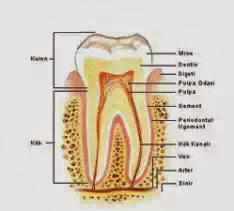
teeth their resistance. Enamel is the hardest and most intensely
mineralized substance in the body, and is one of the four main
components of the teeth, alongside dentin, cementum and pulp. The
enamel covers the tooth as the external protective layer. Since it
contains no nerves, it is not sensitive. This feature of enamel is
certainly a great blessing from Almighty Allah on His servants
because if the enamel were full of nerves, then biting and sucking
and chewing would be very painful. That would make eating a
terrible torment. As with the example of dental enamel, Allah has
bestowed so many blessing on His servants that it is impossible to
generalize. This is revealed in verses:
" Is He who creates like him who does not create? So will you not pay heed?
If you tried to number Allah's blessings, you could never count
them. Allah is Ever-Forgiving, Most Merciful." (Surat an-Nahl,
17-18)
Almighty Allah Has Created Dental Enamel to Be Very Strong
Enamel, the hardest and most intensely mineralized part of the
body, is that visible part of the tooth and is supported by the
underlying dentin (dentin represents 75% of an adult human tooth, but
although having the density as bone, it is sensitive to light and
touch. When needed, the repair cells it contains can make new
dentin tissue) . The color of enamel can vary from ivory to
blue-white, depending on its mineral content. It consists of 97%
inorganic substances. These are calcium salts in the form of micro-
crystals. The rest is organic materials. The surface is covered with
a keratin-containing layer.
Scientists examining dental enamel discovered a highly detailed and
unique structure. That structure makes the enamel, and therefore
the tooth, hard. Although enamel looks smooth, it is not. On the
contrary, it has tiny, shallow cracks. These shallow cracks begin
at the bottom of the enamel and spread toward the surface. They
prevent the tooth from cracking by dispersing the pressure placed on
the enamel and thus make the enamel stronger and more resistant.
The sublime knowledge and detailed artistry in Almighty Allah's
creation of dental enamel also emerges in another way. Under normal
conditions, these lines in the dental enamel should grow every time
we put pressure on our teeth. But these cracks in the tooth
disappear thanks to a special healing process created by Almighty
Allah because while these cracks grow under pressure, organic
substances fill them up and thus prevent the cracks from deepening
and breaking the teeth. Our teeth should normally abrade away under
the erosive effect of the foods we eat and this structural
characteristic of the enamel. But thanks to Allah's sublime
creation, they are able to perform this difficult and lengthy task
in the very best way.
The Strength of Dental Enamel Is the Result of Almighty Allah's Omniscience
In their research into tooth development, scientists uncovered a
gene that reveals the sublime creative artistry of Almighty Allah
and the fine detail in that creation. That gene provides
instructions for dentin sialophosphoprotein (DSPP), which plays a
major role in the formation of the softer dentin inside the tooth.
This gene, which plays a crucial role in dental development,
produces only one protein. However, this protein divides into two
proteins with diametrically opposed functions, dentin sialoprotein
(DSP) and dentin phosphoprotein (DPP). DPP creates pitted and
chalky enamel leading to brittleness, while DSP increases the
hardness of enamel and its rate of formation. To put it another way,
as a result of the delicate collaboration between these two
proteins that complement one another, and operate in just the right
proportions, our teeth are neither too soft, nor so hard or brittle
that they break.
The perfect equilibrium between DSP and DPP reveals the sensitivity
in the critical dentin- enamel link because DSP, an active substance
in the protection of teeth and present in a thin lay at the
interface of enamel and dentin, is harder than all enamel. If the
level of this protein is increased, the teeth become more brittle.
Because in the same way that an excess of fluoride, which makes
teeth hard and protects against decay, will weaken the teeth, so an
excess of DSP has been shown to weaken the teeth and make them
brittle.
On the other hand, DPP is known to have a weakening effect on
teeth. Excessive levels of this protein will mean they decay and
fall out. However, as the result of the omniscience of Almighty
Allah, a very delicate balance has been established between DSP and
DPP. This balance is so sensitive that DPP, which seems to weaken
enamel, and DSP that increases hardness, together lead to perfect
tooth formation .
Through this sensitive balance between DSP and DPP, Almighty Allah,
who creates all things in specific measure and order, produces a
sound combination by ensuring that the soft dentin is covered by
the harder, ceramic-like dentin. Almighty Allah reveals in a verse
from the Qur'an that He creates everything with a specific measure:
"...Everything has its measure with Him." (Surat ar-Ra'ad, 8)
There Are Signs in Everything Created by Almighty Allah in a
Thinking Community
Our teeth and the enamel that represents a very small part of them
are created with many perfect details we may never have thought
about before. One can see this flawless creation everywhere in our
own bodies and at every point in the universe. Almighty Allah has
created human beings with systems and organs through which they can
be comfortable, feel no difficulties and easily meet all their
needs. The important thing is to reflect on these signs and to turn
to Allah, the Lord of all. Almighty Allah reveals this as follows
in a verse:
"In the creation of the heavens and earth, and the alternation of
the night and day, and the ships which sail the seas to people's
benefit, and the water which Allah sends down from the sky – by
which He brings the earth to life when it was dead and scatters about
in it creatures of every kind – and the varying direction of the
winds, and the clouds subservient between heaven and earth, there
are Signs for people who use their intellect." (Surat al-Baqara, 164)
Dental enamel has a far superior structure to ceramics. The crystal
structure of the salts in enamel, which contains large quantities of
carbonate, magnesium, sodium and potassium ions, make the tooth
more resistant to pressure. Scientists are today researching the
manufacture of materials inspired by nature.
How Is the Harmony between the Upper and Lower Teeth Established?
Enamel, the hardest substance in the human body, consists of 97%
mineral salts. Dental enamel is arranged in the form of hexagonal
apatite crystals. Calcium salts that enter the structure of the
enamel collect and crystallize, gradually dissolving into the
organic tooth outline. This accumulation starts in the mother's
stomach.
As the teeth come into being, millions of cells first store calcium
and then combine with one another to form a large block. The shape
of the block is again determined by the cells that constitute it.
At this point a miracle of creation takes place. For example, cells
in the lower palate know the kind of structure that the cells in
the upper palate, so far away from them, will produce. Both groups
of cells produce giant blocks such that each will fit the other. In
this way, when the jaw is closed a molar in the top of the jaw and
one in the bottom fit together perfectly. Any incompatibility would
feel most uncomfortable. But – apart from in the case of disease –
no such incompatibility ever happens, and the 32 calcium blocks in
this complex structures are built to fit one another to perfection.
It is obviously Almighty Allah who gives the cells that make up the
teeth, and indeed all other cells, their properties.
system is one of the strongest parts of our bodies. But the
skeleton, which Almighty Allah has charged with protecting such
vitally important organs as the brain, heart and liver, is not the
strongest part of the body. Contrary to what people think, the most
resistant part of our bodies is not our large and strong bones, but
the tiny teeth in our mouths. What makes our teeth so strong, and
also gives them their color and brightness, is enamel.
What makes enamel so strong?
How do cracks in enamel protect a tooth rather than damaging it?
Our teeth are known for their strength and hardness. For many years
we use our teeth to do things requiring a high resistance to
pressure, such as chewing and biting, yet they still maintain their
resistance for a very long time. It is dental enamel that gives our
teeth their resistance. Enamel is the hardest and most intensely
mineralized substance in the body, and is one of the four main
components of the teeth, alongside dentin, cementum and pulp. The
enamel covers the tooth as the external protective layer. Since it
contains no nerves, it is not sensitive. This feature of enamel is
certainly a great blessing from Almighty Allah on His servants
because if the enamel were full of nerves, then biting and sucking
and chewing would be very painful. That would make eating a
terrible torment. As with the example of dental enamel, Allah has
bestowed so many blessing on His servants that it is impossible to
generalize. This is revealed in verses:
" Is He who creates like him who does not create? So will you not pay heed?
If you tried to number Allah's blessings, you could never count
them. Allah is Ever-Forgiving, Most Merciful." (Surat an-Nahl,
17-18)
Almighty Allah Has Created Dental Enamel to Be Very Strong
Enamel, the hardest and most intensely mineralized part of the
body, is that visible part of the tooth and is supported by the
underlying dentin (dentin represents 75% of an adult human tooth, but
although having the density as bone, it is sensitive to light and
touch. When needed, the repair cells it contains can make new
dentin tissue) . The color of enamel can vary from ivory to
blue-white, depending on its mineral content. It consists of 97%
inorganic substances. These are calcium salts in the form of micro-
crystals. The rest is organic materials. The surface is covered with
a keratin-containing layer.
Scientists examining dental enamel discovered a highly detailed and
unique structure. That structure makes the enamel, and therefore
the tooth, hard. Although enamel looks smooth, it is not. On the
contrary, it has tiny, shallow cracks. These shallow cracks begin
at the bottom of the enamel and spread toward the surface. They
prevent the tooth from cracking by dispersing the pressure placed on
the enamel and thus make the enamel stronger and more resistant.
The sublime knowledge and detailed artistry in Almighty Allah's
creation of dental enamel also emerges in another way. Under normal
conditions, these lines in the dental enamel should grow every time
we put pressure on our teeth. But these cracks in the tooth
disappear thanks to a special healing process created by Almighty
Allah because while these cracks grow under pressure, organic
substances fill them up and thus prevent the cracks from deepening
and breaking the teeth. Our teeth should normally abrade away under
the erosive effect of the foods we eat and this structural
characteristic of the enamel. But thanks to Allah's sublime
creation, they are able to perform this difficult and lengthy task
in the very best way.
The Strength of Dental Enamel Is the Result of Almighty Allah's Omniscience
In their research into tooth development, scientists uncovered a
gene that reveals the sublime creative artistry of Almighty Allah
and the fine detail in that creation. That gene provides
instructions for dentin sialophosphoprotein (DSPP), which plays a
major role in the formation of the softer dentin inside the tooth.
This gene, which plays a crucial role in dental development,
produces only one protein. However, this protein divides into two
proteins with diametrically opposed functions, dentin sialoprotein
(DSP) and dentin phosphoprotein (DPP). DPP creates pitted and
chalky enamel leading to brittleness, while DSP increases the
hardness of enamel and its rate of formation. To put it another way,
as a result of the delicate collaboration between these two
proteins that complement one another, and operate in just the right
proportions, our teeth are neither too soft, nor so hard or brittle
that they break.
The perfect equilibrium between DSP and DPP reveals the sensitivity
in the critical dentin- enamel link because DSP, an active substance
in the protection of teeth and present in a thin lay at the
interface of enamel and dentin, is harder than all enamel. If the
level of this protein is increased, the teeth become more brittle.
Because in the same way that an excess of fluoride, which makes
teeth hard and protects against decay, will weaken the teeth, so an
excess of DSP has been shown to weaken the teeth and make them
brittle.
On the other hand, DPP is known to have a weakening effect on
teeth. Excessive levels of this protein will mean they decay and
fall out. However, as the result of the omniscience of Almighty
Allah, a very delicate balance has been established between DSP and
DPP. This balance is so sensitive that DPP, which seems to weaken
enamel, and DSP that increases hardness, together lead to perfect
tooth formation .
Through this sensitive balance between DSP and DPP, Almighty Allah,
who creates all things in specific measure and order, produces a
sound combination by ensuring that the soft dentin is covered by
the harder, ceramic-like dentin. Almighty Allah reveals in a verse
from the Qur'an that He creates everything with a specific measure:
"...Everything has its measure with Him." (Surat ar-Ra'ad, 8)
There Are Signs in Everything Created by Almighty Allah in a
Thinking Community
Our teeth and the enamel that represents a very small part of them
are created with many perfect details we may never have thought
about before. One can see this flawless creation everywhere in our
own bodies and at every point in the universe. Almighty Allah has
created human beings with systems and organs through which they can
be comfortable, feel no difficulties and easily meet all their
needs. The important thing is to reflect on these signs and to turn
to Allah, the Lord of all. Almighty Allah reveals this as follows
in a verse:
"In the creation of the heavens and earth, and the alternation of
the night and day, and the ships which sail the seas to people's
benefit, and the water which Allah sends down from the sky – by
which He brings the earth to life when it was dead and scatters about
in it creatures of every kind – and the varying direction of the
winds, and the clouds subservient between heaven and earth, there
are Signs for people who use their intellect." (Surat al-Baqara, 164)
Dental enamel has a far superior structure to ceramics. The crystal
structure of the salts in enamel, which contains large quantities of
carbonate, magnesium, sodium and potassium ions, make the tooth
more resistant to pressure. Scientists are today researching the
manufacture of materials inspired by nature.
How Is the Harmony between the Upper and Lower Teeth Established?
Enamel, the hardest substance in the human body, consists of 97%
mineral salts. Dental enamel is arranged in the form of hexagonal
apatite crystals. Calcium salts that enter the structure of the
enamel collect and crystallize, gradually dissolving into the
organic tooth outline. This accumulation starts in the mother's
stomach.
As the teeth come into being, millions of cells first store calcium
and then combine with one another to form a large block. The shape
of the block is again determined by the cells that constitute it.
At this point a miracle of creation takes place. For example, cells
in the lower palate know the kind of structure that the cells in
the upper palate, so far away from them, will produce. Both groups
of cells produce giant blocks such that each will fit the other. In
this way, when the jaw is closed a molar in the top of the jaw and
one in the bottom fit together perfectly. Any incompatibility would
feel most uncomfortable. But – apart from in the case of disease –
no such incompatibility ever happens, and the 32 calcium blocks in
this complex structures are built to fit one another to perfection.
It is obviously Almighty Allah who gives the cells that make up the
teeth, and indeed all other cells, their properties.
Hazrat Abu Bakr Siddiq (As) (571-634)
A fine representative of Islamic moral values throughout his life
and a close friend of our Prophet (saas), Hazrat Abu Bakr was born
in Mecca in 571.
He was the first Caliph of the era in Islamic history known as the
"Period of the Four Caliphs." With the Qur'anic moral values he
exhibited under all circumstances, he was an exemplary Muslim on
whom great successes were bestowed.
Hazrat Abu Bakr embraced Islam at a time when it was not yet being
preached openly.
From the moment he became a Muslim, he lived by Islamic moral
values in the most scrupulous manner.
He provided great material assistance and personal support to our
Prophet (saas) in his preaching work. With his devotion to, and
deep love of Allah, he was instrumental in many people becoming
acquainted with the moral values of Islam.
HAZRAT ABU BAKR'S CHARACTER
Hazrat Abu Bakr was known for his honesty even before embracing
Islam. He was a leading member of the Quraysh and took part in
meetings on important matters.
Hazrat Abu Bakr looked after blood money and debts, which were under
the control of people with elevated virtues chosen by the tribes,
who in turn determined the sums to be paid.
The Quraysh abided by his decisions on blood money and gladly paid
the sums determined by him.
Hazrat Abu Bakr spent his youth exhibiting highly superior moral
values, and was a close friend of the Prophet Muhammad (saas) even
before he received the prophethood. Since he was one of the first
people to heed the Prophet Muhammad's (saas) call after he received
the prophethood, the Prophet (saas) said to him:
"Abu Bakr heeded my call without any hesitation." (A Great History
of Islam from Its Birth to Present, Vol: 2 p: 31)
After embracing Islam, Hazrat Abu Bakr obeyed everything the
Prophet (saas) said and always maintained the bounds set by Allah.
Because of his honesty, loyalty and chastity our Prophet (saas)
referred to him as 'Al-Siddiq', meaning the Truthful One. With his
broad learning, profound knowledge of religious matters, sure
opinions and noble behavior, Hazrat Abu Bakr was an exemplary
Companion.
When his son Abdurrahman joined the pagans at the battle of Badr, he
fought against his son, and thus showed how he held earning Allah's
approval above all else.
HAZRAT ABU BAKR'S EXEMPLARY SPENDING OF HIS FORTUNE
Hazrat Abu Bakr spent his whole fortune in the cause of Allah. By
paying large sums of money to slave owners, he was instrumental in
the freeing of many Muslims taken captive by the Quraysh who wanted
to force them to return to pagan beliefs.
Hazrat Abu Bakr was active in commerce and Allah bestowed great
wealth and assets upon him. Since he spent his entire fortune on
spreading Islamic moral values, causing our Prophet (saas) to say
this about him;
"Abu Bakr is the leading figure when it comes to sacrificing all his
possessions. What an excellent friend Abu Bakr is. There is Islamic
love and brotherhood between us." (Bukhari, 8/Salat, 80)
Another account referring to how Hazrat Abu Bakr spent all he had on
Allah's path goes:
Urwa says:
"Aisha (as) told me: When he died, he left behind neither a dirhem
nor a dinar." (Nawawi, Tahdhib al-Asma wal Lugat, II,189 Ibn Hajar
al-Asqalani, al-Isaba fi tamyiz al-Sahaba IV, 279)
THE JOURNEY OF OUR PROPHET (SAAS) AND HAZRAT ABU BAKR (AS)
Our Prophet(saas) left his home on the night of the 27th Safar in the
14th year of his prophethood and went to the home of Hazrat Abu
Bakr. He and Hazrat Abu Bakr then left Mecca. Traveling south they
came to Mount Thawr and hid in a cave there. That cave in Mount
Thawr was known as "Athal." At that point, the pagans came right up
to the cave mouth. But our Prophet (saas) was in complete
submission to the destiny appointed for them by Allah.
If you do not help him, Allah did help him when the disbelievers
drove him out and there were two of them in the Cave.* He said to
his companion, 'Do not be despondent, Allah is with us.' (Surat
at-Tawba, 40)
When the pagans saw that a spider has spun a web over the mouth of
the cave, and that pigeons had built a nest and laid eggs there,
they assumed nobody was inside and left.
Hazrat Abu Bakr was the devoted friend who sheltered in that cave
alongside our Prophet (saas). He thus enjoyed the honor of
witnessing that miraculous event.
THE CALIPHATE OF HAZRAT ABU BAKR
Hazrat Abu Bakr never abandoned the Prophet Muhammad (saas) after
the migration, and carried the standard at the battle of Tabuk.
In the ninth year of the migration the Prophet (saas) charged him
with leading the Hajj caravan.
When our Prophet (saas) fell ill, he appointed him as his
representative to lead the Companions in prayer. And after the
Prophet's (saas) death, Hazrat Abu Bakr was chosen as Caliph. After
assuming the post of Caliph, Hazrat Abu Bakr addressed the people in
these important words:
"O People! I have become your ruler. Yet I am not the best of you.
If I do good things, help me. If I do wrong things, show me the true.
Honesty is certitude, but lying is betrayal. Even the weakest of
you is strong alongside me, so I will protect his rights. But even
the strongest of you is weak alongside me, so I will draw others'
rights from him." (Hazrat Muhammad and His Life, DIB Press, Ankara,
1996, p. 435)
With these words, Hazrat Abu Bakr summarized in the finest possible
manner the virtues that a ruler possessed of Islamic moral values must
have. He achieved much success throughout his brief caliphate of two
years:
Disputes began arising at intervals after the death of our Prophet
(saas), but he re-established the authority of the State by
bringing Muslims together again.
He initiated work on the collection and preservation of the Holy Qur'an.
He was instrumental in Islamic moral values spreading beyond the
Arabian Peninsula for the first time, to Syria, Palestine and Iraq.
He strove against false prophets and movements that had no place in
religious moral values. He thus ensured that Islamic moral values
remained as they were in the time of our Prophet (saas).
HAZRAT ABU BAKR TREATED THE PEOPLE OF THE BOOK WITH AFFECTION AND COMPASSION
Hazrat Abu Bakr said that the People of the Book should be treated
well, even in times of war. This moral value is very clear in an
address he made to his army:
"Do not betray your cause. Do not abandon mercy even in war. Do not
kill or persecute children, women or the elderly, and do not cut
down date and other fruit trees or kill sheep, goats and other
animals except in order to eat them. If you encounter people who
are praying in churches, leave them to their worship. If you are
offered food and drink, do not eat and drink without saying 'In the
Name of Allah'." (Ibn al-Athir, Al-Kâmil fi at-Tarikh II, 139)
THE SUPERIOR MORAL VALUES OF HAZRAT ABU BAKR IN THE WORDS OF OUR PROPHET (SAAS)
In a hadith from Abu-d Darda related by Bukhari, Prophet Muhammad
(saas) says: "It is certain that Allah sent me to you as a prophet,
but some people did not believe. But Abu Bakr said 'You have spoken
the truth!' and helped me with his life and possessions. You will now
leave this dear friend to me with this virtue, will you not?"
(Prophet Muhammad (saas) said this twice). (Political, Religious,
Cultural and Social Islam, Vol: 1 p: 269-270)
In another hadith related by Abu Huraira, the Messenger of Allah
(saas) said: "Apart from Abu Bakr, there are none whose goodness we
have not repaid. He has done such good things for us that Almighty
Allah will repay him on the Day of Reckoning... (A History of
Political, Religious, Cultural and Social Islam, Kayihan Press,
Hasan Ibrahim Hasan, Ziya Kazic, Ismail Yigit, Abdulkerim Ozaydin,
Idris Bostan, Fehamettin Basar Vol: 1, p: 270)
and a close friend of our Prophet (saas), Hazrat Abu Bakr was born
in Mecca in 571.
He was the first Caliph of the era in Islamic history known as the
"Period of the Four Caliphs." With the Qur'anic moral values he
exhibited under all circumstances, he was an exemplary Muslim on
whom great successes were bestowed.
Hazrat Abu Bakr embraced Islam at a time when it was not yet being
preached openly.
From the moment he became a Muslim, he lived by Islamic moral
values in the most scrupulous manner.
He provided great material assistance and personal support to our
Prophet (saas) in his preaching work. With his devotion to, and
deep love of Allah, he was instrumental in many people becoming
acquainted with the moral values of Islam.
HAZRAT ABU BAKR'S CHARACTER
Hazrat Abu Bakr was known for his honesty even before embracing
Islam. He was a leading member of the Quraysh and took part in
meetings on important matters.
Hazrat Abu Bakr looked after blood money and debts, which were under
the control of people with elevated virtues chosen by the tribes,
who in turn determined the sums to be paid.
The Quraysh abided by his decisions on blood money and gladly paid
the sums determined by him.
Hazrat Abu Bakr spent his youth exhibiting highly superior moral
values, and was a close friend of the Prophet Muhammad (saas) even
before he received the prophethood. Since he was one of the first
people to heed the Prophet Muhammad's (saas) call after he received
the prophethood, the Prophet (saas) said to him:
"Abu Bakr heeded my call without any hesitation." (A Great History
of Islam from Its Birth to Present, Vol: 2 p: 31)
After embracing Islam, Hazrat Abu Bakr obeyed everything the
Prophet (saas) said and always maintained the bounds set by Allah.
Because of his honesty, loyalty and chastity our Prophet (saas)
referred to him as 'Al-Siddiq', meaning the Truthful One. With his
broad learning, profound knowledge of religious matters, sure
opinions and noble behavior, Hazrat Abu Bakr was an exemplary
Companion.
When his son Abdurrahman joined the pagans at the battle of Badr, he
fought against his son, and thus showed how he held earning Allah's
approval above all else.
HAZRAT ABU BAKR'S EXEMPLARY SPENDING OF HIS FORTUNE
Hazrat Abu Bakr spent his whole fortune in the cause of Allah. By
paying large sums of money to slave owners, he was instrumental in
the freeing of many Muslims taken captive by the Quraysh who wanted
to force them to return to pagan beliefs.
Hazrat Abu Bakr was active in commerce and Allah bestowed great
wealth and assets upon him. Since he spent his entire fortune on
spreading Islamic moral values, causing our Prophet (saas) to say
this about him;
"Abu Bakr is the leading figure when it comes to sacrificing all his
possessions. What an excellent friend Abu Bakr is. There is Islamic
love and brotherhood between us." (Bukhari, 8/Salat, 80)
Another account referring to how Hazrat Abu Bakr spent all he had on
Allah's path goes:
Urwa says:
"Aisha (as) told me: When he died, he left behind neither a dirhem
nor a dinar." (Nawawi, Tahdhib al-Asma wal Lugat, II,189 Ibn Hajar
al-Asqalani, al-Isaba fi tamyiz al-Sahaba IV, 279)
THE JOURNEY OF OUR PROPHET (SAAS) AND HAZRAT ABU BAKR (AS)
Our Prophet(saas) left his home on the night of the 27th Safar in the
14th year of his prophethood and went to the home of Hazrat Abu
Bakr. He and Hazrat Abu Bakr then left Mecca. Traveling south they
came to Mount Thawr and hid in a cave there. That cave in Mount
Thawr was known as "Athal." At that point, the pagans came right up
to the cave mouth. But our Prophet (saas) was in complete
submission to the destiny appointed for them by Allah.
If you do not help him, Allah did help him when the disbelievers
drove him out and there were two of them in the Cave.* He said to
his companion, 'Do not be despondent, Allah is with us.' (Surat
at-Tawba, 40)
When the pagans saw that a spider has spun a web over the mouth of
the cave, and that pigeons had built a nest and laid eggs there,
they assumed nobody was inside and left.
Hazrat Abu Bakr was the devoted friend who sheltered in that cave
alongside our Prophet (saas). He thus enjoyed the honor of
witnessing that miraculous event.
THE CALIPHATE OF HAZRAT ABU BAKR
Hazrat Abu Bakr never abandoned the Prophet Muhammad (saas) after
the migration, and carried the standard at the battle of Tabuk.
In the ninth year of the migration the Prophet (saas) charged him
with leading the Hajj caravan.
When our Prophet (saas) fell ill, he appointed him as his
representative to lead the Companions in prayer. And after the
Prophet's (saas) death, Hazrat Abu Bakr was chosen as Caliph. After
assuming the post of Caliph, Hazrat Abu Bakr addressed the people in
these important words:
"O People! I have become your ruler. Yet I am not the best of you.
If I do good things, help me. If I do wrong things, show me the true.
Honesty is certitude, but lying is betrayal. Even the weakest of
you is strong alongside me, so I will protect his rights. But even
the strongest of you is weak alongside me, so I will draw others'
rights from him." (Hazrat Muhammad and His Life, DIB Press, Ankara,
1996, p. 435)
With these words, Hazrat Abu Bakr summarized in the finest possible
manner the virtues that a ruler possessed of Islamic moral values must
have. He achieved much success throughout his brief caliphate of two
years:
Disputes began arising at intervals after the death of our Prophet
(saas), but he re-established the authority of the State by
bringing Muslims together again.
He initiated work on the collection and preservation of the Holy Qur'an.
He was instrumental in Islamic moral values spreading beyond the
Arabian Peninsula for the first time, to Syria, Palestine and Iraq.
He strove against false prophets and movements that had no place in
religious moral values. He thus ensured that Islamic moral values
remained as they were in the time of our Prophet (saas).
HAZRAT ABU BAKR TREATED THE PEOPLE OF THE BOOK WITH AFFECTION AND COMPASSION
Hazrat Abu Bakr said that the People of the Book should be treated
well, even in times of war. This moral value is very clear in an
address he made to his army:
"Do not betray your cause. Do not abandon mercy even in war. Do not
kill or persecute children, women or the elderly, and do not cut
down date and other fruit trees or kill sheep, goats and other
animals except in order to eat them. If you encounter people who
are praying in churches, leave them to their worship. If you are
offered food and drink, do not eat and drink without saying 'In the
Name of Allah'." (Ibn al-Athir, Al-Kâmil fi at-Tarikh II, 139)
THE SUPERIOR MORAL VALUES OF HAZRAT ABU BAKR IN THE WORDS OF OUR PROPHET (SAAS)
In a hadith from Abu-d Darda related by Bukhari, Prophet Muhammad
(saas) says: "It is certain that Allah sent me to you as a prophet,
but some people did not believe. But Abu Bakr said 'You have spoken
the truth!' and helped me with his life and possessions. You will now
leave this dear friend to me with this virtue, will you not?"
(Prophet Muhammad (saas) said this twice). (Political, Religious,
Cultural and Social Islam, Vol: 1 p: 269-270)
In another hadith related by Abu Huraira, the Messenger of Allah
(saas) said: "Apart from Abu Bakr, there are none whose goodness we
have not repaid. He has done such good things for us that Almighty
Allah will repay him on the Day of Reckoning... (A History of
Political, Religious, Cultural and Social Islam, Kayihan Press,
Hasan Ibrahim Hasan, Ziya Kazic, Ismail Yigit, Abdulkerim Ozaydin,
Idris Bostan, Fehamettin Basar Vol: 1, p: 270)
Fathwa, - Does someone who does not wear hijab go to hell?
Question:
If a girl doesn't wear hijab, does it mean that she will go to hell
even if she offers Salat, reads Quran regualrly, acts decently,
doesn't look at boys, doesn't gossip/babckbite etc? Will not wearing
hijab condem her to hell despite all her good attributes?
Answer:
The hijab is obligatory. Leaving the obligatory makes one sinful and
liable to being punished by Allah. Doing the obligatory, with the
intention of obeying Allah and seeking His pleasure, is an act of good
and deserving of eternal reward in the Hereafter, and an increase in
one�s spiritual rank�good in this life and the next.
While disbelief and rejection of faith leads to eternal punishment in
Hell, sins do not. Sins make one deserving of Allah�s punishment for a
period of time in Hell, but this punishment is not eternal. Nor does
it necessarily follow that one will be punished for every sin: Allah
can forgive any sins, even major, and good deeds and other matters can
wipe away sins.
It is obligatory to repent from sin. When one is weak, one should at
least turn to Allah and ask for the strength to do what is right, out
of a desire to seek Allah�s pleasure, and to be of those who love
Allah�for the lover seeks to obey the wishes of their Beloved in all
things.
And Allah alone gives success.
If a girl doesn't wear hijab, does it mean that she will go to hell
even if she offers Salat, reads Quran regualrly, acts decently,
doesn't look at boys, doesn't gossip/babckbite etc? Will not wearing
hijab condem her to hell despite all her good attributes?
Answer:
The hijab is obligatory. Leaving the obligatory makes one sinful and
liable to being punished by Allah. Doing the obligatory, with the
intention of obeying Allah and seeking His pleasure, is an act of good
and deserving of eternal reward in the Hereafter, and an increase in
one�s spiritual rank�good in this life and the next.
While disbelief and rejection of faith leads to eternal punishment in
Hell, sins do not. Sins make one deserving of Allah�s punishment for a
period of time in Hell, but this punishment is not eternal. Nor does
it necessarily follow that one will be punished for every sin: Allah
can forgive any sins, even major, and good deeds and other matters can
wipe away sins.
It is obligatory to repent from sin. When one is weak, one should at
least turn to Allah and ask for the strength to do what is right, out
of a desire to seek Allah�s pleasure, and to be of those who love
Allah�for the lover seeks to obey the wishes of their Beloved in all
things.
And Allah alone gives success.
Fathwa, - Looking at lingerie catalogues to buy lingerie for one's wife...
Question:
A "respectable" scholar once said that it is permissible for men to
look at pictures of almost naked women wearing underwear in lingerie
catalogues for the sole purpose of buying lingerie for their wives. Is
this true? If yes, would this still be the case if the lingerie models
were posing in sexual and suggestive ways?
Answer:
Assalamu alaykum
It is not permissible to view almost naked women wearing underwear in
lingerie catalogues even for the sole purpose of buying lingerie for
one's wife. The ill and detrimental effects of this are far too great
for it to be permissible.
One of the duas of the Messenger (upon him be peace) was, "O Allah,
save us from immorality, the apparent and the hidden."
He says:"Come not nigh to shameful deeds. Whether open or
secret"(al-Qur'an 6:151)
He also says:"Nor come nigh to adultery: for it is a shameful (deed)
and an evil, opening the road (to other evils)"(al-Qur'an 17:32).
There may be a number of other sources for purchasing such gifts for
one's wife. For instance, certain catalogues or websites featuring
only the garments minus the models. However, rather than an all out
search for such, it may be simple to give the wife a gift card to a
department store and let her take care of it for him.
And Allah knows best.
A "respectable" scholar once said that it is permissible for men to
look at pictures of almost naked women wearing underwear in lingerie
catalogues for the sole purpose of buying lingerie for their wives. Is
this true? If yes, would this still be the case if the lingerie models
were posing in sexual and suggestive ways?
Answer:
Assalamu alaykum
It is not permissible to view almost naked women wearing underwear in
lingerie catalogues even for the sole purpose of buying lingerie for
one's wife. The ill and detrimental effects of this are far too great
for it to be permissible.
One of the duas of the Messenger (upon him be peace) was, "O Allah,
save us from immorality, the apparent and the hidden."
He says:"Come not nigh to shameful deeds. Whether open or
secret"(al-Qur'an 6:151)
He also says:"Nor come nigh to adultery: for it is a shameful (deed)
and an evil, opening the road (to other evils)"(al-Qur'an 17:32).
There may be a number of other sources for purchasing such gifts for
one's wife. For instance, certain catalogues or websites featuring
only the garments minus the models. However, rather than an all out
search for such, it may be simple to give the wife a gift card to a
department store and let her take care of it for him.
And Allah knows best.
Fathwa, - Can a sister teach tajwid to a group of brothers?
Question:
I am sister, and currently the head of our small Muslim Student
Society at university. Some of the brothers have asked if I could
teach them tajweed�there is simply no one to teach them on campus.
(Having studied tajwid and Qur�an extensively, I have been teaching
the sisters.) There are classes for brothers in the city itself, but
it is difficult to get there because our university is outside the
city itself. Should I agree?
Answer:
In the Name of Allah, Most Merciful and Compassionate. May His
abundant blessing and most perfect of peace be on His Beloved Prophet,
the best of creation, and his family, companions and followers.
Walaikum assalam wa rahmatullah,
It would be highly blameworthy for a sister to teach brothers
tajwid�it is not unlikely that it would be sinful for both teacher and
students. The upcoming answer, on a related issue, by Shaykh Munawwar
Ateeq explains the fiqh behind why it is not permitted for women to
sing, talk melodiously, or recite Qur�an with tajwid in front of men,
and why it is haram for the latter to listen.
To be blunt, it is reasonable to expect that the interest of at least
a few of the men would be more than spiritual or religious. Allah the
Knowing and Wise has forbidden not only sin itself but also the means
to sin, and has strongly emphasized caution when it comes to
male-female interaction.
The minimum obligatory tawjid is simply to be able to pronounce the
letters (unlike what some contemporary tajwid books claim). This can
be easily learned through anyone who can read Arabic. As for the art
of tajwid, it is a sunna�not an obligation. Precaution in matters of
interaction is given precedence over acting on recommended sunnas.
Why not arrange for a teacher from outside to come to campus, even if
requires paying for them? Surely the MSA could cover or subsidize the
cost of such classes�
And Allah knows best.
I am sister, and currently the head of our small Muslim Student
Society at university. Some of the brothers have asked if I could
teach them tajweed�there is simply no one to teach them on campus.
(Having studied tajwid and Qur�an extensively, I have been teaching
the sisters.) There are classes for brothers in the city itself, but
it is difficult to get there because our university is outside the
city itself. Should I agree?
Answer:
In the Name of Allah, Most Merciful and Compassionate. May His
abundant blessing and most perfect of peace be on His Beloved Prophet,
the best of creation, and his family, companions and followers.
Walaikum assalam wa rahmatullah,
It would be highly blameworthy for a sister to teach brothers
tajwid�it is not unlikely that it would be sinful for both teacher and
students. The upcoming answer, on a related issue, by Shaykh Munawwar
Ateeq explains the fiqh behind why it is not permitted for women to
sing, talk melodiously, or recite Qur�an with tajwid in front of men,
and why it is haram for the latter to listen.
To be blunt, it is reasonable to expect that the interest of at least
a few of the men would be more than spiritual or religious. Allah the
Knowing and Wise has forbidden not only sin itself but also the means
to sin, and has strongly emphasized caution when it comes to
male-female interaction.
The minimum obligatory tawjid is simply to be able to pronounce the
letters (unlike what some contemporary tajwid books claim). This can
be easily learned through anyone who can read Arabic. As for the art
of tajwid, it is a sunna�not an obligation. Precaution in matters of
interaction is given precedence over acting on recommended sunnas.
Why not arrange for a teacher from outside to come to campus, even if
requires paying for them? Surely the MSA could cover or subsidize the
cost of such classes�
And Allah knows best.
Fiqh of Inheritance, - Justice in Distribution
People in the time ofJaahiliyyah)pre-Islamic period of ignorance( used
to assign the inheritance of the deceased to the eldest among his
sons, excluding his young children, and women relatives like
daughters, wives, mothers and sisters; or give it to his brother or
paternal uncle, under the pretext that the children and women were too
powerless to protect the sanctities that should be protected, take
retaliation, gain booty )from wars( and fight the enemies. However,
Allaah The Almighty invalidated this pre-Islamic custom, and assigned
to women and children a share of the inheritance of the deceased, and
made their share an obligatory right, no matter how little or much the
inheritance might be, as shown in His statement )which means(:
}For men is a share of what the parents and close relatives leave, and
for women is a share of what the parents and close relatives leave, be
it little or much -- an obligatory share.{]Quran 4:7[
}Allaah instructs you concerning your children: for the male, what is
equal to the share of two females. But if there are ]only[ daughters,
two or more, for them is two thirds of one's estate. And if there is
only one, for her is half.{]Quran 4:11[
He Says about the inheritance of the mother )what means(:
}But if he had no children and the parents ]alone[ inherit from him,
then for his mother is one third. And if he had brothers ]or sisters[,
for his mother is a sixth.{]Quran 4:11[
About the share of the wife, He Says )what means(:
}And for the wives is one fourth if you leave no child. But if you
leave a child, then for them is an eighth of what you leave.{]Quran
4:12[
Allaah The Almighty accorded inheritance for women in the following way:
One daughter gets half the inheritance
Two or more daughters get two-thirds the inheritance
The mother gets one-third or one-sixth of the inheritance
The wife gets one-fourth or one-eighth of the inheritance
The half-sister from the side of the mother gets one-sixth
The full sister or the half-sister from the side of the father gets
half the inheritance, or half the share of her brother.
It must be borne in mind that all of this is accorded them as their
right, when they received nothing in the pre-Islamic days
ofJaahiliyyah.
Contrast this with the modern era ofJaahiliyyah, which is no better
than the ancientJaahiliyyahin many of its aspects, which gives room to
deprive men, women and children of their rightful inheritance, and
instead allows the owner of the inheritance to assign his property,
which Allaah The Almighty made a means of people's sustenance, to
animals.
The system of inheritance set by Islam is distinguished from all
modern human laws of inheritance in that Islam adopts a moderate
attitude -- between Communist socialism on one extreme, and capitalism
and other similar doctrines that call for complete freedom of a person
to dispose of his wealth according to his own whims on the other
extreme. Communist socialism, as outlined by Karl Marx, rejects the
principle of inheritance, and regards it as an erroneous act that
opposes the principles of justice. Thus, it gives nothing to the
deceased's offspring or next of kin.
Capitalism and its corresponding economic systems, on the contrary,
give the owner the full freedom to dispose of his property as he
likes. He has the right to deprive all his kith and kin of his
inheritance and bequeath it to a stranger, say, a friend or an
employee. A man or a woman, in Western societies, even has the right
to bequeath the whole or some of his/her property to a dog or a cat!
According to the Islamic system, inheritance is obligatory for both
the owner of the property and the heir as well. The owner has no right
to prevent any of his heirs from receiving his inheritance; and the
heir gets his share, with no need for a court judgment. In some
systems, the law affirms inheritance only with a court judgment, since
in their sight, it is optional and not compulsory to bequeath and
receive inheritance.
The Islamic system limits the right of inheritance within the sphere
of the family. It requires a sound relationship through blood or
marital relation, and sinceWalaa')allegiance of an ex-slave to his
ex-masters( resembles kinship, it was joined with the categories of
kinship. In this way, neither an adopted child, nor a child born out
of wedlock has the right to inheritance. Within the limits of the
family, the closest of kin, under Islam, is given preference, followed
by the next of kin to the deceased.
However, in the other systems, the case is quite different. According
to the Jews, for example, the heirs are the male sons, and the share
of the eldest is equal to the share of two brothers, whether the child
is legitimate or illegitimate. Moreover, the eldest son is not
deprived of his share even if he is born from an illegitimate
marriage.
According to the Western system, a stranger -- like a friend or an
employee – is eligible to receive inheritance, and the same applies to
the child born out of wedlock.
The Islamic system assigns to the young child a share from the
inheritance of his father equal to that of his eldest brother. Thus,
there is no differentiation between the fetus in the mother's womb and
the eldest son in a big family. The Islamic system also does not
differentiate between the eldest son and his brothers, as is the case
in the corrupted Jewish canon, and the British law. That is because
the young children might be in need of money to build their lives, and
to meet their living expenses, more than their older brothers who can
work and gather for themselves independent property.
The Islamic system also assigns a share of the inheritance to women.
The mother, wife, daughter, son's daughter, sister, and other women
relatives, have definite shares in the inheritance of the deceased, to
ensure them an honorable life, free from the humiliation of
destitution and mortification of poverty, unlike some systems that
deprive the women of inheritance under all circumstances. Some laws
previously deprived the wife of inheritance, and she was not given any
share in it. In the past, the Jews did not give women any portion of
the inheritance.
The Islamic system has made 'need' the basic criterion for preference
in inheritance. The deceased person's children need his money more
than his father because they are likely to face greater difficulty in
fulfilling their requirements, being young and at a stage where they
are beginning their life, unlike their grandfather. Moreover, the
duties and obligations of the son under theSharee'ah)legislation( of
Islam are more than those of his sister. He is the one required to
provide for himself once he reaches the age of maturity, and he is
also required to pay his wife her dowry, provide for her and for the
children. He is responsible for the expenses of education, medical
treatment, clothing…etc. In addition to this, he is required to
provide for his father or relatives if they are poor. However, the
girl is more likely to have someone to provide for her, and not the
other way round, since she will get married and will be the
responsibility of her husband.
These are some of the merits that distinguish the inheritance system
in Islam from the old and contemporary laws that were legislated by
human beings and that keep changing every now and then.
to assign the inheritance of the deceased to the eldest among his
sons, excluding his young children, and women relatives like
daughters, wives, mothers and sisters; or give it to his brother or
paternal uncle, under the pretext that the children and women were too
powerless to protect the sanctities that should be protected, take
retaliation, gain booty )from wars( and fight the enemies. However,
Allaah The Almighty invalidated this pre-Islamic custom, and assigned
to women and children a share of the inheritance of the deceased, and
made their share an obligatory right, no matter how little or much the
inheritance might be, as shown in His statement )which means(:
}For men is a share of what the parents and close relatives leave, and
for women is a share of what the parents and close relatives leave, be
it little or much -- an obligatory share.{]Quran 4:7[
}Allaah instructs you concerning your children: for the male, what is
equal to the share of two females. But if there are ]only[ daughters,
two or more, for them is two thirds of one's estate. And if there is
only one, for her is half.{]Quran 4:11[
He Says about the inheritance of the mother )what means(:
}But if he had no children and the parents ]alone[ inherit from him,
then for his mother is one third. And if he had brothers ]or sisters[,
for his mother is a sixth.{]Quran 4:11[
About the share of the wife, He Says )what means(:
}And for the wives is one fourth if you leave no child. But if you
leave a child, then for them is an eighth of what you leave.{]Quran
4:12[
Allaah The Almighty accorded inheritance for women in the following way:
One daughter gets half the inheritance
Two or more daughters get two-thirds the inheritance
The mother gets one-third or one-sixth of the inheritance
The wife gets one-fourth or one-eighth of the inheritance
The half-sister from the side of the mother gets one-sixth
The full sister or the half-sister from the side of the father gets
half the inheritance, or half the share of her brother.
It must be borne in mind that all of this is accorded them as their
right, when they received nothing in the pre-Islamic days
ofJaahiliyyah.
Contrast this with the modern era ofJaahiliyyah, which is no better
than the ancientJaahiliyyahin many of its aspects, which gives room to
deprive men, women and children of their rightful inheritance, and
instead allows the owner of the inheritance to assign his property,
which Allaah The Almighty made a means of people's sustenance, to
animals.
The system of inheritance set by Islam is distinguished from all
modern human laws of inheritance in that Islam adopts a moderate
attitude -- between Communist socialism on one extreme, and capitalism
and other similar doctrines that call for complete freedom of a person
to dispose of his wealth according to his own whims on the other
extreme. Communist socialism, as outlined by Karl Marx, rejects the
principle of inheritance, and regards it as an erroneous act that
opposes the principles of justice. Thus, it gives nothing to the
deceased's offspring or next of kin.
Capitalism and its corresponding economic systems, on the contrary,
give the owner the full freedom to dispose of his property as he
likes. He has the right to deprive all his kith and kin of his
inheritance and bequeath it to a stranger, say, a friend or an
employee. A man or a woman, in Western societies, even has the right
to bequeath the whole or some of his/her property to a dog or a cat!
According to the Islamic system, inheritance is obligatory for both
the owner of the property and the heir as well. The owner has no right
to prevent any of his heirs from receiving his inheritance; and the
heir gets his share, with no need for a court judgment. In some
systems, the law affirms inheritance only with a court judgment, since
in their sight, it is optional and not compulsory to bequeath and
receive inheritance.
The Islamic system limits the right of inheritance within the sphere
of the family. It requires a sound relationship through blood or
marital relation, and sinceWalaa')allegiance of an ex-slave to his
ex-masters( resembles kinship, it was joined with the categories of
kinship. In this way, neither an adopted child, nor a child born out
of wedlock has the right to inheritance. Within the limits of the
family, the closest of kin, under Islam, is given preference, followed
by the next of kin to the deceased.
However, in the other systems, the case is quite different. According
to the Jews, for example, the heirs are the male sons, and the share
of the eldest is equal to the share of two brothers, whether the child
is legitimate or illegitimate. Moreover, the eldest son is not
deprived of his share even if he is born from an illegitimate
marriage.
According to the Western system, a stranger -- like a friend or an
employee – is eligible to receive inheritance, and the same applies to
the child born out of wedlock.
The Islamic system assigns to the young child a share from the
inheritance of his father equal to that of his eldest brother. Thus,
there is no differentiation between the fetus in the mother's womb and
the eldest son in a big family. The Islamic system also does not
differentiate between the eldest son and his brothers, as is the case
in the corrupted Jewish canon, and the British law. That is because
the young children might be in need of money to build their lives, and
to meet their living expenses, more than their older brothers who can
work and gather for themselves independent property.
The Islamic system also assigns a share of the inheritance to women.
The mother, wife, daughter, son's daughter, sister, and other women
relatives, have definite shares in the inheritance of the deceased, to
ensure them an honorable life, free from the humiliation of
destitution and mortification of poverty, unlike some systems that
deprive the women of inheritance under all circumstances. Some laws
previously deprived the wife of inheritance, and she was not given any
share in it. In the past, the Jews did not give women any portion of
the inheritance.
The Islamic system has made 'need' the basic criterion for preference
in inheritance. The deceased person's children need his money more
than his father because they are likely to face greater difficulty in
fulfilling their requirements, being young and at a stage where they
are beginning their life, unlike their grandfather. Moreover, the
duties and obligations of the son under theSharee'ah)legislation( of
Islam are more than those of his sister. He is the one required to
provide for himself once he reaches the age of maturity, and he is
also required to pay his wife her dowry, provide for her and for the
children. He is responsible for the expenses of education, medical
treatment, clothing…etc. In addition to this, he is required to
provide for his father or relatives if they are poor. However, the
girl is more likely to have someone to provide for her, and not the
other way round, since she will get married and will be the
responsibility of her husband.
These are some of the merits that distinguish the inheritance system
in Islam from the old and contemporary laws that were legislated by
human beings and that keep changing every now and then.
Fiqh of Inheritance, - Impediments of Inheritance
Just as there are causes by virtue of which two persons can inherit
from each other, there are also impediments that could hinder
inheritance between them. Those impediments might be summed up as
follows:
First impediment: Difference in religion
If the deceased follows a religion and the heir follows another
religion, the difference in religion between two persons impedes them
from inheriting from each other. Such difference in religion takes
several forms including:
The deceased is a Muslim and the heir is a disbeliever, say a Jew, a
Christian or belonging to any religion of disbelief. In this case, the
disbeliever does not inherit from his Muslim relative. There is no
difference of opinion over this fact among scholars in general, due to
the followingHadeeth)narration(:"No Muslim inherits
The deceased is a disbeliever and the heir is a Muslim. In this case,
the Muslim should not inherit )from the property of( his disbelieving
relative, according to the opinion of the majority of scholars, who
base their opinion on the previousHadeeth.
The deceased is a disbeliever, belonging to a particular religion, and
the heir is also a disbeliever, but belonging to another religion. In
this case, they should not inherit from each other, due to
theHadeeth:"No people belonging to two different religions should
inherit from each other."]Abu Daawood and
There are, indeed, juristic differences as to the classification of
religion. According to some scholars, disbelief as a whole is regarded
as one religion; and according to others, there are three religions
)apart from Islam(: Judaism is a religion, Christianity is a religion
and all other religions are regarded as one religion.
Second impediment: Killing
Killing is to commit an act that terminates the life of another
person. It means that the murderer never inherits from the murdered
person. If a son kills his father, he will not be entitled to inherit
his property.
It is well known that killing is of different kinds: for instance, the
murder with no just cause, the intentional killing, semi-intentional
killing, killing by mistake; and killing with just cause )like killing
in implementation of legal retribution(. However, scholars agree on
the fact that murder is among the impediments of inheritance, due to
theHadeeth:"The killer has nothing to inherit, and if he )the
deceased( has no heir, his heir should be the closest relative to him.
The killer inherits nothing."]Abu Daawood[
However, there is a difference of opinion among the scholars
ofFiqh)Islamic jurisprudence( as to whether or not some forms of
killing could impede the killer from inheriting.
Third impediment: Slavery
It is the state of being a slave to another. The slave never inherits
the property of the free man, since the slave does not possess
property.
from each other, there are also impediments that could hinder
inheritance between them. Those impediments might be summed up as
follows:
First impediment: Difference in religion
If the deceased follows a religion and the heir follows another
religion, the difference in religion between two persons impedes them
from inheriting from each other. Such difference in religion takes
several forms including:
The deceased is a Muslim and the heir is a disbeliever, say a Jew, a
Christian or belonging to any religion of disbelief. In this case, the
disbeliever does not inherit from his Muslim relative. There is no
difference of opinion over this fact among scholars in general, due to
the followingHadeeth)narration(:"No Muslim inherits
The deceased is a disbeliever and the heir is a Muslim. In this case,
the Muslim should not inherit )from the property of( his disbelieving
relative, according to the opinion of the majority of scholars, who
base their opinion on the previousHadeeth.
The deceased is a disbeliever, belonging to a particular religion, and
the heir is also a disbeliever, but belonging to another religion. In
this case, they should not inherit from each other, due to
theHadeeth:"No people belonging to two different religions should
inherit from each other."]Abu Daawood and
There are, indeed, juristic differences as to the classification of
religion. According to some scholars, disbelief as a whole is regarded
as one religion; and according to others, there are three religions
)apart from Islam(: Judaism is a religion, Christianity is a religion
and all other religions are regarded as one religion.
Second impediment: Killing
Killing is to commit an act that terminates the life of another
person. It means that the murderer never inherits from the murdered
person. If a son kills his father, he will not be entitled to inherit
his property.
It is well known that killing is of different kinds: for instance, the
murder with no just cause, the intentional killing, semi-intentional
killing, killing by mistake; and killing with just cause )like killing
in implementation of legal retribution(. However, scholars agree on
the fact that murder is among the impediments of inheritance, due to
theHadeeth:"The killer has nothing to inherit, and if he )the
deceased( has no heir, his heir should be the closest relative to him.
The killer inherits nothing."]Abu Daawood[
However, there is a difference of opinion among the scholars
ofFiqh)Islamic jurisprudence( as to whether or not some forms of
killing could impede the killer from inheriting.
Third impediment: Slavery
It is the state of being a slave to another. The slave never inherits
the property of the free man, since the slave does not possess
property.
Fiqh of Inheritance, - Causes of Inheritance
Inheritance in the IslamicSharee'ah)legislation( has three causes:
First cause: Marriage
Under Sharee'ah, marriage refers to the valid marital contract -- even
in the absence of meeting in seclusion between the spouses or sexual
intercourse between them. Both spouses inherit from each other, so
long as the marital contract is in effect between them. For example,
if a man divorces his wife and her'Iddah)post-marriage waiting period(
elapses, then there would be no mutual inheritance between them, due
to the termination of the marriage, which is the cause of inheritance.
However, if he divorces her during his fatal sickness and is accused
of having done so with the intention of preventing her from
inheritance, in this case, she inherits )her share of( his property
even )if he dies( after the conclusion of her'Iddah, and even if she
gets married to another person according to the opinion of some
scholars ofFiqh)Islamic jurisprudence(, by way of opposing the
wrongful husband and nullifying his purpose.
Second cause:Walaa')allegiance of an ex-slave to his ex-master(
This is a kind of kinship. If a master frees his slave, a kind of
relation calledWalaa')allegiance( starts to exist between them. It is
a favor done by the master to his slave out of his bounty, whereby he
brings him out of slavery to freedom.
Third cause: Real Kinship
Kinship is a connection between two persons by virtue of birth, be it
a close or far connection. Every man or woman with whom one has a
connection by birth, no matter how close or far, whether from the side
of the father or from the side of the mother, or from the side of both
together, is one's kin. This is the strongest cause of inheritance.
The heirs from among the kith and kin are divided into three divisions:
1-The ascendants: The deceased's father, grandfather )the father's
father(, up to all levels of similar relationships from the side of
the father; and the deceased's mother, and grandmother being related
to him/her through a male or a female heir.
2-The descendants: The deceased's sons and sons of his son down to all
levels, and his son's daughter down to all levels of her father.
3-Non-ascendant /descendant relations: They are the deceased's
siblings;whether they are full or half-brothers or sisters, the male
children of his/her full brothers and half-brothers from the side of
the father, his paternal uncles who are his father's full brothers, or
half-brothers from the side of the father up to all levels, the
paternal cousins down to all levels.
These are the three causes of inheritance agreed upon among scholars.
They deserve, in the presence of a sound mind and disposition, to be
causes of inheritance. There are other causes which are subject to
dispute, as to whether or not they are regarded as causes of
inheritance, likeBayt Al-Maalof the Muslims )Muslim treasury(, the
kith and kin who are not heirs, etc.
First cause: Marriage
Under Sharee'ah, marriage refers to the valid marital contract -- even
in the absence of meeting in seclusion between the spouses or sexual
intercourse between them. Both spouses inherit from each other, so
long as the marital contract is in effect between them. For example,
if a man divorces his wife and her'Iddah)post-marriage waiting period(
elapses, then there would be no mutual inheritance between them, due
to the termination of the marriage, which is the cause of inheritance.
However, if he divorces her during his fatal sickness and is accused
of having done so with the intention of preventing her from
inheritance, in this case, she inherits )her share of( his property
even )if he dies( after the conclusion of her'Iddah, and even if she
gets married to another person according to the opinion of some
scholars ofFiqh)Islamic jurisprudence(, by way of opposing the
wrongful husband and nullifying his purpose.
Second cause:Walaa')allegiance of an ex-slave to his ex-master(
This is a kind of kinship. If a master frees his slave, a kind of
relation calledWalaa')allegiance( starts to exist between them. It is
a favor done by the master to his slave out of his bounty, whereby he
brings him out of slavery to freedom.
Third cause: Real Kinship
Kinship is a connection between two persons by virtue of birth, be it
a close or far connection. Every man or woman with whom one has a
connection by birth, no matter how close or far, whether from the side
of the father or from the side of the mother, or from the side of both
together, is one's kin. This is the strongest cause of inheritance.
The heirs from among the kith and kin are divided into three divisions:
1-The ascendants: The deceased's father, grandfather )the father's
father(, up to all levels of similar relationships from the side of
the father; and the deceased's mother, and grandmother being related
to him/her through a male or a female heir.
2-The descendants: The deceased's sons and sons of his son down to all
levels, and his son's daughter down to all levels of her father.
3-Non-ascendant /descendant relations: They are the deceased's
siblings;whether they are full or half-brothers or sisters, the male
children of his/her full brothers and half-brothers from the side of
the father, his paternal uncles who are his father's full brothers, or
half-brothers from the side of the father up to all levels, the
paternal cousins down to all levels.
These are the three causes of inheritance agreed upon among scholars.
They deserve, in the presence of a sound mind and disposition, to be
causes of inheritance. There are other causes which are subject to
dispute, as to whether or not they are regarded as causes of
inheritance, likeBayt Al-Maalof the Muslims )Muslim treasury(, the
kith and kin who are not heirs, etc.
Dought & clear,- (description of the prayer) - It is not Sunnah to say du‘aa’ following an obligatory prayer, placing the right hand on the forehead.
There is a dua which is said by placing the right hand on the forehead
after farz namaz. I want to know the hadith related with this dua.
Praise be to Allaah.
What is proven from the Prophet (blessings and peace of Allah be upon
him) is that when he had finished praying, he would ask Allah for
forgiveness three times, then he would say: "Allaahumma anta as-salaam
wa minka al-salaam, tabaarakta yaa dhaa'l-jalaali wa'l-ikraam(O Allah,
You are as-Salaam (the One Who is free from all defects and
deficiencies) and from You is all peace, blessed are You, Possessor of
majesty and honour).
This is based on what has been explained previously in the answer to
question no. 104163
Secondly:
After searching we could not find any proof for the du'aa' mentioned
by the questioner that is said after the obligatory prayer when
placing the right hand on the forehead.
Shaykh Ibn Baaz (may Allah have mercy on him) was asked:
There are some people who, after finishing the prayer, put their hands
on their foreheads for a while and they say that this is Sunnah. Is
what they say correct?
He replied: There is no basis for that as far as we know. There is no
basis for placing the hands on the forehead after prayer.
FromFataawa Noor 'ala ad-Darb.
And Allah knows best.
after farz namaz. I want to know the hadith related with this dua.
Praise be to Allaah.
What is proven from the Prophet (blessings and peace of Allah be upon
him) is that when he had finished praying, he would ask Allah for
forgiveness three times, then he would say: "Allaahumma anta as-salaam
wa minka al-salaam, tabaarakta yaa dhaa'l-jalaali wa'l-ikraam(O Allah,
You are as-Salaam (the One Who is free from all defects and
deficiencies) and from You is all peace, blessed are You, Possessor of
majesty and honour).
This is based on what has been explained previously in the answer to
question no. 104163
Secondly:
After searching we could not find any proof for the du'aa' mentioned
by the questioner that is said after the obligatory prayer when
placing the right hand on the forehead.
Shaykh Ibn Baaz (may Allah have mercy on him) was asked:
There are some people who, after finishing the prayer, put their hands
on their foreheads for a while and they say that this is Sunnah. Is
what they say correct?
He replied: There is no basis for that as far as we know. There is no
basis for placing the hands on the forehead after prayer.
FromFataawa Noor 'ala ad-Darb.
And Allah knows best.
Dought & clear,- (description of the prayer) - How much did the Prophet (blessings and peace of Allah be upon him) recite in the obligatory prayers?.
How much did the Prophet (blessings and peace of Allah be upon him)
recite in the obligatory and naafil prayers?
Praise be to Allaah.
The Prophet (blessings and peace of Allah be upon him) used to recite
at length in Fajr and Zuhr prayer, a moderate amount in 'Asr and
'Isha', and briefly in Maghrib, in which he would recite short
soorahs.
He (blessings and peace of Allah be upon him) would sometimes recite
longer passages than this or he would make it shorter, according to
the situation.
It was narrated from Sulaymaan ibn Yasaar from Abu Hurayrah (may Allah
be pleased with him) who said: I never prayed behind anyone whose
prayer was more like that of the Messenger of Allah (blessings and
peace of Allah be upon him) than So and so. Sulaymaan said: He would
make the first two rak'ahs of Zuhr lengthy, and the last two shorter;
he would make 'Asr brief; in Maghrib he would recite the short soorahs
from al-mufassal; in 'Isha' he would recite medium-length soorahs from
al-mufassal; and in Fajr he would recite long soorahs from
al-mufassal.
Narrated by an-Nasaa'i (972); classed as saheeh by al-Albaani inSaheeh
Sunan an-Nasaa'i.
Shaykh Ibn 'Uthaymeen (may Allah have mercy on him) said:
The lengthy soorahs of al-mufassal are from Qaaf (50) to an-Naba'
(78); from an-Naba' to ad-Duha (93) they are medium length; and from
ad-Duha to the end they are short.
End quote fromash-Sharh al-Mumti', 3/75
Ibn Battaal (may Allah have mercy on him) said: The scholars are
unanimously agreed that the longest of the prayers is the recitation
in Fajr… Then he quoted a number of reports from the Sahaabah (may
Allah be pleased with them)… Then he said: This difference of opinion
among the early generation indicates that they understood from the
Messenger that it is permissible to make the recitation in Fajr prayer
long or short, and that there is no set limit in that beyond which it
is not permissible to go. It may be, and Allah knows best, that those
among the Sahaabah who recited at length knew that the people praying
behind them were eager to make the prayer lengthy. But nowadays it is
more appropriate to make the prayer brief, because among the people
are those who are sick or elderly or who need to go about their
business, as the Prophet (blessings and peace of Allah be upon him)
said to Mu'aadh and as Maalik said there may be a man who wants to go
back to his work or who may be needed to help others when he is
praying Fajr and Zuhr, so it is recommended for the imam to recite a
short soorah. The same applies to the traveller; people praying behind
him may want him to keep it brief.
End quote fromSharh Saheeh al-Bukhaari, 2/385
Shaykh al-Islam Ibn Taymiyah (may Allah have mercy on him) said:
It is best for the imam to seek to emulate the prayer of the Messenger
of Allah (blessings and peace of Allah be upon him) and the way in
which he led his Companions in prayer. Rather this is what is
prescribed and is what the Imams enjoined, as it is proven
inas-Saheehthat the Prophet (blessings and peace of Allah be upon him)
said to Maalik ibn al-Huwayrith and his companion: "When the time for
prayer comes, give the adhaan (call to prayer) and the iqaamah (call
immediately preceding the prayer), let one of you lead the other in
prayer and pray as you have seen me praying." And it is proven
inas-Saheehthat he used to recite in Fajr prayer something between
sixty and one hundred verses, which is between approximately one third
and one half of a juz', of which there are thirty. So he would recite
the lengthy soorahs of al-mufassal such as Qaaf (50), "Alif-Laam-Meem
tanzeel", and al-Mulk (67); and he would recite Soorat al-Mu'minoon
(23), as-Saaffaat (37) and so on… And sometimes he would make it
brief, either because he was travelling or for some other reason, as
he (blessings and peace of Allah be upon him) said: "I may start to
pray, intending to make it lengthy, then I hear the crying of a child
so I make it brief because of what I know of his mother's concern for
him." And it was narrated from him that he used to recite in Fajr
Soorat at-Takweer (81) and Soorat az-Zalzalah (99). So the imam should
usually do what the Prophet (blessings and peace of Allah be upon him)
usually used to do, then if there is a purpose to be served by making
it longer than that or shorter than that, then he should do so, as the
Prophet (blessings and peace of Allah be upon him) sometimes used to
do more than that or less than that.
And Allah knows best.
recite in the obligatory and naafil prayers?
Praise be to Allaah.
The Prophet (blessings and peace of Allah be upon him) used to recite
at length in Fajr and Zuhr prayer, a moderate amount in 'Asr and
'Isha', and briefly in Maghrib, in which he would recite short
soorahs.
He (blessings and peace of Allah be upon him) would sometimes recite
longer passages than this or he would make it shorter, according to
the situation.
It was narrated from Sulaymaan ibn Yasaar from Abu Hurayrah (may Allah
be pleased with him) who said: I never prayed behind anyone whose
prayer was more like that of the Messenger of Allah (blessings and
peace of Allah be upon him) than So and so. Sulaymaan said: He would
make the first two rak'ahs of Zuhr lengthy, and the last two shorter;
he would make 'Asr brief; in Maghrib he would recite the short soorahs
from al-mufassal; in 'Isha' he would recite medium-length soorahs from
al-mufassal; and in Fajr he would recite long soorahs from
al-mufassal.
Narrated by an-Nasaa'i (972); classed as saheeh by al-Albaani inSaheeh
Sunan an-Nasaa'i.
Shaykh Ibn 'Uthaymeen (may Allah have mercy on him) said:
The lengthy soorahs of al-mufassal are from Qaaf (50) to an-Naba'
(78); from an-Naba' to ad-Duha (93) they are medium length; and from
ad-Duha to the end they are short.
End quote fromash-Sharh al-Mumti', 3/75
Ibn Battaal (may Allah have mercy on him) said: The scholars are
unanimously agreed that the longest of the prayers is the recitation
in Fajr… Then he quoted a number of reports from the Sahaabah (may
Allah be pleased with them)… Then he said: This difference of opinion
among the early generation indicates that they understood from the
Messenger that it is permissible to make the recitation in Fajr prayer
long or short, and that there is no set limit in that beyond which it
is not permissible to go. It may be, and Allah knows best, that those
among the Sahaabah who recited at length knew that the people praying
behind them were eager to make the prayer lengthy. But nowadays it is
more appropriate to make the prayer brief, because among the people
are those who are sick or elderly or who need to go about their
business, as the Prophet (blessings and peace of Allah be upon him)
said to Mu'aadh and as Maalik said there may be a man who wants to go
back to his work or who may be needed to help others when he is
praying Fajr and Zuhr, so it is recommended for the imam to recite a
short soorah. The same applies to the traveller; people praying behind
him may want him to keep it brief.
End quote fromSharh Saheeh al-Bukhaari, 2/385
Shaykh al-Islam Ibn Taymiyah (may Allah have mercy on him) said:
It is best for the imam to seek to emulate the prayer of the Messenger
of Allah (blessings and peace of Allah be upon him) and the way in
which he led his Companions in prayer. Rather this is what is
prescribed and is what the Imams enjoined, as it is proven
inas-Saheehthat the Prophet (blessings and peace of Allah be upon him)
said to Maalik ibn al-Huwayrith and his companion: "When the time for
prayer comes, give the adhaan (call to prayer) and the iqaamah (call
immediately preceding the prayer), let one of you lead the other in
prayer and pray as you have seen me praying." And it is proven
inas-Saheehthat he used to recite in Fajr prayer something between
sixty and one hundred verses, which is between approximately one third
and one half of a juz', of which there are thirty. So he would recite
the lengthy soorahs of al-mufassal such as Qaaf (50), "Alif-Laam-Meem
tanzeel", and al-Mulk (67); and he would recite Soorat al-Mu'minoon
(23), as-Saaffaat (37) and so on… And sometimes he would make it
brief, either because he was travelling or for some other reason, as
he (blessings and peace of Allah be upon him) said: "I may start to
pray, intending to make it lengthy, then I hear the crying of a child
so I make it brief because of what I know of his mother's concern for
him." And it was narrated from him that he used to recite in Fajr
Soorat at-Takweer (81) and Soorat az-Zalzalah (99). So the imam should
usually do what the Prophet (blessings and peace of Allah be upon him)
usually used to do, then if there is a purpose to be served by making
it longer than that or shorter than that, then he should do so, as the
Prophet (blessings and peace of Allah be upon him) sometimes used to
do more than that or less than that.
And Allah knows best.
Dought & clear,- (description of the prayer) - Wording of the tashahhud and sending blessings on the Prophet (peace and blessings of Allaah be upon him).
I want to know the wording of the tashahhud in prayer, and how to send
blessings on the Prophet (peace and blessings of Allaah be upon him).
Praise be to Allaah.
The Messenger(peace and blessings of Allaah be upon him) encouraged us
to learn the rulings on prayer and how he(peace and blessings of
Allaah be upon him) prayed, so that we would follow his example in
that. He said: "Pray as you have seen me praying." Narrated by
al-Bukhaari (631).
Based on this, we must pay attention to learning this.
The wordings for the tashahhud and the blessings on the Prophet(peace
and blessings of Allaah be upon him) that have been narrated in
reports are many and various. It is best for the Muslim to recite all
of them, saying it in one form on one occasion and in another form on
another occasion, and so on, so that he will have done all the
sunnahs. He should not limit himself only to some of them. But if that
is too hard for him, then he should stick to what he is able to do,
and there is no sin on him in sha Allaah.
There follow some of the versions of the tashahhud and blessings on
the Prophet(peace and blessings of Allaah be upon him) that have been
narrated in proven reports from the Prophet(peace and blessings of
Allaah be upon him) in the prayer.
Ibn Mas'ood (may Allaah be pleased with him) recited the tashahhud as
follows:At-tahiyyaatu Lillaahi wa's-salawaatu wa't-tayyibaat,
as-salaamu 'alayka ayyuha'n-Nabiyyu wa rahmat-Allaahi wa barakaatuhu.
As-salaamu 'alayna wa 'alaa 'ibaad-Illaah is-saaliheen. Ash-hadu an
laa ilaaha ill-Allaah wa ash-hadu anna Muhammadan 'abduhu wa
rasooluhu(All compliments, prayers and pure words are due to Allaah.
Peace be upon you, O Prophet, and the mercy of Allaah and His
blessings. Peace be upon us, and on the righteous slaves of Allaah. I
bear witness that none has the right to be worshipped except Allaah,
and I bear witness that Muhammad is His slave and Messenger).
Narrated by al-Bukhaari (6265) and Muslim (402).
Ibn 'Umar (may Allaah be pleased with him) recited the tashahhud as
follows:At-tahiyyaatu Lillaahi wa's-salawaatu wa't-tayyibaat,
as-salaamu 'alayka ayyuha'n-Nabiyyu wa rahmat-Allaahi wa barakaatuhu.
As-salaamu 'alayna wa 'alaa 'ibaad-Illaah is-saaliheen. Ash-hadu an
laa ilaaha ill-Allaah wahdahu laa shareeka lah wa ash-hadu anna
Muhammadan 'abduhu wa rasooluhu(All compliments, prayers and pure
words are due to Allaah. Peace be upon you, O Prophet, and the mercy
of Allaah and His blessings. Peace be upon us, and on the righteous
slaves of Allaah. I bear witness that none has the right to be
worshipped except Allaah alone with no partner or associate, and I
bear witness that Muhammad is His slave and Messenger).
Narrated by Abu Dawood (971) and classed as saheeh by al-Albaani.
The tashahhud of 'Umar was recited by him on the minbar in order to
teach the people: "At-tahiyyaatu Lillaahi, az-zaakiyaatu Lillaahi,
al-tayyibaatu Lillaahi, al-salawaatu Lillaahi. As-salaamu 'alayka
ayyuha'n-Nabiyyu wa rahmat-Allaahi wa barakaatuhu. As-salaamu 'alayna
wa 'alaa 'ibaad-Illaah is-saaliheen. Ash-hadu an laa ilaaha ill-Allaah
wa ash-hadu anna Muhammadan 'abduhu wa rasooluhu(All compliments are
due to Allaah, all pure things are due to Allaah, all pure words are
due to Allaah, all prayers are due to Allaah. Peace be upon you, O
Prophet, and the mercy of Allaah and His blessings. Peace be upon
us,and on the righteous slaves of Allaah. I bear witness that none has
the right to be worshipped except Allaah, and I bear witness that
Muhammad is His slave and Messenger).
Narrated by Maalik (204) and classed as saheeh by al-Albaani.
As for the wording of the blessings on the Prophet(peace and blessings
of Allaah be upon him), it is as follows:
"Allaahumma salli 'ala Muhammad wa 'ala aali Muhammad kama salayta
'ala Ibraaheem wa 'ala aali Ibraaheem, innaka hameedun majeed.
Allaahumma baarik 'ala Muhammad wa 'ala aali Muhammad kama baarakta
'ala Ibraaheem wa 'ala aali Ibraaheem, innaka hameedun majeed(O
Allaah, send prayers upon Muhammad and upon the family of Muhammad, as
You sent prayers upon Ibraaheem and upon the family of Ibraaheem; You
are indeed Worthy of Praise, Full of Glory. O Allaah, send blessings
upon Muhammad and upon the family of Muhammad as You sent blessings
upon Ibraaheem and upon the family of Ibraaheem; You are indeed Worthy
of Praise, Full of Glory)."
Narrated by al-Bukhaari (3370).
"Allaahumma salli 'ala Muhammad wa 'ala aali Muhammad kama salayta
'ala aali Ibraaheem, wa baarik 'ala Muhammad wa 'ala aali Muhammad
kama baarakta 'ala aali Ibraaheem fi'l-aalameen, innaka hameedun
majeed(O Allaah, send prayers upon Muhammad and the family of
Muhammad, and send blessings upon Muhammad and the family of Muhammad,
as You sent prayers and blessings upon Ibraaheem and the family of
Ibraaheem among the nations; You are indeed Worthy of Praise, Full of
Glory)."
blessings on the Prophet (peace and blessings of Allaah be upon him).
Praise be to Allaah.
The Messenger(peace and blessings of Allaah be upon him) encouraged us
to learn the rulings on prayer and how he(peace and blessings of
Allaah be upon him) prayed, so that we would follow his example in
that. He said: "Pray as you have seen me praying." Narrated by
al-Bukhaari (631).
Based on this, we must pay attention to learning this.
The wordings for the tashahhud and the blessings on the Prophet(peace
and blessings of Allaah be upon him) that have been narrated in
reports are many and various. It is best for the Muslim to recite all
of them, saying it in one form on one occasion and in another form on
another occasion, and so on, so that he will have done all the
sunnahs. He should not limit himself only to some of them. But if that
is too hard for him, then he should stick to what he is able to do,
and there is no sin on him in sha Allaah.
There follow some of the versions of the tashahhud and blessings on
the Prophet(peace and blessings of Allaah be upon him) that have been
narrated in proven reports from the Prophet(peace and blessings of
Allaah be upon him) in the prayer.
Ibn Mas'ood (may Allaah be pleased with him) recited the tashahhud as
follows:At-tahiyyaatu Lillaahi wa's-salawaatu wa't-tayyibaat,
as-salaamu 'alayka ayyuha'n-Nabiyyu wa rahmat-Allaahi wa barakaatuhu.
As-salaamu 'alayna wa 'alaa 'ibaad-Illaah is-saaliheen. Ash-hadu an
laa ilaaha ill-Allaah wa ash-hadu anna Muhammadan 'abduhu wa
rasooluhu(All compliments, prayers and pure words are due to Allaah.
Peace be upon you, O Prophet, and the mercy of Allaah and His
blessings. Peace be upon us, and on the righteous slaves of Allaah. I
bear witness that none has the right to be worshipped except Allaah,
and I bear witness that Muhammad is His slave and Messenger).
Narrated by al-Bukhaari (6265) and Muslim (402).
Ibn 'Umar (may Allaah be pleased with him) recited the tashahhud as
follows:At-tahiyyaatu Lillaahi wa's-salawaatu wa't-tayyibaat,
as-salaamu 'alayka ayyuha'n-Nabiyyu wa rahmat-Allaahi wa barakaatuhu.
As-salaamu 'alayna wa 'alaa 'ibaad-Illaah is-saaliheen. Ash-hadu an
laa ilaaha ill-Allaah wahdahu laa shareeka lah wa ash-hadu anna
Muhammadan 'abduhu wa rasooluhu(All compliments, prayers and pure
words are due to Allaah. Peace be upon you, O Prophet, and the mercy
of Allaah and His blessings. Peace be upon us, and on the righteous
slaves of Allaah. I bear witness that none has the right to be
worshipped except Allaah alone with no partner or associate, and I
bear witness that Muhammad is His slave and Messenger).
Narrated by Abu Dawood (971) and classed as saheeh by al-Albaani.
The tashahhud of 'Umar was recited by him on the minbar in order to
teach the people: "At-tahiyyaatu Lillaahi, az-zaakiyaatu Lillaahi,
al-tayyibaatu Lillaahi, al-salawaatu Lillaahi. As-salaamu 'alayka
ayyuha'n-Nabiyyu wa rahmat-Allaahi wa barakaatuhu. As-salaamu 'alayna
wa 'alaa 'ibaad-Illaah is-saaliheen. Ash-hadu an laa ilaaha ill-Allaah
wa ash-hadu anna Muhammadan 'abduhu wa rasooluhu(All compliments are
due to Allaah, all pure things are due to Allaah, all pure words are
due to Allaah, all prayers are due to Allaah. Peace be upon you, O
Prophet, and the mercy of Allaah and His blessings. Peace be upon
us,and on the righteous slaves of Allaah. I bear witness that none has
the right to be worshipped except Allaah, and I bear witness that
Muhammad is His slave and Messenger).
Narrated by Maalik (204) and classed as saheeh by al-Albaani.
As for the wording of the blessings on the Prophet(peace and blessings
of Allaah be upon him), it is as follows:
"Allaahumma salli 'ala Muhammad wa 'ala aali Muhammad kama salayta
'ala Ibraaheem wa 'ala aali Ibraaheem, innaka hameedun majeed.
Allaahumma baarik 'ala Muhammad wa 'ala aali Muhammad kama baarakta
'ala Ibraaheem wa 'ala aali Ibraaheem, innaka hameedun majeed(O
Allaah, send prayers upon Muhammad and upon the family of Muhammad, as
You sent prayers upon Ibraaheem and upon the family of Ibraaheem; You
are indeed Worthy of Praise, Full of Glory. O Allaah, send blessings
upon Muhammad and upon the family of Muhammad as You sent blessings
upon Ibraaheem and upon the family of Ibraaheem; You are indeed Worthy
of Praise, Full of Glory)."
Narrated by al-Bukhaari (3370).
"Allaahumma salli 'ala Muhammad wa 'ala aali Muhammad kama salayta
'ala aali Ibraaheem, wa baarik 'ala Muhammad wa 'ala aali Muhammad
kama baarakta 'ala aali Ibraaheem fi'l-aalameen, innaka hameedun
majeed(O Allaah, send prayers upon Muhammad and the family of
Muhammad, and send blessings upon Muhammad and the family of Muhammad,
as You sent prayers and blessings upon Ibraaheem and the family of
Ibraaheem among the nations; You are indeed Worthy of Praise, Full of
Glory)."
Regretting on the Day of Judgment in Hereafter (Akhirah) for not following Deen-e-Islam
Once, a group of people were traveling on rocks at night. A voice came
from the sky that whosoever picks up the rocks will regret and
whosoever doesn't pick up the rocks will regret. Now, the people were
confused. How can this be? Whether you pick up the rocks or not, you
will regret!
Anyway, some people picked up the rocks and some didn't. In the
morning when they reached their homes, they saw that the rocks turned
into diamonds. Now, those people who didn't pick up the rocks started
regretting saying, "If only we had picked up some rocks." Those people
who did pick some rocks also started regretting saying, "Why didn't we
pick up more rocks?" Both sides ended up regretting.
Dear Muslims, this same incident will take place with us on the Day of
Judgment. Those people who spent their time in useless things will
start regretting by looking at those who achieved a great position in
Paradise by spending their time in the way of Allah (SWT). Now, those
who did achieve a position in Paradise will start regretting by
looking at those who did more than them and are higher in status.
"Alas! If we had only done more to please Allah (SWT)."
Allah (SWT), the Majestic said: "And could you but see when the guilty
shall hang down their heads before their Lord: Our Lord! We have seen
and we have heard, therefore send us back, we will do good; surely
(now) we are certain." Noble Qur'an (32:12)
Imam Sadiq (as)said: All evil is placed in a house and its key is love
for this world. All good is placed in a house and its key is
abstinence in this world.
from the sky that whosoever picks up the rocks will regret and
whosoever doesn't pick up the rocks will regret. Now, the people were
confused. How can this be? Whether you pick up the rocks or not, you
will regret!
Anyway, some people picked up the rocks and some didn't. In the
morning when they reached their homes, they saw that the rocks turned
into diamonds. Now, those people who didn't pick up the rocks started
regretting saying, "If only we had picked up some rocks." Those people
who did pick some rocks also started regretting saying, "Why didn't we
pick up more rocks?" Both sides ended up regretting.
Dear Muslims, this same incident will take place with us on the Day of
Judgment. Those people who spent their time in useless things will
start regretting by looking at those who achieved a great position in
Paradise by spending their time in the way of Allah (SWT). Now, those
who did achieve a position in Paradise will start regretting by
looking at those who did more than them and are higher in status.
"Alas! If we had only done more to please Allah (SWT)."
Allah (SWT), the Majestic said: "And could you but see when the guilty
shall hang down their heads before their Lord: Our Lord! We have seen
and we have heard, therefore send us back, we will do good; surely
(now) we are certain." Noble Qur'an (32:12)
Imam Sadiq (as)said: All evil is placed in a house and its key is love
for this world. All good is placed in a house and its key is
abstinence in this world.
Islam: Death is a Beautiful Gift for a Believer and this worldly life is a preparation for Hereafter
According to an old fable, a man made an unusual agreement with Hazrat
Izraeel (pbuh) - the angel of death. He told Hazrat Izraeel (pbuh)
that he would be willing to accompany him (as though he had a choice)
only if Hazrat Izraeel (pbuh) would send him a notice well in advance.
The agreement was made. Weeks became months and the months into years.
One bitterly cold night, as the man sat alone thinking of his success
in life, Hazrat Izraeel (pbuh) tapped on his shoulder. "You are here
too soon" the man cried out. "You sent no messenger. I thought we had
an agreement!" Hazrat Izraeel (pbuh) whispered "Notice your hair, once
it was full and black, now it has streaks of silver in it! Observe
your face in the mirror and see the wrinkles. Yes! I have sent many
messages through the years! I have kept my part. I am sorry that you
are not ready for me but the order of Almighty Allah (SWT) cannot be
averted!"
Prophet of Islam, Muhammad (pbuh) said: You are not created for
annihilation and mortality, but you have been created for survival and
eternal living, and it is only by death that you are transferred from
this lodging to other housing.
The King and the Poor Man are equal after Death in this World:
There was a king who decided to take a tour of his country. As he
passed by different places, everyone rushed to see him. However, while
passing by a certain place, he noticed a poor old man who did not pay
any attention to the king's arrival and remained engaged in his own
activities.
The king went up to this poor man and asked why he did not join the
people to see him. The poor man replied, "Before you, there was
another king who once passed by this place. Everyone gathered to see
him as well. But, few days later he died and was buried in a place
nearby. A poor man also died during that time and was buried near the
king's grave. After some time, a strong flood passed through that area
causing those graves to overturn. As a result, the bones of the poor
man became mixed up with those of the king's. We could not
differentiate between them any longer. After seeing this, it does not
matter to me anymore as to who is a king and who is a beggar. In the
end, our home is the same."
Imam Zein elabdin (as)said: The world and its affairs will seem
insignificant for the one with great and cleric personality.
Imam Muhammad Bagher (as)said: To recognize the world insignificant is
the highest stage of certainty in faith.
The Hereafter - Ma'ad by Ayatullah Dastghaib Shiraazi (q.s.)
Izraeel (pbuh) - the angel of death. He told Hazrat Izraeel (pbuh)
that he would be willing to accompany him (as though he had a choice)
only if Hazrat Izraeel (pbuh) would send him a notice well in advance.
The agreement was made. Weeks became months and the months into years.
One bitterly cold night, as the man sat alone thinking of his success
in life, Hazrat Izraeel (pbuh) tapped on his shoulder. "You are here
too soon" the man cried out. "You sent no messenger. I thought we had
an agreement!" Hazrat Izraeel (pbuh) whispered "Notice your hair, once
it was full and black, now it has streaks of silver in it! Observe
your face in the mirror and see the wrinkles. Yes! I have sent many
messages through the years! I have kept my part. I am sorry that you
are not ready for me but the order of Almighty Allah (SWT) cannot be
averted!"
Prophet of Islam, Muhammad (pbuh) said: You are not created for
annihilation and mortality, but you have been created for survival and
eternal living, and it is only by death that you are transferred from
this lodging to other housing.
The King and the Poor Man are equal after Death in this World:
There was a king who decided to take a tour of his country. As he
passed by different places, everyone rushed to see him. However, while
passing by a certain place, he noticed a poor old man who did not pay
any attention to the king's arrival and remained engaged in his own
activities.
The king went up to this poor man and asked why he did not join the
people to see him. The poor man replied, "Before you, there was
another king who once passed by this place. Everyone gathered to see
him as well. But, few days later he died and was buried in a place
nearby. A poor man also died during that time and was buried near the
king's grave. After some time, a strong flood passed through that area
causing those graves to overturn. As a result, the bones of the poor
man became mixed up with those of the king's. We could not
differentiate between them any longer. After seeing this, it does not
matter to me anymore as to who is a king and who is a beggar. In the
end, our home is the same."
Imam Zein elabdin (as)said: The world and its affairs will seem
insignificant for the one with great and cleric personality.
Imam Muhammad Bagher (as)said: To recognize the world insignificant is
the highest stage of certainty in faith.
The Hereafter - Ma'ad by Ayatullah Dastghaib Shiraazi (q.s.)
Friday, October 4, 2013
The Passage Related With Prophet David (Pbuh)’s Dancing WithMusic in The Torah
2 Samuel, Chapter 6:5-23
The Ark Brought to Jerusalem
... Meanwhile, David and all the house of Israel were celebrating
before the Lord with all kinds of instruments made of fir wood, and
with lyres, harps, tambourines, castanets and cymbals ...
And David was dancing before the Lord with all his might , and David
was wearing a linen ephod. So David and all the house of Israel were
bringing up the ark of the Lord with shouting and the sound of the
trumpet . Then it happened as the ark of the Lord came into the
city of David that Michal the daughter of Saul looked out of the
window and saw King David leaping and dancing before the Lord ; and
she despised him in her heart.
... Further, he distributed to all the people, to all the multitude
of Israel, both to men and women, a cake of bread and one of dates
and one of raisins to each one. But when David returned to bless
his household, Michal the daughter of Saul came out to meet David
and said, "How the king of Israel distinguished himself today!… as
one of the foolish ones…"
So David said to Michal, "It was before the Lord, Who chose me above
your father and above all his house, to appoint me ruler over the
people of the Lord, over Israel; therefore I will celebrate before
the Lord. I will become even more undignified than this, and I will
be humiliated in my own eyes..."
* Saul's daughter Michal is one of the Prophet David (pbuh)'s wives.
The Ark Brought to Jerusalem
... Meanwhile, David and all the house of Israel were celebrating
before the Lord with all kinds of instruments made of fir wood, and
with lyres, harps, tambourines, castanets and cymbals ...
And David was dancing before the Lord with all his might , and David
was wearing a linen ephod. So David and all the house of Israel were
bringing up the ark of the Lord with shouting and the sound of the
trumpet . Then it happened as the ark of the Lord came into the
city of David that Michal the daughter of Saul looked out of the
window and saw King David leaping and dancing before the Lord ; and
she despised him in her heart.
... Further, he distributed to all the people, to all the multitude
of Israel, both to men and women, a cake of bread and one of dates
and one of raisins to each one. But when David returned to bless
his household, Michal the daughter of Saul came out to meet David
and said, "How the king of Israel distinguished himself today!… as
one of the foolish ones…"
So David said to Michal, "It was before the Lord, Who chose me above
your father and above all his house, to appoint me ruler over the
people of the Lord, over Israel; therefore I will celebrate before
the Lord. I will become even more undignified than this, and I will
be humiliated in my own eyes..."
* Saul's daughter Michal is one of the Prophet David (pbuh)'s wives.
The Way Of The Antichrist Has Caused The Deaths Of More Than 1 Billion People
Our Prophet (saas) has emphasized the scale of the corruption of the
antichrist and has warned all Muslims against this danger:
There have been no creation (creating more trouble) than the
antichrist , from the creation of Adam to the Last Hour.
(Al-Barzanji, Al-Isha'ah li-ashrat al-sa'ah, 8th. Edition, p. 225)
All the events our Prophet (saas) foretold in the hadiths as
portents of the coming of the antichrist have come about one after
the other. Our Prophet (saas) foretold that the way of the
antichrist would make people irreligious. Today, 99% of people are
under the influence of scourges brought about by irreligion and
showing that the antichrist is at work, such as wars, conflicts,
anarchy, terror, the slaughter of the innocent, murder and a rising
suicide rate. Our Prophet (saas) described the kind of environment
the antichrist would cause as follows in other hadiths:
... ... There will be much strife, disorder and insurrection (in
those times) AND PEOPLE WILL KILL ONE ANOTHER. People kill
themselves, and mischief prevails all over the world. At such a
troubled time... THE ACCURSED ANTICHRIST ... will appear.. (Ibn
al-Athir, al-Nihayah, vol. 1, p. 131)
He said: "The Day of Judgment will draw nigh, good deeds will be
lacking, people will adopt excessive parsimony and greed, and there
will be much turmoil."
The companions asked, "What is turmoil?"
"Killing, killing!" replied the Prophet (saas). (Bukhari, Vol. 13, p. 6023)
The 20 th century was one of terrible wars, the like of which had
never been seen before. Under the effect of Darwinist, materialist,
communist and fascist ideologies, the way of the antichrist caused
thousands of cities and towns to be destroyed in the First and
Second World Wars, more than 1 billion deaths from hunger, neglect,
disease, poverty, suicide and slaughter and at least as many again
to be injured or disabled.
Vast masses of people were killed in the air bombing used for the
first time in the Second World War, and many cities were devastated.
Trustworthy hadiths say that the dajjal will make use of the
airplane technology.
The earth will be spread out beneath his feet like a ram's hide is
spread out … (Mustadrak al-Hakim, 4: 529-530)
Antichrist goes as fast as the wind sweeping clouds before it.
(Muslim, Kitab al-Fitan: 110)
The characters of fascist and communist psychopathic dictators such
as Hitler, Mussolini, Stalin, Lenin and Mao that the way of the
antichrist used as tools in this slaughter are all based on
Darwinism. They all thought, in the light of Darwinist teachings
that represent the fundamental idea of the way of the antichrist,
that human beings are a species of animal and believed that
societies could progress through waging war.
They all explicitly stated their devotion to Darwin's teachings and
admitted in speeches and writings that their philosophies and world
views were founded on Darwin and his theory of evolution.
In his reply on 19 December, 1860, (regarding Darwin' Origin of
Species) Marx wrote to Engels, "This book contains the basis in
nature for our view. (J. D. Bernal, Marx & Science, New York,
International Publishers, 1952, p. 17)
Stalin expressed the importance he attached to Darwin's ideas in these words:
"There are three things that we do to disabuse the minds of our
seminary students. We had to teach them the age of the earth, the
geologic origin, and Darwin's teachings." (Kent Hovind, The False
Religion of Evolution,
http://www.hsv.tis.net/….ke4vol/evolve/ndxng.html [This book has only
been published on the internet.])
TORTURE, GENOCIDE AND RAPE ARE ACTIONS OF THE WAY OF THE ANTICHRIST
THE WAY OF THE ANTICHRIST IS AT WORK
THE WAY OF THE ANTICHRIST HAS CAUSED THE DEATHS OF MORE THAN 1 BILLION PEOPLE
antichrist and has warned all Muslims against this danger:
There have been no creation (creating more trouble) than the
antichrist , from the creation of Adam to the Last Hour.
(Al-Barzanji, Al-Isha'ah li-ashrat al-sa'ah, 8th. Edition, p. 225)
All the events our Prophet (saas) foretold in the hadiths as
portents of the coming of the antichrist have come about one after
the other. Our Prophet (saas) foretold that the way of the
antichrist would make people irreligious. Today, 99% of people are
under the influence of scourges brought about by irreligion and
showing that the antichrist is at work, such as wars, conflicts,
anarchy, terror, the slaughter of the innocent, murder and a rising
suicide rate. Our Prophet (saas) described the kind of environment
the antichrist would cause as follows in other hadiths:
... ... There will be much strife, disorder and insurrection (in
those times) AND PEOPLE WILL KILL ONE ANOTHER. People kill
themselves, and mischief prevails all over the world. At such a
troubled time... THE ACCURSED ANTICHRIST ... will appear.. (Ibn
al-Athir, al-Nihayah, vol. 1, p. 131)
He said: "The Day of Judgment will draw nigh, good deeds will be
lacking, people will adopt excessive parsimony and greed, and there
will be much turmoil."
The companions asked, "What is turmoil?"
"Killing, killing!" replied the Prophet (saas). (Bukhari, Vol. 13, p. 6023)
The 20 th century was one of terrible wars, the like of which had
never been seen before. Under the effect of Darwinist, materialist,
communist and fascist ideologies, the way of the antichrist caused
thousands of cities and towns to be destroyed in the First and
Second World Wars, more than 1 billion deaths from hunger, neglect,
disease, poverty, suicide and slaughter and at least as many again
to be injured or disabled.
Vast masses of people were killed in the air bombing used for the
first time in the Second World War, and many cities were devastated.
Trustworthy hadiths say that the dajjal will make use of the
airplane technology.
The earth will be spread out beneath his feet like a ram's hide is
spread out … (Mustadrak al-Hakim, 4: 529-530)
Antichrist goes as fast as the wind sweeping clouds before it.
(Muslim, Kitab al-Fitan: 110)
The characters of fascist and communist psychopathic dictators such
as Hitler, Mussolini, Stalin, Lenin and Mao that the way of the
antichrist used as tools in this slaughter are all based on
Darwinism. They all thought, in the light of Darwinist teachings
that represent the fundamental idea of the way of the antichrist,
that human beings are a species of animal and believed that
societies could progress through waging war.
They all explicitly stated their devotion to Darwin's teachings and
admitted in speeches and writings that their philosophies and world
views were founded on Darwin and his theory of evolution.
In his reply on 19 December, 1860, (regarding Darwin' Origin of
Species) Marx wrote to Engels, "This book contains the basis in
nature for our view. (J. D. Bernal, Marx & Science, New York,
International Publishers, 1952, p. 17)
Stalin expressed the importance he attached to Darwin's ideas in these words:
"There are three things that we do to disabuse the minds of our
seminary students. We had to teach them the age of the earth, the
geologic origin, and Darwin's teachings." (Kent Hovind, The False
Religion of Evolution,
http://www.hsv.tis.net/….ke4vol/evolve/ndxng.html [This book has only
been published on the internet.])
TORTURE, GENOCIDE AND RAPE ARE ACTIONS OF THE WAY OF THE ANTICHRIST
THE WAY OF THE ANTICHRIST IS AT WORK
THE WAY OF THE ANTICHRIST HAS CAUSED THE DEATHS OF MORE THAN 1 BILLION PEOPLE
Lizard that Walks on Water: Basilisk
If someone talks about "walking on water", you would think that he
has a great imagination or that it could only be possible via
illusions. This ability, which is so impossible for us, is a very
common way of living for some living creatures.
There are living creatures that walk on water or stroll on the
water surface safely without even realizing concepts such as
buoyancy of water, laws of surface tension, weight, length and
density.
This lizard called "basilik" which lives in Central America is one
of the miraculous creatures that walks on water.
It jumps into water when it senses a danger,
It stands on its back feet on the water and begins to run on the
surface of the water.
Its physics of running on water is very perfect.
And the secret of this miracle is in the cavities filled with air
that forms underneath its feet as it runs.
Its feet have scaled whisks that momentarily captures air and
prevents the animal from sinking.
Therefore, the basiliks walk on air instead of walking on water. The
only thing it needs to do is to be as fast as it can to avoid the
air package being ruptured until it takes the next step.
However, the basilik reaches a speed of 12 kilometer per hour while
running on water as if it knows this. And it can pass over a 40
meter long pool without sinking.
If the lizard does not withdraw its foot from the hole formed when
it compresses its foot on water, its foot can sink. In order to
pull the foot out of the water, the animal needs to overcome the
bonding between the water and its foot. Just as the animal pushes
down, the toes on its foot are pulled up together with the foot.
This means that when the animal pulls its foot from the hole with
speed, only air is formed around it. For a human being to accomplish
what is done by the basiliks lizard, he would need to run 104 km per
hour and consume 15 times more energy than he normally does, which
is quite impossible with current circumstances.
As it is seen, the basiliks can only stand with the help of detailed
calculations. However, the basiliks lack the consciousness and
intelligence to make such a calculation.
For example, it is a clear fact that it cannot calculate the grams
of weight required so it can stand on water, the speed at which it
can benefit from surface tension or the structure of its feet to
ensure not getting wet, and that it cannot take the precautions
related to these and make the required changes in its body.
However, if you ask the opinion of an evolutionist on this matter,
they would tell you that blind coincidences might have given the
basiliks such an ability. Of course, it is impossible that these
illogical approaches explain the complex systems that require an
order to work perfectly.
There is a clear plan and calculation here and this calculation
belongs to Allah. And Allah reveals as follows in one verse:
... Every single thing is before His Sight. (Surat ar-Ra'd, 8)
has a great imagination or that it could only be possible via
illusions. This ability, which is so impossible for us, is a very
common way of living for some living creatures.
There are living creatures that walk on water or stroll on the
water surface safely without even realizing concepts such as
buoyancy of water, laws of surface tension, weight, length and
density.
This lizard called "basilik" which lives in Central America is one
of the miraculous creatures that walks on water.
It jumps into water when it senses a danger,
It stands on its back feet on the water and begins to run on the
surface of the water.
Its physics of running on water is very perfect.
And the secret of this miracle is in the cavities filled with air
that forms underneath its feet as it runs.
Its feet have scaled whisks that momentarily captures air and
prevents the animal from sinking.
Therefore, the basiliks walk on air instead of walking on water. The
only thing it needs to do is to be as fast as it can to avoid the
air package being ruptured until it takes the next step.
However, the basilik reaches a speed of 12 kilometer per hour while
running on water as if it knows this. And it can pass over a 40
meter long pool without sinking.
If the lizard does not withdraw its foot from the hole formed when
it compresses its foot on water, its foot can sink. In order to
pull the foot out of the water, the animal needs to overcome the
bonding between the water and its foot. Just as the animal pushes
down, the toes on its foot are pulled up together with the foot.
This means that when the animal pulls its foot from the hole with
speed, only air is formed around it. For a human being to accomplish
what is done by the basiliks lizard, he would need to run 104 km per
hour and consume 15 times more energy than he normally does, which
is quite impossible with current circumstances.
As it is seen, the basiliks can only stand with the help of detailed
calculations. However, the basiliks lack the consciousness and
intelligence to make such a calculation.
For example, it is a clear fact that it cannot calculate the grams
of weight required so it can stand on water, the speed at which it
can benefit from surface tension or the structure of its feet to
ensure not getting wet, and that it cannot take the precautions
related to these and make the required changes in its body.
However, if you ask the opinion of an evolutionist on this matter,
they would tell you that blind coincidences might have given the
basiliks such an ability. Of course, it is impossible that these
illogical approaches explain the complex systems that require an
order to work perfectly.
There is a clear plan and calculation here and this calculation
belongs to Allah. And Allah reveals as follows in one verse:
... Every single thing is before His Sight. (Surat ar-Ra'd, 8)
Fathwa, - Why Hijab?
Question:
Why Hijab?
Answer:
The Qur�anic verse, �Say to believing women, that they cast down their
eyes and guard their private parts, and reveal not their adornment
save such as is outward; and let them drape their headcoverings over
their bosoms, and not reveal their adornment . . .� (Qur�an 24:31) is
a specific requirement for Muslim women to cover their hair.
The word �headcoverings� (Ar. singular khimar, plural khumur), more
familiar in our times as the hijab, is a word of well-known
signification among scholars of Arabic, at their forefront the authors
of the classical lexical reference dictionaries like Zabidi�s
encyclopedic Taj al-�arus or Mutarrizi�s al-Mughrib, both of which
define khimar as �a woman�s headcovering�; or Fayumi�s al-Misbah or
Fayruzabadi�s al-Qamus, which both define it as �a cloth with which a
woman covers her head.� The Taj al-�arus also notes that a man's
turban is sometimes referred to as a khimar �because a man covers his
head with it in like manner as a woman covers her head with her khimar
when he disposes it in the Arab manner, turning part of it under the
jaws nearly in the same manner in which a woman disposes her khimar.�
These authorities are cited in the eight-volume Arabic-English Lexicon
of Edward William Lane, who describes the khimar as �a woman�s muffler
or veil with which she covers her head and the lower part of her
face.�
There is no other lexical sense in which the word khimar may be
construed. The wording of the command, however, �and let them drape
their headcoverings over their bosoms,� sometimes confuses
nonspecialists in the sciences of the Qur�an, and in truth,
interpreting the Qur�an does sometimes require in-depth knowledge of
the historical circumstances in which the various verses were
revealed. In this instance, the elliptical form of the divine command
is because women at the time of the revelation wore their headcovers
tied back behind their necks, as some village women still do in Muslim
countries, leaving the front of the neck bare, as well as the opening
(Ar. singular jayb, plural juyub, translated as �bosoms� in the above
verse) at the top of the dress. The Islamic revelation confirmed the
practice of covering the head, understood from the use of the word
khimar in the verse, but also explained that the custom of the time
was not sufficient and that women were henceforth to tie the headcover
in front and let it drape down to conceal the throat and the dress�s
opening at the top.
This is why Muslim women cover their heads: because the Qur�an
unambiguously orders them to, and there is no qualifying text or
hadith or even other lexical possibility to show that the Qur�anic
order might mean anything besides obligation. Rather, the hadiths all
bear this meaning out, Muslim scholars are in unanimous agreement
about it and have been from the time of the Prophet (Allah bless him
and give him peace) down to our own day, and it is even known by all
non-Muslim peoples about them.
There was thus nothing new or surprising in the Islamic legal opinion
promulgated in December 2003 by the Grand Mufti of Egypt, Sheikh �Ali
Jumu�a of the Egyptian Fatwa Authority (Dar al-Ifta� al-Misriyya) that
�the hijab is an obligation on all Muslim female adults, as firmly
established in the Holy Qur�an and the Prophet Muhammad�s hadiths, as
well as unanimously agreed upon by Muslim scholars.� He pointed out
that unlike the cross sometimes worn by Christians, or the skullcap
worn by Jews, the hijab is not a �symbol� of Islam but rather that
�Islam orders female adults to wear hijab as obligatory religious
clothing.� It is part of every Muslim woman�s religious practice.
Some ink and words have been spent by some contemporary ethnic Muslim
women writers (and an occasional convert) trying to do away with the
covering of hair mandated by the Qur�an and the unanimous consensus of
Muslims. They say�accurately enough, for a Muslim does not leave Islam
merely by committing a sin�that one can take off the hijab and still
remain a Muslim. But such a person remains a bad Muslim, who deems
aping non-Muslims better than practicing Islam. For what? The Supreme
Being knows our benefit better than we do; and if one believes in
Allah, Master of every atom in the universe, it is only plain sense to
follow Him. When all else fails, read the directions. Those who refuse
to wear the hijab are acting out of ignorance or bad faith, and when
one meets them, one seldom finds they manage to practice the other
aspects of their religion. In the end, it is a matter of hearts. The
heart that is alive has a sense of eternity, and knows that the
infinite is greater than the finite. The heart that is dead follows
the trends of the trend makers because it has turned its back on the
Divine and forgotten endless time.
Why Hijab?
Answer:
The Qur�anic verse, �Say to believing women, that they cast down their
eyes and guard their private parts, and reveal not their adornment
save such as is outward; and let them drape their headcoverings over
their bosoms, and not reveal their adornment . . .� (Qur�an 24:31) is
a specific requirement for Muslim women to cover their hair.
The word �headcoverings� (Ar. singular khimar, plural khumur), more
familiar in our times as the hijab, is a word of well-known
signification among scholars of Arabic, at their forefront the authors
of the classical lexical reference dictionaries like Zabidi�s
encyclopedic Taj al-�arus or Mutarrizi�s al-Mughrib, both of which
define khimar as �a woman�s headcovering�; or Fayumi�s al-Misbah or
Fayruzabadi�s al-Qamus, which both define it as �a cloth with which a
woman covers her head.� The Taj al-�arus also notes that a man's
turban is sometimes referred to as a khimar �because a man covers his
head with it in like manner as a woman covers her head with her khimar
when he disposes it in the Arab manner, turning part of it under the
jaws nearly in the same manner in which a woman disposes her khimar.�
These authorities are cited in the eight-volume Arabic-English Lexicon
of Edward William Lane, who describes the khimar as �a woman�s muffler
or veil with which she covers her head and the lower part of her
face.�
There is no other lexical sense in which the word khimar may be
construed. The wording of the command, however, �and let them drape
their headcoverings over their bosoms,� sometimes confuses
nonspecialists in the sciences of the Qur�an, and in truth,
interpreting the Qur�an does sometimes require in-depth knowledge of
the historical circumstances in which the various verses were
revealed. In this instance, the elliptical form of the divine command
is because women at the time of the revelation wore their headcovers
tied back behind their necks, as some village women still do in Muslim
countries, leaving the front of the neck bare, as well as the opening
(Ar. singular jayb, plural juyub, translated as �bosoms� in the above
verse) at the top of the dress. The Islamic revelation confirmed the
practice of covering the head, understood from the use of the word
khimar in the verse, but also explained that the custom of the time
was not sufficient and that women were henceforth to tie the headcover
in front and let it drape down to conceal the throat and the dress�s
opening at the top.
This is why Muslim women cover their heads: because the Qur�an
unambiguously orders them to, and there is no qualifying text or
hadith or even other lexical possibility to show that the Qur�anic
order might mean anything besides obligation. Rather, the hadiths all
bear this meaning out, Muslim scholars are in unanimous agreement
about it and have been from the time of the Prophet (Allah bless him
and give him peace) down to our own day, and it is even known by all
non-Muslim peoples about them.
There was thus nothing new or surprising in the Islamic legal opinion
promulgated in December 2003 by the Grand Mufti of Egypt, Sheikh �Ali
Jumu�a of the Egyptian Fatwa Authority (Dar al-Ifta� al-Misriyya) that
�the hijab is an obligation on all Muslim female adults, as firmly
established in the Holy Qur�an and the Prophet Muhammad�s hadiths, as
well as unanimously agreed upon by Muslim scholars.� He pointed out
that unlike the cross sometimes worn by Christians, or the skullcap
worn by Jews, the hijab is not a �symbol� of Islam but rather that
�Islam orders female adults to wear hijab as obligatory religious
clothing.� It is part of every Muslim woman�s religious practice.
Some ink and words have been spent by some contemporary ethnic Muslim
women writers (and an occasional convert) trying to do away with the
covering of hair mandated by the Qur�an and the unanimous consensus of
Muslims. They say�accurately enough, for a Muslim does not leave Islam
merely by committing a sin�that one can take off the hijab and still
remain a Muslim. But such a person remains a bad Muslim, who deems
aping non-Muslims better than practicing Islam. For what? The Supreme
Being knows our benefit better than we do; and if one believes in
Allah, Master of every atom in the universe, it is only plain sense to
follow Him. When all else fails, read the directions. Those who refuse
to wear the hijab are acting out of ignorance or bad faith, and when
one meets them, one seldom finds they manage to practice the other
aspects of their religion. In the end, it is a matter of hearts. The
heart that is alive has a sense of eternity, and knows that the
infinite is greater than the finite. The heart that is dead follows
the trends of the trend makers because it has turned its back on the
Divine and forgotten endless time.
Fathwa, - When must a Muslim girl wear the hijab?
Question:
When is it really permissible for a Muslim girl to wear the hijab?
Does it matter when she herself is ready to wear it or is there an age
where you would have to?
Answer:
In the Name of Allah, Most Gracious, Most Merciful
Praise be to Allah. May the peace and blessings of Allah shower upon
our Beloved Messenger, his family, companions, and those who follow
them.
Dear Sister,
It is permissible for a Muslim girl to wear hijab any time she
pleases, even if she is not old enough to have to wear it. As to when
she has to wear it, a Muslim female is required to observe hijab as
soon as she reaches the age of puberty, that is, when she sees her
first menstruation. However, it is highly desirable that she be
introduced to hijab before puberty. Sometimes, if a girl waits until
she reaches puberty, then puts on hijab all at once, she can find it
difficult. Hijab is best introduced in stages, say, first a scarf,
then the long sleeves, long skirts, etc. If it is done this way, along
with strengthening one's iman and love for Allah, then insha'Allah
when puberty comes, there should be no difficulty.
As to when you feel ready, readiness can vary with the individual.
Some people feel ready right away, and some take a lifetime, and some
never feel ready. So don't base your decision to wear hijab completely
on readiness. If you do, you may miss out on the immediate benefits of
wearing it.
Strengthen your iman, establish your prayers, and constantly remember
Allah. Make small but significant changes to your wardrobe, like
making your clothes longer and looser. When you cover for prayer, keep
your scarf on longer, instead of taking it off. These are steps that
can increase your himma or enthusiasm for hijab. And keep in mind that
the Prophet, peace be upon him, said in a Hadith Qudsi, "God Most High
says I am as my Servant thinks I am. I am with him when he makes
mention of Me. If he makes mention of Me by himself, I make mention of
him to Myself. If he makes mention of Me in an assembly, I make
mention of him in an assembly better than his. If he comes closer to
Me a hand span, I come closer to him arms-length, if he comes to Me
walking, I come to him running."
And Allah alone gives success. And Allah knows best.
When is it really permissible for a Muslim girl to wear the hijab?
Does it matter when she herself is ready to wear it or is there an age
where you would have to?
Answer:
In the Name of Allah, Most Gracious, Most Merciful
Praise be to Allah. May the peace and blessings of Allah shower upon
our Beloved Messenger, his family, companions, and those who follow
them.
Dear Sister,
It is permissible for a Muslim girl to wear hijab any time she
pleases, even if she is not old enough to have to wear it. As to when
she has to wear it, a Muslim female is required to observe hijab as
soon as she reaches the age of puberty, that is, when she sees her
first menstruation. However, it is highly desirable that she be
introduced to hijab before puberty. Sometimes, if a girl waits until
she reaches puberty, then puts on hijab all at once, she can find it
difficult. Hijab is best introduced in stages, say, first a scarf,
then the long sleeves, long skirts, etc. If it is done this way, along
with strengthening one's iman and love for Allah, then insha'Allah
when puberty comes, there should be no difficulty.
As to when you feel ready, readiness can vary with the individual.
Some people feel ready right away, and some take a lifetime, and some
never feel ready. So don't base your decision to wear hijab completely
on readiness. If you do, you may miss out on the immediate benefits of
wearing it.
Strengthen your iman, establish your prayers, and constantly remember
Allah. Make small but significant changes to your wardrobe, like
making your clothes longer and looser. When you cover for prayer, keep
your scarf on longer, instead of taking it off. These are steps that
can increase your himma or enthusiasm for hijab. And keep in mind that
the Prophet, peace be upon him, said in a Hadith Qudsi, "God Most High
says I am as my Servant thinks I am. I am with him when he makes
mention of Me. If he makes mention of Me by himself, I make mention of
him to Myself. If he makes mention of Me in an assembly, I make
mention of him in an assembly better than his. If he comes closer to
Me a hand span, I come closer to him arms-length, if he comes to Me
walking, I come to him running."
And Allah alone gives success. And Allah knows best.
Fathwa, - Good Hijab, Bad Hijab?
Question:
Is it haram or not preferable to wear colorful ornately decorated
hijabs? Should one stick to solid colors? I have oftentimes heard
different views. I was told that wearing solid, colored, undecorated
scarves is "good hijab" because it is more modest. On the other hand,
I have heard others argue that wearing beautiful scarves is being
modest enough, and that although the ornate scarves are obviously more
pleasing to the eye than the solid colored scarves, that is acceptable
because women should not look horrible either. I am confused. What
then really constitutes good hijab?
Answer:
In the Name of Allah, Most Gracious, Most Merciful Praise be to Allah.
May the peace and blessings of Allah shower upon our Beloved
Messenger, his family, companions, and those who follow them.
Our understanding of hijab comes from two verses of the Qur'an. The
first, in Surat al-Nur, reads, �And say to the believing women that
they should lower their gaze and guard their modesty; that they should
not display their beauty and ornaments except what must ordinarily
appear thereof; that they should draw their veils over their bosoms
and not display their beauty except to their husbands, their fathers,
their husbands' fathers, their sons, their husbands' sons, their
brothers, or their brothers' sons or their sisters' sons, or their
women or the servants whom their right hands possess, or male servants
free of physical needs, or small children who have no sense of the
shame of sex, and that they should not strike their feet in order to
draw attention to their hidden ornaments. And O you Believers, turn
you all together towards Allah, that you may attain Bliss.� (Quran
24:31).
The other verse in Surat al-Ahzab says, �O Prophet, tell your wives
and your daughters and the women of the believers to draw their cloaks
close round them (when they go abroad). That will be better, so that
they may be recognized and not annoyed. Allah is ever Forgiving,
Merciful.� (Quran 33:59)
One of the most famous hadith proofs for hijab is the following,
"A'isha (may Allah be pleased with her) reported that Asma�, the
daughter of Abu Bakr (may Allah be pleased with him) came to the
Messenger of Allah (may peace and blessings be upon him) while wearing
thin clothing. He approached her and said: 'O Asma�! When a girl
reaches the menstrual age, it is not proper that anything should
remain exposed except this and this. He pointed to the face and
hands." [Abu Dawud]
These are the evidences for hijab. As to what form the hijab takes,
that can vary depending upon local custom. Scholars are unanimous that
the hijab must cover every part of the woman's body, except for the
face and hands. Some Hanafi scholars say that the face, hands, and
feet are all exempted. The clothing used to cover the body should be
opaque and loose-fitting. In other words, the color of the skin and
the contours of the body should not show through the clothing. The
head should be covered with some form of a khimar or head veil. The
head veil should cover the hair, neck, ears, and bosom. Furthermore,
women should not make themselves up or use perfume when they go out.
Using makeup and perfume would defeat the whole purpose of hijab. It
is easy to see how the West has built a whole industry revolving
around making the female as seductive as possible with makeup,
perfume, revealing clothing, and constantly changing hair styles. This
is not an image that we Muslim women want.
As to what fabrics, colors, or styles of clothing you use, that is up
to you, as long as you have satisfied these basic requirements. It is
recommended to wear a jilbab, or over-garment. However, a long,
loose-fitting tunic with a long skirt also satisfies the requirement
for covering the body modestly. If you look at styles in the Muslim
world, you will see everything from an Arab abaya to an Iranian
chador, from Afghani burqas to Malaysian skirt and tunic sets, from
smart business suits to Indo-Pak shalvar qamiz. You will see a
diversity of fabrics, colors, and designs. All of these can fulfill
the basic requirement of hijab, which is the modest covering of the
hair and body. As far as color is concerned, a lot of that is
cultural. While wearing black in Iran or the Arab world is customary,
in Africa and Southeast Asia it is customary to be colorful and this
is not inappropriate. Diversity is one of the strengths of the Umma. I
don't think it's appropriate for people to tell you that if you wear a
black hijab, your hijab is good, but if you wear a hijab with flowers
on it, your hijab is bad. As long as you are modest and have not
dressed in a way that will attract attention to yourself, you are
fine. You can tell if you are wearing something that is showy or
flashy. What colors you wear are entirely up to you. Just use
discretion.
And Allah knows best. And Allah alone gives success.
Is it haram or not preferable to wear colorful ornately decorated
hijabs? Should one stick to solid colors? I have oftentimes heard
different views. I was told that wearing solid, colored, undecorated
scarves is "good hijab" because it is more modest. On the other hand,
I have heard others argue that wearing beautiful scarves is being
modest enough, and that although the ornate scarves are obviously more
pleasing to the eye than the solid colored scarves, that is acceptable
because women should not look horrible either. I am confused. What
then really constitutes good hijab?
Answer:
In the Name of Allah, Most Gracious, Most Merciful Praise be to Allah.
May the peace and blessings of Allah shower upon our Beloved
Messenger, his family, companions, and those who follow them.
Our understanding of hijab comes from two verses of the Qur'an. The
first, in Surat al-Nur, reads, �And say to the believing women that
they should lower their gaze and guard their modesty; that they should
not display their beauty and ornaments except what must ordinarily
appear thereof; that they should draw their veils over their bosoms
and not display their beauty except to their husbands, their fathers,
their husbands' fathers, their sons, their husbands' sons, their
brothers, or their brothers' sons or their sisters' sons, or their
women or the servants whom their right hands possess, or male servants
free of physical needs, or small children who have no sense of the
shame of sex, and that they should not strike their feet in order to
draw attention to their hidden ornaments. And O you Believers, turn
you all together towards Allah, that you may attain Bliss.� (Quran
24:31).
The other verse in Surat al-Ahzab says, �O Prophet, tell your wives
and your daughters and the women of the believers to draw their cloaks
close round them (when they go abroad). That will be better, so that
they may be recognized and not annoyed. Allah is ever Forgiving,
Merciful.� (Quran 33:59)
One of the most famous hadith proofs for hijab is the following,
"A'isha (may Allah be pleased with her) reported that Asma�, the
daughter of Abu Bakr (may Allah be pleased with him) came to the
Messenger of Allah (may peace and blessings be upon him) while wearing
thin clothing. He approached her and said: 'O Asma�! When a girl
reaches the menstrual age, it is not proper that anything should
remain exposed except this and this. He pointed to the face and
hands." [Abu Dawud]
These are the evidences for hijab. As to what form the hijab takes,
that can vary depending upon local custom. Scholars are unanimous that
the hijab must cover every part of the woman's body, except for the
face and hands. Some Hanafi scholars say that the face, hands, and
feet are all exempted. The clothing used to cover the body should be
opaque and loose-fitting. In other words, the color of the skin and
the contours of the body should not show through the clothing. The
head should be covered with some form of a khimar or head veil. The
head veil should cover the hair, neck, ears, and bosom. Furthermore,
women should not make themselves up or use perfume when they go out.
Using makeup and perfume would defeat the whole purpose of hijab. It
is easy to see how the West has built a whole industry revolving
around making the female as seductive as possible with makeup,
perfume, revealing clothing, and constantly changing hair styles. This
is not an image that we Muslim women want.
As to what fabrics, colors, or styles of clothing you use, that is up
to you, as long as you have satisfied these basic requirements. It is
recommended to wear a jilbab, or over-garment. However, a long,
loose-fitting tunic with a long skirt also satisfies the requirement
for covering the body modestly. If you look at styles in the Muslim
world, you will see everything from an Arab abaya to an Iranian
chador, from Afghani burqas to Malaysian skirt and tunic sets, from
smart business suits to Indo-Pak shalvar qamiz. You will see a
diversity of fabrics, colors, and designs. All of these can fulfill
the basic requirement of hijab, which is the modest covering of the
hair and body. As far as color is concerned, a lot of that is
cultural. While wearing black in Iran or the Arab world is customary,
in Africa and Southeast Asia it is customary to be colorful and this
is not inappropriate. Diversity is one of the strengths of the Umma. I
don't think it's appropriate for people to tell you that if you wear a
black hijab, your hijab is good, but if you wear a hijab with flowers
on it, your hijab is bad. As long as you are modest and have not
dressed in a way that will attract attention to yourself, you are
fine. You can tell if you are wearing something that is showy or
flashy. What colors you wear are entirely up to you. Just use
discretion.
And Allah knows best. And Allah alone gives success.
The World of Jinn -I
The Quran and Sunnah )Prophet's sayings and actions( indicate that the
jinn exist, and that there is a purpose for their existence in this
life, which is to worship Allaah Alone, with no partner or associate.
Almighty Allaah Says )what means(:"And I did not create the jinn and
mankind except to worship Me."]Quran 51:56[ and also )what means(:"O
company of jinn and mankind, did there not come to you messengers from
among you, relating to you My verses …?"]Quran 6:130[
The world of the jinn is an independent and separate world, with its
own distinct nature and features that are hidden from the world of
humans. Jinn and humans have some things in common, such as the
possession of understanding and the choice between the way of good and
the way of evil. The word jinn comes from an Arabic root meaning
"hidden from sight". Allaah Says )what means(:"… Indeed, he )Satan(
sees you, he and his tribe, from where you do not see them. …"]Quran
7:27[
Allaah has told us in the Noble Quran the essence from which the jinn
were created. He Says )what means(:"And the jinn We created before
from scorching fire."]Quran 15:27[
And also )what means(:"And He created the jinn from a smokeless flame
of fire."]Quran 55:15[
According to one prophetic narration that was narrated by 'Aa'ishahthe
Prophetsaid:"The angels were created from light, the jinn were created
from fire, and Aadam was created from that which has been described to
you )soil(."]Muslim[
Types of jinn
Allaah, the Most Exalted, has created different types of jinn. Among
them are some that can take on different forms, such as dogs and
snakes; some who are like flying winds with wings; and some that can
travel and rest. The Messenger of Allaahsaid:"The jinn are of three
types: a type that has wings, they fly through the air; a type that
looks like snakes and dogs; and a type that stops for a rest then
resumes its journey."]At-Tabaraani and others[
The jinn and the Children of Aadam
Every individual among the Children of Aadam has a jinn who has been
appointed to be his constant companion )Qareen(. Ibn Mas'oodsaid: "The
Messenger of Allaahsaid:"There is not one of you who does not have a
jinn appointed to be his constant companion." They )present
companions( said: "And you too, O Messenger of Allaah?"Hesaid:"And me
too, but Allaah has helped me and he has submitted )became a believing
Muslim(, so that he only helps me to do good."]Muslim[
Their powers
Almighty Allaah has given the jinn powers that He has not given to
humans. He has told us about some of their powers, such as the ability
to move and travel quickly. A genie from among the jinn guaranteed to
the Prophet Sulaymaan )Solomon(that he would bring the throne of the
Queen of Yemen toJerusalemin a moment faster than that needed for a
man to get up from where he was sitting. Allaah says )what means(:"A
powerful one from among the jinn said, "I will bring it to you before
you rise from your place, and indeed, I am for this ]task[ strong and
trustworthy." Said one who had knowledge from the Scripture, "I will
bring it to you before your glance returns to you." And when ]Solomon[
saw it placed before him, he said, "This is from the favor of my Lord
..."]Quran 27:39-40[
The food and drink of the jinn
The jinn eat and drink. Ibn Mas'oodsaid: "The Messenger of
Allaahsaid:"One the jinn called me, and I went with him and recited
Quran for them.' He took me and showed me the traces of where they had
been and the traces of their fires. They )his fellow jinn( asked him
for food and he said: "You can have every bone on which the name of
Allaah has been mentioned that comes into your possession, as meat,
and all the droppings as food for your animals." The Prophetsaid, "So
do not use ]these things[ for cleaning yourselves ]after relieving
oneself[, for they are the food and provision of your
brothers.'"]Muslim[
The believing jinn may eat any bone on which the name of Allaah has
been mentioned, because the Messengerdid not permit them to have
anything on which Allaah's name has not been mentioned - those are for
the disbelievers among the jinn.
The beasts of the jinn
According to the narration that was narrated by Ibn Mas'oodthat we
have quoted above, the jinn asked the Messengerfor provision, and he
said to them: "…and ]you can have[ all the droppings as food for your
animals."
The dwelling-places of the jinn
The jinn live on this earth where we do. They are mostly to be found
in ruins and unclean places like bathrooms, dunghills, garbage dumps
and graveyards. Hence, the Prophettaught us to take precautions when
entering such places, by reciting the Athkaar )supplications(
prescribed by Islam. One of these was reported by Anas Ibn Maalikwho
said: "When the Messenger of Allaahused to relieve himself, he would
say:"Allaahumma inni a'oothu bika min al-khubuthi wa'l-khabaa'ith )O
Allaah, I seek refuge with You from the evil ones, male and
female(.'"]Al-Bukhaari[
jinn exist, and that there is a purpose for their existence in this
life, which is to worship Allaah Alone, with no partner or associate.
Almighty Allaah Says )what means(:"And I did not create the jinn and
mankind except to worship Me."]Quran 51:56[ and also )what means(:"O
company of jinn and mankind, did there not come to you messengers from
among you, relating to you My verses …?"]Quran 6:130[
The world of the jinn is an independent and separate world, with its
own distinct nature and features that are hidden from the world of
humans. Jinn and humans have some things in common, such as the
possession of understanding and the choice between the way of good and
the way of evil. The word jinn comes from an Arabic root meaning
"hidden from sight". Allaah Says )what means(:"… Indeed, he )Satan(
sees you, he and his tribe, from where you do not see them. …"]Quran
7:27[
Allaah has told us in the Noble Quran the essence from which the jinn
were created. He Says )what means(:"And the jinn We created before
from scorching fire."]Quran 15:27[
And also )what means(:"And He created the jinn from a smokeless flame
of fire."]Quran 55:15[
According to one prophetic narration that was narrated by 'Aa'ishahthe
Prophetsaid:"The angels were created from light, the jinn were created
from fire, and Aadam was created from that which has been described to
you )soil(."]Muslim[
Types of jinn
Allaah, the Most Exalted, has created different types of jinn. Among
them are some that can take on different forms, such as dogs and
snakes; some who are like flying winds with wings; and some that can
travel and rest. The Messenger of Allaahsaid:"The jinn are of three
types: a type that has wings, they fly through the air; a type that
looks like snakes and dogs; and a type that stops for a rest then
resumes its journey."]At-Tabaraani and others[
The jinn and the Children of Aadam
Every individual among the Children of Aadam has a jinn who has been
appointed to be his constant companion )Qareen(. Ibn Mas'oodsaid: "The
Messenger of Allaahsaid:"There is not one of you who does not have a
jinn appointed to be his constant companion." They )present
companions( said: "And you too, O Messenger of Allaah?"Hesaid:"And me
too, but Allaah has helped me and he has submitted )became a believing
Muslim(, so that he only helps me to do good."]Muslim[
Their powers
Almighty Allaah has given the jinn powers that He has not given to
humans. He has told us about some of their powers, such as the ability
to move and travel quickly. A genie from among the jinn guaranteed to
the Prophet Sulaymaan )Solomon(that he would bring the throne of the
Queen of Yemen toJerusalemin a moment faster than that needed for a
man to get up from where he was sitting. Allaah says )what means(:"A
powerful one from among the jinn said, "I will bring it to you before
you rise from your place, and indeed, I am for this ]task[ strong and
trustworthy." Said one who had knowledge from the Scripture, "I will
bring it to you before your glance returns to you." And when ]Solomon[
saw it placed before him, he said, "This is from the favor of my Lord
..."]Quran 27:39-40[
The food and drink of the jinn
The jinn eat and drink. Ibn Mas'oodsaid: "The Messenger of
Allaahsaid:"One the jinn called me, and I went with him and recited
Quran for them.' He took me and showed me the traces of where they had
been and the traces of their fires. They )his fellow jinn( asked him
for food and he said: "You can have every bone on which the name of
Allaah has been mentioned that comes into your possession, as meat,
and all the droppings as food for your animals." The Prophetsaid, "So
do not use ]these things[ for cleaning yourselves ]after relieving
oneself[, for they are the food and provision of your
brothers.'"]Muslim[
The believing jinn may eat any bone on which the name of Allaah has
been mentioned, because the Messengerdid not permit them to have
anything on which Allaah's name has not been mentioned - those are for
the disbelievers among the jinn.
The beasts of the jinn
According to the narration that was narrated by Ibn Mas'oodthat we
have quoted above, the jinn asked the Messengerfor provision, and he
said to them: "…and ]you can have[ all the droppings as food for your
animals."
The dwelling-places of the jinn
The jinn live on this earth where we do. They are mostly to be found
in ruins and unclean places like bathrooms, dunghills, garbage dumps
and graveyards. Hence, the Prophettaught us to take precautions when
entering such places, by reciting the Athkaar )supplications(
prescribed by Islam. One of these was reported by Anas Ibn Maalikwho
said: "When the Messenger of Allaahused to relieve himself, he would
say:"Allaahumma inni a'oothu bika min al-khubuthi wa'l-khabaa'ith )O
Allaah, I seek refuge with You from the evil ones, male and
female(.'"]Al-Bukhaari[
The World of Jinn -II
Jinn: Muslims and non-Muslims
Almighty Allaah tells us in the Noble Quran that some of the jinn said
)what means(:"And among us are Muslims ]in submission to Allaah[, and
among us are the unjust. And whoever has become Muslim — those have
sought out the right course. But as for the unjust, they will be, for
Hell, firewood.'"]Quran 72:14-15[
The Muslims among the jinn are of different levels as regards
righteousness and piety. Allaah Says )what means(:"And among us are
the righteous, and among us are ]others[ not so; we were ]of[ divided
ways."]Quran 72:11[
The story of the first jinn who became Muslim was narrated by
'Abdullaah Ibn 'Abbaaswho said: "The Prophetwent out with a group of
his Companions )( heading for the marketplace of 'Ukaath. This was
when the devils were prevented from getting any news from heaven, and
shooting stars had been sent against them. The devils went back to
their people, who said, 'What is the matter with you?' They said, 'We
cannot get news from heaven, and shooting stars were sent against us.'
Their people said, 'Nothing is stopping you from hearing news from
heaven except some new event that must have happened. Go and look in
the east and the west of the earth, and see if you can find out what
it is that is stopping you from hearing news from heaven."
Those who went out in the direction of Tihaamah came upon the
Prophetin )a place called( Nakhlah, when he was on his way to 'Ukaath,
and found him leading his Companions in Fajr )dawn( prayer. When they
heard the Quran, they listened to it and said, 'By Allaah, this is
what is stopping us from hearing news from heaven.' When they went
back to their people, they said as Allaah tells us in the Quran )what
means(:"Indeed, we have heard an amazing Quran ]i.e. recitation[. It
guides to the right course, and we have believed in it. And we will
never associate with our Lord anyone."]Quran 72:1-2[
Then Allaah revealed to His Prophetthe verse )which means(:"Say, ]O
Muhammad[, "It has been revealed to me that a group of the jinn
listened and said, "Indeed, we have heard an amazing
Quran..."]Al-Bukhaari[
Their reckoning on the Day of Resurrection
The jinn will be called to account on the day of Resurrection.
Mujaahidsaid, concerning the verse )which means(:"…but the jinn have
already known that they ]who made such claims[ will be brought ]to
punishment[."]Quran 37:158[
"They will be brought to judgement."]Al-Bukhaari[
Protection from the harm of the jinn
Because the jinn can see us while we cannot see them, the
Prophettaught us many ways to protect ourselves from their harm, such
as seeking refuge with Allaah from the accursed Shaytaan )Satan(,
reciting chapters Al-Falaq and An-Naas )the last two chapters of the
Quran(, and reciting the words taught by Allaah in the Quran )which
mean(:"And say, "My Lord, I seek refuge in You from the incitements of
the devils. And I seek refuge in You, my Lord, lest they be present
with me."]Quran 23:97-98[
Saying Bismillaah )in the Name of Allaah( before entering one's home,
before eating or drinking, and before having intercourse with one's
spouse will also keep the devil from entering the house or partaking
with a person in his food, drink and sexual activity.
Similarly, mentioning the name of Allaah before entering the toilet or
taking off one's clothes will prevent the jinn from seeing a person's
private parts or harming him, as the Prophetsaid:"To put a barrier
that will prevent the jinn from seeing the 'Awrah )parts of the body
that must be covered in Islam( of the Children of Aadam, let any one
of you say 'Bismillaah' when entering the toilet."]At-Tirmithi[
Strength of faith and religion in general will also prevent the jinn
from harming a person, so much so that if they were to fight, the one
who has faith would win. 'Abdullaah Ibn Mas'oodsaid: "A man from among
the Companions of Muhammadmet a male jinn. They wrestled, and the man
knocked down the jinn. The man said to him, 'You look small and skinny
to me, and your forearms look like the front paws of a dog. Do all the
jinn look like this, or only you?' He said, 'No, by Allaah, among them
I am strong, but let us wrestle again, and if you defeat me I will
teach you something that will do you good.' The man said, 'Fine.' He
)the jinn( said, 'Recite )the verse, which means(:"Allaah- there is no
deity except Him, the Ever- Living, the Sustainer of ]all[ existence
…"]Quran 2: 255[
The man said, 'Fine.' He said, 'You will never recite this in your
house but the Satan will come out of it like a donkey breaking wind,
and he will never come back in until the next morning.'" ]Ad-Daarimi[
Almighty Allaah tells us in the Noble Quran that some of the jinn said
)what means(:"And among us are Muslims ]in submission to Allaah[, and
among us are the unjust. And whoever has become Muslim — those have
sought out the right course. But as for the unjust, they will be, for
Hell, firewood.'"]Quran 72:14-15[
The Muslims among the jinn are of different levels as regards
righteousness and piety. Allaah Says )what means(:"And among us are
the righteous, and among us are ]others[ not so; we were ]of[ divided
ways."]Quran 72:11[
The story of the first jinn who became Muslim was narrated by
'Abdullaah Ibn 'Abbaaswho said: "The Prophetwent out with a group of
his Companions )( heading for the marketplace of 'Ukaath. This was
when the devils were prevented from getting any news from heaven, and
shooting stars had been sent against them. The devils went back to
their people, who said, 'What is the matter with you?' They said, 'We
cannot get news from heaven, and shooting stars were sent against us.'
Their people said, 'Nothing is stopping you from hearing news from
heaven except some new event that must have happened. Go and look in
the east and the west of the earth, and see if you can find out what
it is that is stopping you from hearing news from heaven."
Those who went out in the direction of Tihaamah came upon the
Prophetin )a place called( Nakhlah, when he was on his way to 'Ukaath,
and found him leading his Companions in Fajr )dawn( prayer. When they
heard the Quran, they listened to it and said, 'By Allaah, this is
what is stopping us from hearing news from heaven.' When they went
back to their people, they said as Allaah tells us in the Quran )what
means(:"Indeed, we have heard an amazing Quran ]i.e. recitation[. It
guides to the right course, and we have believed in it. And we will
never associate with our Lord anyone."]Quran 72:1-2[
Then Allaah revealed to His Prophetthe verse )which means(:"Say, ]O
Muhammad[, "It has been revealed to me that a group of the jinn
listened and said, "Indeed, we have heard an amazing
Quran..."]Al-Bukhaari[
Their reckoning on the Day of Resurrection
The jinn will be called to account on the day of Resurrection.
Mujaahidsaid, concerning the verse )which means(:"…but the jinn have
already known that they ]who made such claims[ will be brought ]to
punishment[."]Quran 37:158[
"They will be brought to judgement."]Al-Bukhaari[
Protection from the harm of the jinn
Because the jinn can see us while we cannot see them, the
Prophettaught us many ways to protect ourselves from their harm, such
as seeking refuge with Allaah from the accursed Shaytaan )Satan(,
reciting chapters Al-Falaq and An-Naas )the last two chapters of the
Quran(, and reciting the words taught by Allaah in the Quran )which
mean(:"And say, "My Lord, I seek refuge in You from the incitements of
the devils. And I seek refuge in You, my Lord, lest they be present
with me."]Quran 23:97-98[
Saying Bismillaah )in the Name of Allaah( before entering one's home,
before eating or drinking, and before having intercourse with one's
spouse will also keep the devil from entering the house or partaking
with a person in his food, drink and sexual activity.
Similarly, mentioning the name of Allaah before entering the toilet or
taking off one's clothes will prevent the jinn from seeing a person's
private parts or harming him, as the Prophetsaid:"To put a barrier
that will prevent the jinn from seeing the 'Awrah )parts of the body
that must be covered in Islam( of the Children of Aadam, let any one
of you say 'Bismillaah' when entering the toilet."]At-Tirmithi[
Strength of faith and religion in general will also prevent the jinn
from harming a person, so much so that if they were to fight, the one
who has faith would win. 'Abdullaah Ibn Mas'oodsaid: "A man from among
the Companions of Muhammadmet a male jinn. They wrestled, and the man
knocked down the jinn. The man said to him, 'You look small and skinny
to me, and your forearms look like the front paws of a dog. Do all the
jinn look like this, or only you?' He said, 'No, by Allaah, among them
I am strong, but let us wrestle again, and if you defeat me I will
teach you something that will do you good.' The man said, 'Fine.' He
)the jinn( said, 'Recite )the verse, which means(:"Allaah- there is no
deity except Him, the Ever- Living, the Sustainer of ]all[ existence
…"]Quran 2: 255[
The man said, 'Fine.' He said, 'You will never recite this in your
house but the Satan will come out of it like a donkey breaking wind,
and he will never come back in until the next morning.'" ]Ad-Daarimi[
Subscribe to:
Comments (Atom)
'' Our Lord ! grant us good in this world and good in the hereafter and save us from the torment of the Fire '' [Ameen]
-
{in Arab} :->
Rabbanaa aatinaa fid-dunyaa hasanatan wafil aakhirati hasanatan waqinaa 'athaaban-naar/-
(Surah Al-Baqarah ,verse 201)