The family is that brick which forms the foundation of a society. It
is composed of individuals that have permanent relations established
between them. Most importantly, it possesses almost a majority of the
different kinds of personal relations. Because of this, there must be
certain etiquettes placed in order to control and regulate these
relations. This is such that it can be maintained in the best possible
manner, and so that it can generate and produce its proper fruits.
Family relations consist of the relationship between the spouses from
one perspective, the relationship between the parents and the children
from a second perspective, and the relationship between the children
themselves from a third perspective.
Etiquettes pertaining to the Husband
1.It is not from the deficiencies, but rather from good manners, that
the husband shares in the responsibility of specified matters, such as
the mending of garments or what is similar to that.
2.It is appropriate for a man to not restrict himself from serving
himself. This is since the wife takes care of the household affairs.
So therefore, it is from good manners that the husband extends a
helping hand to his wife in the house, during times of necessity, such
as when she is sick, pregnant, has given birth or similar to that.
3.The exemplary husband is he who cooperates with his wife by bearing
good relations and showing kind manners )to her(, according to the
full extent of the meaning contained in these )last( two expressions.
Truly, the husbands who are best at working alongside their wives are
the best of mankind in the view of Islam.
4.Beware of characterizing the relationship between the spouses with
over-seriousness! For indeed characterizing the family life with a
militaristic nature amounts to one of the causes for failure and bad
results.
5.From the kind and noble manners of the husband is that he complies
and assents to the requests of his wife, so long as they are not
forbidden in Islam.
6.The husband should specify a time in which he can play around and
pass free time with his wife.
7.The relationship between the spouses must contain one singular and
specific nature. And it cannot be this way unless the couple begin
demolishing all the obstacles and impediments that stand between them.
For example, the husband should not feel timid and restrain himself
from drinking out of the same cup that his wife drinks out of.
8.There is no human being that is perfect. So there is no doubt that
the husband will see things in his wife that do not comply with his
natural disposition and preferences. If these aspects are not in
opposition to the fundaments of Islam or to the obedience of the
husband and his rights, then at that point, he should not try to
change her personality. He should also remember that if there are some
characteristics that he doesn't find pleasing in his wife, then indeed
she has other characteristics, which are definitely pleasing to him.
9.Do not let Ramadan be a barrier that impedes you from showing
affection to your wife. But this is so long as you are able to refrain
yourself, since what is forbidden during the days of Ramadan is only
sexual intercourse.Showing affection to one's wife during Ramadan can
be done during the night and if during the day )while they are
fasting(, it can be done by other than kissing and huging.
10.Do not chase after the small errors of your wife and recount them
to her, for too much blaming and reprimanding will worsen the
relationship between the two of you, and it will pose a threat to your
marital life.
11.If you are able, do not hold back from providing your wife with
good clothing and food, and from being generous in spending money on
her. This is of course according to the extent of your ability.
12.Do not give little importance to implementing the punishment
required for any acts in opposition to the Islam, which your wife has
committed, whether it is in the home or outside it. This should be the
only reason that causes you to become angry.
13.What has been stated previously does not mean that you should leave
matters alone until that result comes to happen. Thus, whenever you
realize that a matter is left alone, weigh it with seriousness and
determination, without being too harsh or rude about it.
14.Do not attempt to meddle intoyour wife's houseworkaffairs that do
not fall into your area of duties and responsibilities, such as the
food and the order of the house because woman like to put their
personal touch on the house )her kingdom(.
15.Beware of scolding your wife or blaming her for a mistake she
committed, in the presence of others, even if they are your own
children. For indeed that is an act that goes against correct behavior
and it will lead to raising anger in the hearts of people.
16.If you are forced to place punishment upon your wifeafter having
adviced her and she didn't respondthen let it be by staying away from
her at bedtime. Anddo not boycott her except that it is done within
the household. And avoid using foul language, insulting her, beating
her and describing her with repulsive names.
17.Having jealousy and caring about the bashfulness of your wife is a
praiseworthy thing, which shows your love for her. However it is on
the condition that you do not go to great extremes in this jealousy.
For then at that point, it would turn into something worthy of no
praise.
18.Entering the house: Do not alarm your family by entering upon them
suddenly. Rather, enter while they are aware of it, and greet them
with Salaam. And ask about them and how they are doing. And do not
forget to remember Allaah, the Mighty and Sublime, when you enter the
house.
19.Beware of spreading any secrets connected with the intimate
encounters you have with your wife, for that is something restricted
and forbidden.
20.Constantly maintain the cleaning of your mouth and the freshening
of your breath.
21.Guardianship of your wife doesn't mean that you can exploit what
Allaah has bestowed upon you from taking charge of her, such that you
harm and oppress her.
22.Showing respect and kindness to your wife's family is showing
respect and kindness to her. This applies on the condition that it is
not accompanied by an act forbidden in Islam, such as intermingling of
the sexes or being in privacy )with them(.
23.Too much joking will lead to )your family having( little fear )of
disobeying you( and a lack of respect for you.
24.Be prompt in fulfilling the conditions, which you promised to your
wife during the pre-marriage agreement.
25.When you lecture your wife or reprimand her or simply speak to her,
choose the kindest and nicest of words and expressions for your
speech.
26.It is not proper for you to ask your wife to look for work outside
of the house or to spend upon you from her wealth.
27.Do not overburden your wife with acts that she is not able to
handle. Consider, with extreme regard, the environment she was raised
up in. Rural service is not like urban service, and the service of a
strong woman and her preparation for it is not like the service of a
weak woman.
"GENERAL ARTICLES"
- Tamil -- Urdu -- Kannada -- Telugu --*-
Share
Share
-
-*- *: ::->
*
"BISMILLA HIRRAHMAAN NIRRAHEEM"
WELCOME! - AS'SALAMU ALAIKUM!!
******** *****
*****
[All] praise is [due] to Allah, Lord of the worlds; -
Guide us to the straight path
*- -*
* * In this Blog; More Than Ten Thousand(10,000) {Masha Allah} - Most Usefull Articles!, In Various Topics!! :- Read And All Articles & Get Benifite!
* Visit :- 
"INDIA "- Time in New Delhi -

*- WHAT ISLAM SAYS -*
-
Islam is a religion of Mercy, Peace and Blessing. Its teachings emphasize kind hear tedness, help, sympathy, forgiveness, sacrifice, love and care.Qur’an, the Shari’ah and the life of our beloved Prophet (SAW) mirrors this attribute, and it should be reflected in the conduct of a Momin.Islam appreciates those who are kind to their fellow being,and dislikes them who are hard hearted, curt, and hypocrite.Recall that historical moment, when Prophet (SAW) entered Makkah as a conqueror. There was before him a multitude of surrendered enemies, former oppressors and persecutors, who had evicted the Muslims from their homes, deprived them of their belongings, humiliated and intimidated Prophet (SAW) hatched schemes for his murder and tortured and killed his companions. But Prophet (SAW) displayed his usual magnanimity, generosity, and kind heartedness by forgiving all of them and declaring general amnesty...Subhanallah. May Allah help us tailor our life according to the teachings of Islam. (Aameen)./-
| ''HASBUNALLAHU WA NI'MAL WAKEEL''
-
''Allah is Sufficient for us'' + '' All praise is due to Allah. May peace and blessings beupon the Messenger, his household and companions '' (Aameen)
'' Our Lord ! grant us good in this world and good in the hereafter and save us from the torment of the Fire '' [Ameen]
-
{in Arab} :->
Rabbanaa aatinaa fid-dunyaa hasanatan wafil aakhirati hasanatan waqinaa 'athaaban-naar/-
(Surah Al-Baqarah ,verse 201)*--*~
| | |
| | | |
|
Follow Me | |
**
Friday, October 25, 2013
A husband's responsibilities towards his family
Who moved the Ka’bah to where it is now?.
Who moved the kab'ah to where it is now?
Praise be to Allaah.
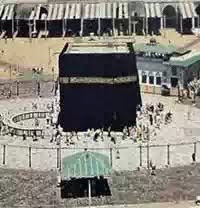
The Ka'bah was not in one place and then moved, rather it was built in
the place where it is now, and it has not been moved from that time.
The scholars differed as to who built the Ka'bah. It was said that it
was the angels, or Adam (peace be upon him), or Ibraaheem (peace be
upon him) – the latter is the correct view.
Allaah says (interpretation of the meaning):
"And (remember) when Ibraaheem (Abraham) and (his son) Ismaa'eel
(Ishmael) were raising the foundations of the House (the Ka'bah at
Makkah), (saying), 'Our Lord! Accept (this service) from us. Verily,
You are the All-Hearer, the All-Knower'"
[al-Baqarah 2:127]
It was narrated that Abu Dharr (may Allaah be pleased with him) said:
I said, "O Messenger of Allaah, which mosque was built first on
earth?" He said, "Al-Masjid al-Haraam." I said, "Then which?" He said,
"Al-Masjid al-Aqsa." I asked, "How much time was between them?" He
said, "Forty years. So wherever you are when the time for prayer
comes, then pray."
Narrated by al-Bukhaari, 3186; Muslim, 520.
The scholars of the Standing Committee said:
The Holy Ka'bah is the qiblah of the Muslims towards which they face
in every prayer, in obedience to the command of Allaah, as He says
(interpretation of the meaning):
"Verily, We have seen the turning of your (Muhammad's) face towards
the heaven. Surely, We shall turn you to a Qiblah (prayer direction)
that shall please you, so turn your face in the direction of Al-Masjid
Al-Haraam (at Makkah). And wheresoever you people are, turn your faces
(in prayer) in that direction"
[al-Baqarah 2:144]
It is also the place where they perform the rituals of Hajj and
'Umrah, by circumambulating it, in obedience to the command of Allaah
(interpretation of the meaning):
"and circumambulate the Ancient House (the Ka'bah at Makkah)"
[al-Hajj 22:29]
And in obedience to what Allaah has prescribed on the lips of His
Messenger Muhammad(peace and blessings of Allaah be upon him).
It was built by Ibraaheem al-Khaleel and his son Ismaa'eel (peace be
upon them both) as Allaah tells us (interpretation of the meaning):
"And (remember) when Ibraaheem (Abraham) and (his son) Ismaa'eel
(Ishmael) were raising the foundations of the House (the Ka'bah at
Makkah), (saying), 'Our Lord! Accept (this service) from us. Verily,
You are the All-Hearer, the All-Knower'"
[al-Baqarah 2:127]
And it has been renovated several times since then.
Shaykh 'Abd al-'Azeez ibn 'Abd-Allaah ibn Baaz, Shaykh 'Abd al-Razzaaq
'Afeefi, Shaykh 'Abd-Allaah ibn Ghadyaan, Shaykh 'Abd-Allaah ibn
Qa'ood.
Fataawa al-Lajnah al-Daa'imah, 6/310
And Allaah knows best.
Praise be to Allaah.
The Ka'bah was not in one place and then moved, rather it was built in
the place where it is now, and it has not been moved from that time.
The scholars differed as to who built the Ka'bah. It was said that it
was the angels, or Adam (peace be upon him), or Ibraaheem (peace be
upon him) – the latter is the correct view.
Allaah says (interpretation of the meaning):
"And (remember) when Ibraaheem (Abraham) and (his son) Ismaa'eel
(Ishmael) were raising the foundations of the House (the Ka'bah at
Makkah), (saying), 'Our Lord! Accept (this service) from us. Verily,
You are the All-Hearer, the All-Knower'"
[al-Baqarah 2:127]
It was narrated that Abu Dharr (may Allaah be pleased with him) said:
I said, "O Messenger of Allaah, which mosque was built first on
earth?" He said, "Al-Masjid al-Haraam." I said, "Then which?" He said,
"Al-Masjid al-Aqsa." I asked, "How much time was between them?" He
said, "Forty years. So wherever you are when the time for prayer
comes, then pray."
Narrated by al-Bukhaari, 3186; Muslim, 520.
The scholars of the Standing Committee said:
The Holy Ka'bah is the qiblah of the Muslims towards which they face
in every prayer, in obedience to the command of Allaah, as He says
(interpretation of the meaning):
"Verily, We have seen the turning of your (Muhammad's) face towards
the heaven. Surely, We shall turn you to a Qiblah (prayer direction)
that shall please you, so turn your face in the direction of Al-Masjid
Al-Haraam (at Makkah). And wheresoever you people are, turn your faces
(in prayer) in that direction"
[al-Baqarah 2:144]
It is also the place where they perform the rituals of Hajj and
'Umrah, by circumambulating it, in obedience to the command of Allaah
(interpretation of the meaning):
"and circumambulate the Ancient House (the Ka'bah at Makkah)"
[al-Hajj 22:29]
And in obedience to what Allaah has prescribed on the lips of His
Messenger Muhammad(peace and blessings of Allaah be upon him).
It was built by Ibraaheem al-Khaleel and his son Ismaa'eel (peace be
upon them both) as Allaah tells us (interpretation of the meaning):
"And (remember) when Ibraaheem (Abraham) and (his son) Ismaa'eel
(Ishmael) were raising the foundations of the House (the Ka'bah at
Makkah), (saying), 'Our Lord! Accept (this service) from us. Verily,
You are the All-Hearer, the All-Knower'"
[al-Baqarah 2:127]
And it has been renovated several times since then.
Shaykh 'Abd al-'Azeez ibn 'Abd-Allaah ibn Baaz, Shaykh 'Abd al-Razzaaq
'Afeefi, Shaykh 'Abd-Allaah ibn Ghadyaan, Shaykh 'Abd-Allaah ibn
Qa'ood.
Fataawa al-Lajnah al-Daa'imah, 6/310
And Allaah knows best.
Dought & clear, - Is there life on other planets?.
Is there life on other planets or in other galaxies?.
Praise be to Allaah.
As for the seven heavens, they are populated by the angels, as Allaah
says (interpretation of the meaning):
"Nearly the heavens might be rent asunder from above them (by His
Majesty), and the angels glorify the praises of their Lord, and ask
for forgiveness for those on the earth. Verily, Allaah is the
Oft-Forgiving, the Most Merciful"
[al-Shoora 42:5]
"But if they are too proud (to do so), then there are those who are
with your Lord (angels) glorify Him night and day, and never are they
tired"
[Fussilat 41:38]
Al-Tirmidhi (2312) narrated that Abu Dharr (may Allaah be pleased with
him) said: The Messenger of Allaah(peace and blessings of Allaah be
upon him) said: "Verily I see what you do not see and I hear what you
do not hear. The heaven is creaking and it should creak, for there is
no space in it the width of four fingers but there is an angel there,
prostrating to Allaah. By Allaah, if you knew what I know, you would
laugh little and weep much, and you would never enjoy women in your
beds, and you would go out in the streets, beseeching Allaah." Classed
as hasan by al-Albaani inSaheeh al-Tirmidhi.
Inal-Saheehaynit is narrated from Maalik ibn Sa'sa'ah, in the story of
al-Isra' wa'l-Mi'raaj (the Prophet's Night Journey and Ascent into
heaven): " ... Then the Much-Frequented House (al-bayt al-ma'moor) was
raised up for me, and I said: 'O Jibreel, what is this?' He said:
'This is the Much-Frequented House. Every day seventy thousand angels
enter it and when they depart from it, they never return to it."
Al-Bukhaari (3207) and Muslim (164).
This has to do with the heavens. As for the planets and other
galaxies, our answer is to say: Allaah knows best.
Praise be to Allaah.
As for the seven heavens, they are populated by the angels, as Allaah
says (interpretation of the meaning):
"Nearly the heavens might be rent asunder from above them (by His
Majesty), and the angels glorify the praises of their Lord, and ask
for forgiveness for those on the earth. Verily, Allaah is the
Oft-Forgiving, the Most Merciful"
[al-Shoora 42:5]
"But if they are too proud (to do so), then there are those who are
with your Lord (angels) glorify Him night and day, and never are they
tired"
[Fussilat 41:38]
Al-Tirmidhi (2312) narrated that Abu Dharr (may Allaah be pleased with
him) said: The Messenger of Allaah(peace and blessings of Allaah be
upon him) said: "Verily I see what you do not see and I hear what you
do not hear. The heaven is creaking and it should creak, for there is
no space in it the width of four fingers but there is an angel there,
prostrating to Allaah. By Allaah, if you knew what I know, you would
laugh little and weep much, and you would never enjoy women in your
beds, and you would go out in the streets, beseeching Allaah." Classed
as hasan by al-Albaani inSaheeh al-Tirmidhi.
Inal-Saheehaynit is narrated from Maalik ibn Sa'sa'ah, in the story of
al-Isra' wa'l-Mi'raaj (the Prophet's Night Journey and Ascent into
heaven): " ... Then the Much-Frequented House (al-bayt al-ma'moor) was
raised up for me, and I said: 'O Jibreel, what is this?' He said:
'This is the Much-Frequented House. Every day seventy thousand angels
enter it and when they depart from it, they never return to it."
Al-Bukhaari (3207) and Muslim (164).
This has to do with the heavens. As for the planets and other
galaxies, our answer is to say: Allaah knows best.
Dought & clear, - Why is the week seven days?.
If Allah swt made everything in 6 days why do we have 7 days in a week?.
Praise be to Allaah.
Firstly:
We cannot be certain about anything with regard of the division of the
week into seven days, or the time when this division began – was it
before the creation of the heavens and the earth, or was the creation
of the heavens and the earth what led to this division? The reason for
that is that we have no clear evidence which states anything certain
to that effect. But what is indicated by a study of calendars and the
customs and reports of different nations is that the division of the
week into seven days is connected to religion and taken from it, and
that it has to do with reports and rulings of religion.
Shaykh al-Islam Ibn Taymiyah (may Allaah have mercy on him) said
inMajmoo' al-Fataawa(7/95):
Every nation that does not have a Book has no names for days of the
week in their languages, rather they have names for the day, the month
and the year, because that may be known on tangible and rational ways,
so the nations gave them names, because expression follows
visualization. But the week was only known by hearing (reports). It
was not known that Allaah created the heavens and the earth and
everything in between in six days then rose over the Throne except by
the words of the Prophets who were enjoined to gather together on one
day of the week to worship Allaah and remember the first week in which
Allaah began to create the universe. In Arabic and Hebrew and the
languages of those who learned from them, there are words for the days
of the week, unlike the language of the Turks and others like them;
there are no words for the days of the week in their language because
they did not know of that so they have no words for it.
Dr. Jawaad 'Ali says:
The month is divided into four sections, and each section is a week
composed of seven days.
The idea of this division is attributed to the Babylonians, but the
days of the week and their order in the manner that is known until now
is a system that appeared long after them. The week (shavu'ah in
Hebrew) is mentioned in the Torah, in the Book of Genesis. Based on
both the Jewish Sabbath and the story of creation, the week was
organized along the lines that are still prevalent today. End quote.
Al-Mufassal fi Tareekh al-'Arab qabl al-Islam(16/96).
And Allaah knows best.
Praise be to Allaah.
Firstly:
We cannot be certain about anything with regard of the division of the
week into seven days, or the time when this division began – was it
before the creation of the heavens and the earth, or was the creation
of the heavens and the earth what led to this division? The reason for
that is that we have no clear evidence which states anything certain
to that effect. But what is indicated by a study of calendars and the
customs and reports of different nations is that the division of the
week into seven days is connected to religion and taken from it, and
that it has to do with reports and rulings of religion.
Shaykh al-Islam Ibn Taymiyah (may Allaah have mercy on him) said
inMajmoo' al-Fataawa(7/95):
Every nation that does not have a Book has no names for days of the
week in their languages, rather they have names for the day, the month
and the year, because that may be known on tangible and rational ways,
so the nations gave them names, because expression follows
visualization. But the week was only known by hearing (reports). It
was not known that Allaah created the heavens and the earth and
everything in between in six days then rose over the Throne except by
the words of the Prophets who were enjoined to gather together on one
day of the week to worship Allaah and remember the first week in which
Allaah began to create the universe. In Arabic and Hebrew and the
languages of those who learned from them, there are words for the days
of the week, unlike the language of the Turks and others like them;
there are no words for the days of the week in their language because
they did not know of that so they have no words for it.
Dr. Jawaad 'Ali says:
The month is divided into four sections, and each section is a week
composed of seven days.
The idea of this division is attributed to the Babylonians, but the
days of the week and their order in the manner that is known until now
is a system that appeared long after them. The week (shavu'ah in
Hebrew) is mentioned in the Torah, in the Book of Genesis. Based on
both the Jewish Sabbath and the story of creation, the week was
organized along the lines that are still prevalent today. End quote.
Al-Mufassal fi Tareekh al-'Arab qabl al-Islam(16/96).
And Allaah knows best.
Subscribe to:
Comments (Atom)
'' Our Lord ! grant us good in this world and good in the hereafter and save us from the torment of the Fire '' [Ameen]
-
{in Arab} :->
Rabbanaa aatinaa fid-dunyaa hasanatan wafil aakhirati hasanatan waqinaa 'athaaban-naar/-
(Surah Al-Baqarah ,verse 201)